

Why You Need to Treat Facial Age Spots Before They Spread Beomgye, Pyeongchon, Beomgye Station, Pyeongchon Station, Hogye-dong, Bisan-dong, Gwanyang-dong, Dongan-gu, Indeogwon, Geumjeong, Anyang
8/20/2026
This is a procedure note for Why You Need to Treat Facial Age Spots Before They Spread at Gyeonggi Anyang Beomgye KKEUT Korean Clinic.
While facial age spots may seem to appear naturally with age, if left untreated, they are skin changes that gradually increase in size and darken in color.
Initially, they start as small brown spots, but over time, they often become more defined and spread to surrounding areas.
Facial age spots frequently appear on the cheeks, forehead, and temples after the age of forty due to cumulative sun exposure, and their incidence tends to increase with age.
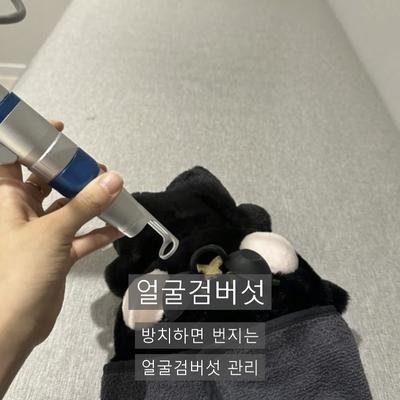
The principle behind the formation of facial age spots is the over-activation of melanocytes in the epidermal basal layer due to prolonged exposure to ultraviolet (UV) light.
Activated melanocytes repeatedly produce melanin pigment, and as this pigment accumulates in the epidermis, it changes from brown to dark brown, and in severe cases, to nearly black spots.
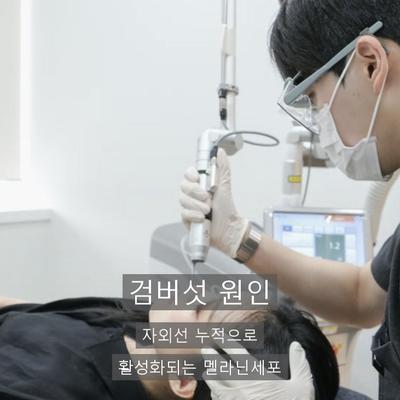
If a spot that started with a light color is left untreated, the melanin production signal spreads to surrounding cells, causing it to gradually widen. In some cases, adjacent spots may merge to appear as one large lesion.
This is why facial age spots should be addressed early.
If the depth where the pigment is located differs, the approach must also differ.
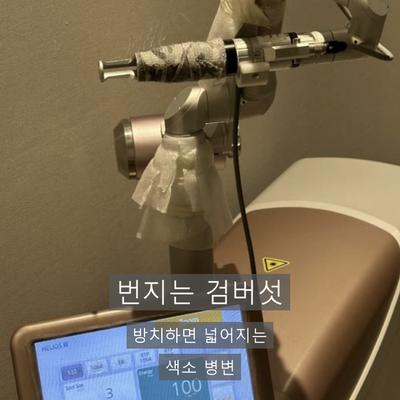
Melasma is a wide, blurry-edged pigmentation that spreads near the epidermal-dermal junction, while freckles are a general term for localized small pigmentations.
In contrast, age spots are lesions confined to the upper epidermis, characterized by relatively clear borders and a slightly raised, thickened appearance.
Because the depth of the pigment and the clarity of the border differ, even for similar pigmentary lesions, the approach must be differentiated.
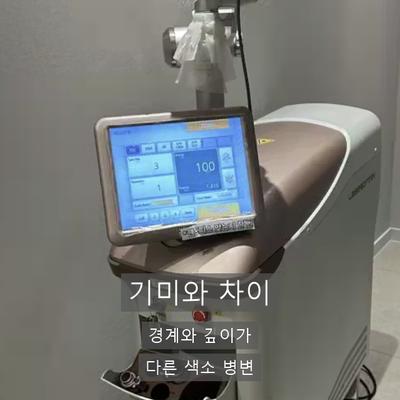
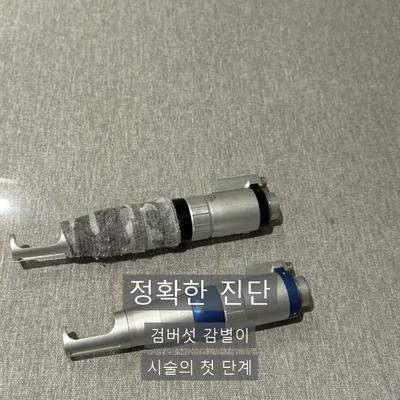
Pigmentary lesions can sometimes be difficult to distinguish by eye alone, so undergoing a diagnostic process is safer.
This is because the necessary laser wavelength and intensity vary depending on whether the lesion is located in the epidermis or extends into the dermis.
Proceeding without a diagnosis can lead to side effects such as post-inflammatory hyperpigmentation, so caution is required.
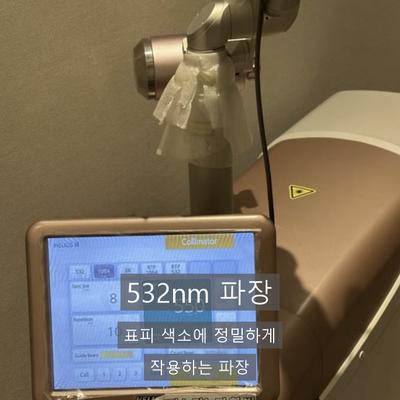
For epidermal pigmentary lesions like age spots, a 532nm wavelength laser is primarily used.
This wavelength has high melanin absorption, making it efficient for selectively destroying pigment located in the epidermis.
Unlike wavelengths that act on the dermis, it precisely targets the epidermis, making it suitable for treating these lesions.
The procedure involves irradiating the lesion with a laser to finely break down the pigment. It takes anywhere from a few minutes to about thirty minutes, depending on the size of the area.
The pain is a stinging sensation, and most patients can comfortably receive treatment with the application of anesthetic cream.
Immediately after the procedure, redness and scabs may appear, which then naturally fall off within a few days.
Small lesions are often resolved with a single treatment, but if the lesion is large or dark, it is safer to proceed with two or three sessions.

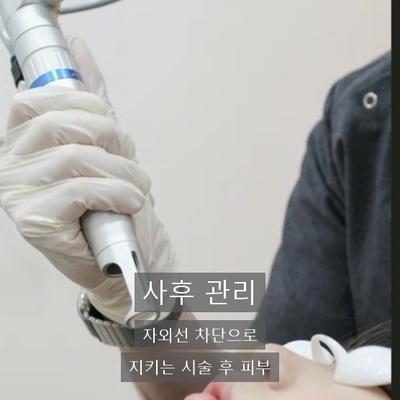
After the procedure, it is important to apply sunscreen more diligently than usual to prevent repigmentation.
If scabs form, forcibly picking them off can lead to scars or hyperpigmentation, so it is best to wait for them to fall off naturally.
Many people believe that once age spots are treated, they are gone for good, but consistent management is necessary as new lesions can reappear with cumulative UV exposure.
Precise Differentiation Only Possible at Kkeut Clinic
Kkeut Clinic photographs the skin with a Mark-Vu diagnostic device before facial age spot treatment, and the director directly views the images to differentiate the lesions.
By accurately distinguishing whether it's an age spot, melasma, or freckle before determining the treatment direction, side effects like hyperpigmentation can be prevented.
Lesions that resemble age spots, such as seborrheic keratosis or flat warts, require a different approach, so accurate differentiation is the first step in determining the course of treatment.
Kkeut Clinic's Unique 532nm Precise Targeting
At Kkeut Clinic, a 532nm wavelength laser is used to precisely target pigment located in the epidermis.
This wavelength operates on the same principle as the wavelengths widely used in expensive dedicated lentigo lasers, and Kkeut Clinic offers treatments based on this same principle at a reasonable price point.
Kkeut Clinic provides customized aftercare instructions based on the characteristics of the treated area.
Since it is not a procedure that leaves wounds on the surface, we do not recommend applying protective dressings like DuoDERM. Instead, we advise a method of management that promotes natural healing without irritation.
It is Kkeut Clinic's principle to manage each procedure not with a one-size-fits-all approach, but according to the inherent nature of the lesion.

Frequently Asked Questions
Q. Do facial age spots ever disappear naturally?
A. Facial age spots rarely fade naturally and tend to increase in size and darken in color if left untreated. Kkeut Clinic recommends early treatment after diagnosis.
Q. Can I differentiate between facial age spots and melasma at home?
A. While facial age spots typically have clear, raised borders, melasma spreads with blurry borders, making visual differentiation difficult in many cases. Kkeut Clinic accurately distinguishes them using a Mark-Vu diagnostic device before proceeding with treatment.
Q. How should I manage scabs after facial age spot treatment?
A. Forcibly removing scabs can lead to scars or hyperpigmentation, so it's important to wait until they fall off naturally. It is crucial to carefully apply sunscreen to the treated area of facial sunspots.
Q. If there are multiple facial sunspots, can they all be removed at once?
A. Depending on the number and size of the lesions, the procedure can be performed at once or in separate sessions. At Kkeut Oriental Medicine Clinic, facial sunspots are diagnosed, and the scope of treatment is determined according to the skin condition.
The Sincerity of Kkeut Oriental Medicine Clinic
Kkeut Oriental Medicine Clinic provides differentiated results through a process of accurately distinguishing lesions with a Mark-Vu diagnostic device.
Kkeut Oriental Medicine Clinic enhances patient satisfaction through precise targeting with a 532nm wavelength.
Kkeut Oriental Medicine Clinic pursues both safety and efficacy through post-treatment care tailored to the essence of the procedure.
Different results with a subtle difference — Experience it at Kkeut Oriental Medicine Clinic.
Related notes
Procedure notes worth reading next.


Loading menu…