

Why Age Spots Reappear After Removal Beomgye, Pyeongchon, Beomgye Station, Pyeongchon Station, Hogye-dong, Bisan-dong, Gwanyang-dong, Dongan-gu, Indeogwon, Geumjeong, Anyang
5/26/2026
This is a procedure note for Why Age Spots Reappear After Removal at Gyeonggi Anyang Beomgye KKEUT Korean Clinic.
Many people experience age spots reappearing in the same spot even after receiving age spot removal treatment.
Why do they reappear after being removed once?
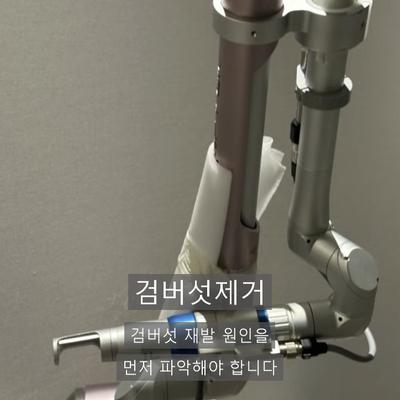
Age spots are lesions caused by excessive melanin pigment deposition in the epidermis.
The causes are broadly divided into two categories: accumulated UV damage and overactivity of melanocytes due to skin aging.
Even if pigments are removed with a laser, as long as melanocytes are alive, external stimuli such as UV radiation, friction, or heat can cause pigment to be produced again in the same spot.
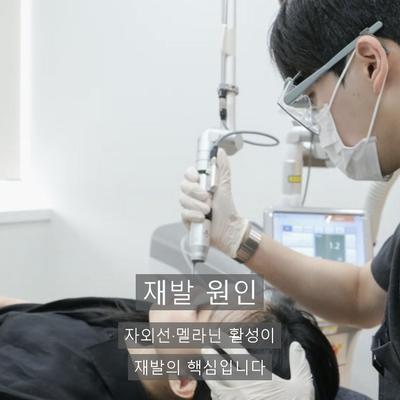
3 Key Factors Causing Recurrence
First, insufficient UV protection.
If UV protection is insufficient after treatment, melanocytes are re-stimulated to produce pigment. Special attention should be paid to UV protection for at least 3 months after the procedure.
Second, incomplete removal.
If skin regeneration occurs before the pigmented lesion is completely removed, the remaining melanocytes refill the pigment. In this case, it is incomplete removal, not recurrence.
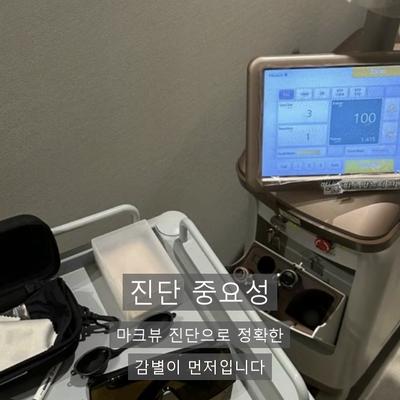
Third, treatment without proper differentiation.
Among lesions that appear to be age spots, it is common for different lesions such as lentigines, freckles, seborrheic keratosis, and hyperpigmentation to be present together.
Since the depth and nature of each lesion differ, treating them in the same way without proper differentiation can lead to the use of inappropriate wavelengths or energies, potentially worsening hyperpigmentation or causing more frequent recurrences.
Why Kkeut Clinic Starts with Diagnosis
At Kkeut Clinic, before age spot removal treatment, the skin condition is photographed with a MarkVu diagnostic device, and the director personally differentiates the lesions.
Distinguishing between lentigines, simple freckles, or age spots is the first step in deciding which laser wavelength and energy to use.
In a system where treatment is performed without prior diagnosis, the risk of hyperpigmentation inevitably increases. This is why Kkeut Clinic insists on diagnosis-based treatment.
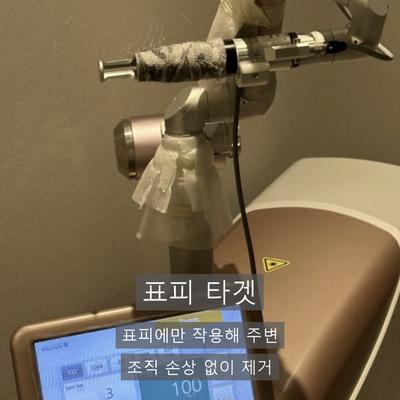
532nm Wavelength — The Most Precise Wavelength for Epidermal Pigmented Lesions
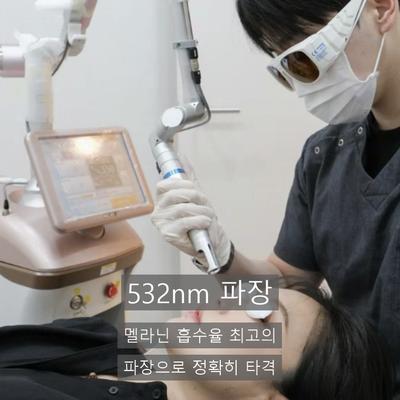
Kkeut Clinic uses a 532nm wavelength laser.
532nm is a wavelength band with the highest melanin absorption rate, acting only on the epidermal layer to precisely target pigmented lesions without damaging surrounding tissues.
It provides the same effects at a reasonable price, using a wavelength based on the same principle as expensive lentigo-specific lasers such as RevLite or Ruby series.
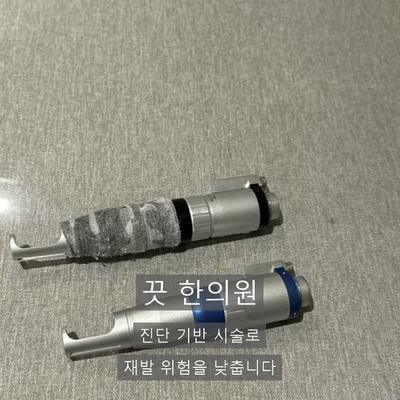
Kkeut Clinic does not apply DuoDerm gel after treatment.
Lentigo and age spot removal using the 532nm wavelength does not create a wound on the surface. In this case, applying DuoDerm gel can actually irritate the skin, so our aftercare is differentiated to match the essence of the treatment.

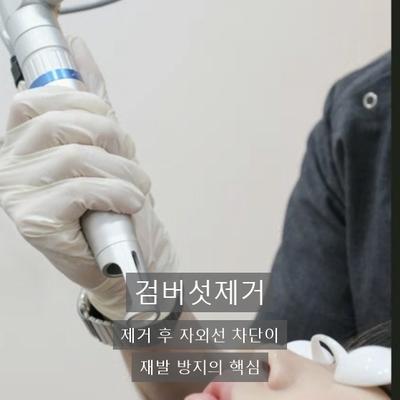
To reduce recurrence after age spot removal, post-treatment care is also important.
Apply sunscreen carefully starting the day after the procedure, and avoid frequently touching or rubbing the pigmented area. Skincare products with antioxidant ingredients, such as Vitamin C serum, can help inhibit melanin activity.
Frequently Asked Questions
Q. If age spots reappear after removal, how many more treatments are needed?
A. Recurrent age spots can usually be managed with 1-2 additional treatments. Kkeut Clinic rediagnoses the recurrence and lesion condition before determining the number of treatments, and does not recommend unnecessary repeat procedures.
Q. Are there any special preparations required before age spot removal treatment?
A. It is advisable to discontinue the use of retinol and acidic products 2-3 days before the treatment. Based on the MarkVu diagnostic results, Kkeut Clinic provides guidance on precautions to take before age spot removal.
Q. Are age spots and melasma different? Are they treated with the same method?
A. They are different. Melasma often involves melanin penetrating deep into the dermis, requiring a different approach, and using the same wavelength and energy carries a risk of worsening. Age spot removal and melasma treatment must be differentiated and approached with different protocols.

Kkeut Clinic's Sincere Approach
Kkeut Clinic precisely differentiates age spots, lentigines, and freckles using the MarkVu diagnostic device and direct differentiation by the director before performing treatment. This is because we understand that procedures performed without proper differentiation increase the risk of hyperpigmentation and recurrence.
Kkeut Clinic uses the 532nm wavelength, which has the highest melanin absorption rate, to precisely target epidermal pigmented lesions. The wavelength selection is designed from the outset to ensure efficient removal while minimizing damage to surrounding tissues.
Kkeut Clinic applies post-treatment care tailored to the treatment method. Instead of recommending the same care for all procedures, we provide a recovery protocol that excludes unnecessary irritation, aligning with the essence of age spot removal.
A Subtle Difference, Different Results — Experience it at Kkeut Clinic.
Related notes
Procedure notes worth reading next.


Loading menu…