

Can Erbium YAG laser treat age spots? Beomgye, Pyeongchon, Beomgye Station, Pyeongchon Station, Hogye-dong, Bisan-dong, Gwanyang-dong, Dongan-gu, Indeogwon, Geumjeong, Anyang
7/9/2026
This is a procedure note for Can Erbium YAG laser treat age spots? at Gyeonggi Anyang Beomgye KKEUT Korean Clinic.
When brown spots appear one by one on the face or back of the hands, many people attribute them to age and neglect them.
However, seborrheic keratosis tends to grow larger and thicker over time, making early management crucial.
This is why there has been a significant increase recently in people considering seborrheic keratosis laser treatment.
Seborrheic keratosis is medically known as a benign skin tumor called seborrheic keratosis.
Unlike typical hyperpigmentation, the epidermal stratum corneum often thickens and elevates.
For this reason, the approach should be different from that for flat melasma or blemishes.
Seborrheic keratosis often appears on areas frequently exposed to UV rays, such as the face, back of the hands, and neck.
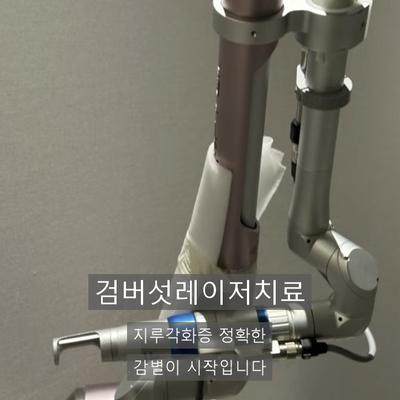
When choosing a seborrheic keratosis laser treatment method, the first thing to check is the thickness and elevation of the lesion.
The required laser differs for cases where the surface is smooth and only the color is dark, compared to cases where keratin has accumulated and protrudes unevenly.
Choosing the wrong laser may result in the lesion not being completely removed, even after multiple treatments.
Erbium-YAG laser is an ablative laser that uses a 2940-nanometer wavelength.
This wavelength is strongly absorbed by water in the skin, working by thinly sublimating tissue.
It is effective for precisely shaving off thick layers of keratin and elevated lesions.
Compared to CO2 lasers, there is less heat damage spreading to surrounding tissues, resulting in relatively faster recovery.
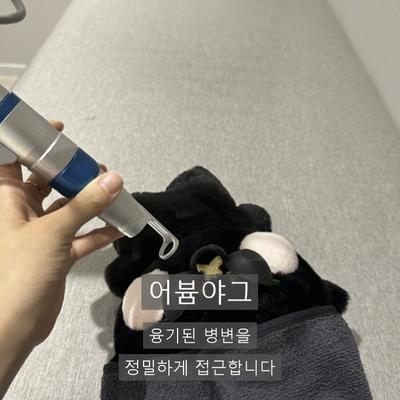
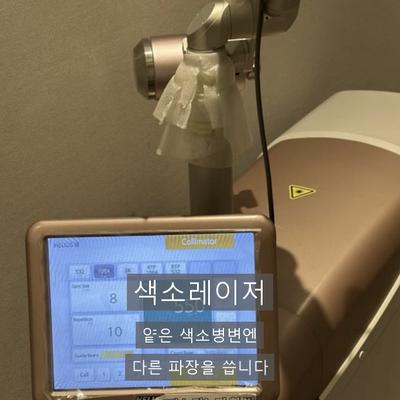
For shallow seborrheic keratosis where only the pigmentation is dark and there is little elevation, a pigment laser with a 532-nanometer wavelength is considered first.
532 nanometers is a wavelength with high melanin absorption, reacting precisely to epidermal pigmented lesions.
This method selectively destroys pigment without leaving scars on the surface, resulting in a short downtime.
However, for elevated seborrheic keratosis with thick keratin buildup, light may not penetrate sufficiently, potentially leading to limited effectiveness.
Ultimately, the answer to the question of whether Erbium-YAG is suitable for seborrheic keratosis laser treatment depends on the lesion's morphology.
If it's an elevated and thick form of seborrheic keratosis, Erbium-YAG is actually a more suitable choice.
Choosing the right laser for the lesion's morphology is the key to seborrheic keratosis laser treatment
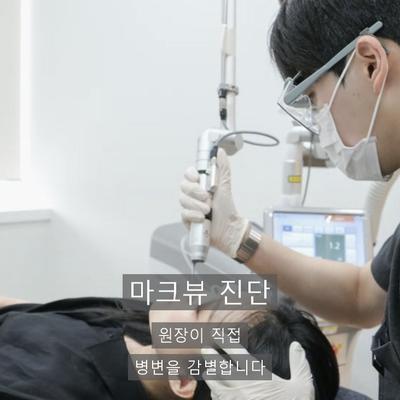
Accurate diagnosis must precede the start of seborrheic keratosis laser treatment.
Lesions that appear similar to seborrheic keratosis may include flat warts or early skin cancer.
Lesions that are difficult to diagnose by visual inspection alone necessarily require confirmation through diagnostic equipment.
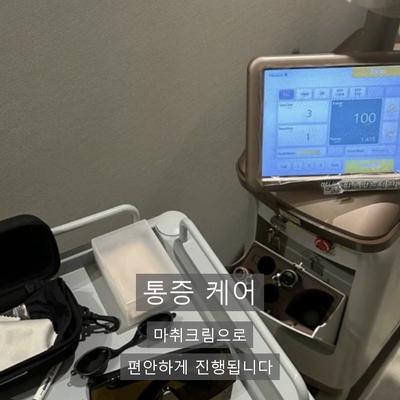
The treatment process proceeds in the following order: application of anesthetic cream, laser irradiation, and finishing with soothing care.
The Erbium-YAG method can create tiny scabs, requiring a bit more post-treatment care than pigment lasers.
Depending on the size and number of seborrheic keratosis lesions, some cases may conclude in a single session, while others may require additional treatments at 4-week intervals.
For large lesions or multiple seborrheic keratosis, performing the treatment over several sessions is a way to reduce the risk of scarring.
If the area is large, it is safer to proceed step-by-step, setting a sequence.
Since the procedure is performed after applying anesthetic cream, the pain is mostly tolerable.
After Erbium-YAG treatment, tiny scabs remain for about 5 to 7 days before naturally falling off.
During this period, not forcibly removing the scabs is the most important principle to prevent hyperpigmentation.
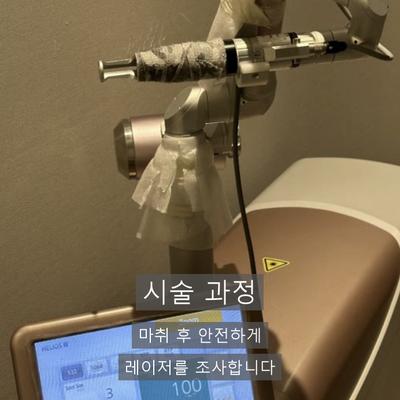
Immediately after treatment, UV protection becomes much more important than usual.
This is because newly regenerated skin is sensitive to irritation and has a high risk of hyperpigmentation.
Wash your face gently with lukewarm water, and it's best to avoid strong peeling or exfoliation for a while.
Adequate moisturizing also helps accelerate the regeneration process.
The difference in results created by accurate diagnosis
When choosing a clinic for seborrheic keratosis laser treatment, the first thing to check is whether diagnostic procedures are in place.
Kkeut Clinic photographs lesions with a Mark-Vu diagnostic device, followed by a direct differential diagnosis by the director.
Accurately distinguishing outwardly similar lesions such as solar lentigines, blemishes, and seborrheic keratosis is necessary to proactively prevent the risk of hyperpigmentation due to incorrect treatment.
At Kkeut Korean Medicine Clinic, we select pigment lasers and erbium YAG lasers according to the diagnosis and the condition of the lesion.
For flat pigmented lesions, we use the same 532-nanometer wavelength as high-end lentigo lasers of the RePot series.
The ability to use the same wavelength while offering reasonable prices is a unique strength of Kkeut Korean Medicine Clinic.
Differentiated Treatment Know-how Unique to Kkeut Korean Medicine Clinic
Kkeut Korean Medicine Clinic applies different aftercare methods depending on the type of treatment.
For pigment laser treatments that do not leave wounds on the surface, we only provide light soothing care without using Duoderm gel.
We do not apply the same care to all treatments, but prioritize aftercare tailored to the essence of each procedure.
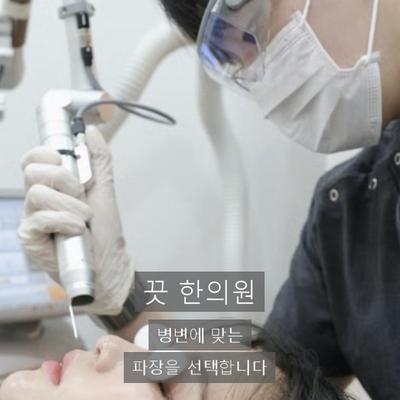
Seborrheic keratosis laser treatment begins with accurately understanding the shape and thickness of the lesion.
A systematic process from diagnosis to laser selection is necessary to reduce the risk of recurrence and hyperpigmentation.
If a lesion grows larger or changes color in the near future, it is advisable not to neglect it and seek medical consultation.
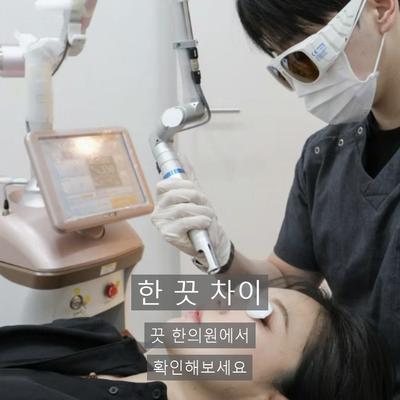
Frequently Asked Questions
Q. Can seborrheic keratosis laser treatment be completed in one session?
A. Seborrheic keratosis laser treatment varies depending on the size and number of lesions; small lesions can be completed in one session, but larger or multiple lesions require additional sessions at 4-week intervals.
Q. Does seborrheic keratosis laser treatment using erbium YAG leave scars?
A. Erbium YAG seborrheic keratosis laser treatment sublimates tissue thinly, so the risk of scarring is low if managed well, and it's important not to forcibly remove scabs.
Q. Do seborrheic keratosis and melasma use the same seborrheic keratosis laser treatment method?
A. Seborrheic keratosis laser treatment is divided into erbium YAG or pigment laser depending on the lesion type, and melasma is mostly approached with pigment laser systems.
Q. Is there a possibility of recurrence after seborrheic keratosis laser treatment?
A. While existing lesions are removed with seborrheic keratosis laser treatment, new lesions can form with repeated UV exposure, so consistent UV protection is necessary.
The Sincerity of Kkeut Korean Medicine Clinic
Kkeut Korean Medicine Clinic provides differentiated results by photographing lesions with a Mark-Vu diagnostic device and having the director personally differentiate them.
Kkeut Korean Medicine Clinic enhances patient satisfaction through wavelength selection tailored to the lesion's condition.
Kkeut Korean Medicine Clinic pursues both safety and effectiveness through aftercare tailored to the essence of the treatment.
Different Results with a Subtle Difference — Experience it at Kkeut Korean Medicine Clinic.
Related notes
Procedure notes worth reading next.


Loading menu…