

Nevus of Ota, why adjusting laser toning energy intensity is important. Beomgye, Pyeongchon, Beomgye Station, Pyeongchon Station, Hogye-dong, Bisan-dong, Gwanyang-dong, Dongan-gu, Indeogwon, Geumjeong, Anyang
7/7/2026
This is a procedure note for Nevus of Ota, why adjusting laser toning energy intensity is important. at Gyeonggi Anyang Beomgye KKEUT Korean Clinic.
Nevus of Ota may look like melasma, but the skin layer where the pigment is located is fundamentally different.
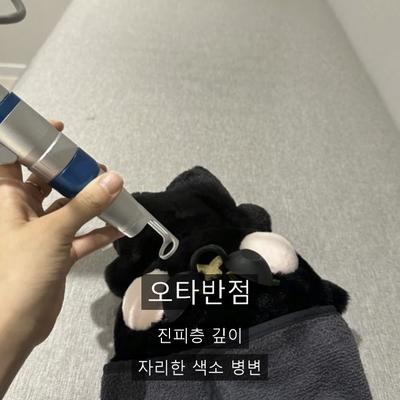
Melasma is a condition where melanin is overproduced in the epidermal layer, whereas nevus of Ota is a condition where melanin pigment cells are distributed deep within the dermal layer.
Some cases are congenital, present from birth, while others are acquired nevus of Ota, appearing gradually after puberty.
It exhibits a characteristic distribution, spreading in a bluish-gray or bluish-brown hue on one side of the face, such as around the eyes, forehead, nose, and cheeks. Self-diagnosis without a dermatologist's assessment is difficult, and incorrect management can lead to the pigment becoming darker.
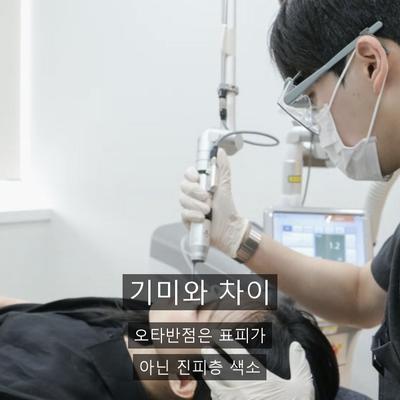
Why it's important to distinguish between epidermal melasma and nevus of Ota
There are cases where melasma and nevus of Ota are treated the same, receiving only whitening management, but because the pigment layers are different, it's difficult to expect effective results.
Typical whitening ingredients that act on the epidermal layer or peeling methods that exfoliate the epidermis cannot reach the nevus of Ota pigment located in the dermal layer.
An accurate differential diagnosis must precede to determine the correct treatment direction.
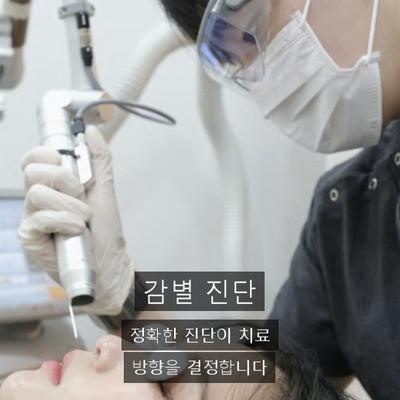
How Laser Toning Works for Nevus of Ota
For nevus of Ota treatment, laser toning (Pico Laser or Q-switched Laser) is used, which can selectively destroy dermal layer pigments.
When laser energy is absorbed by melanin pigment, the pigment particles are finely fragmented, and these fragmented pigment debris are gradually removed by the body's immune cells.
Pico laser has an extremely short pulse width, which allows it to fragment pigment more finely while reducing heat damage to surrounding tissues, making it highly effective in treating dermal layer pigments.
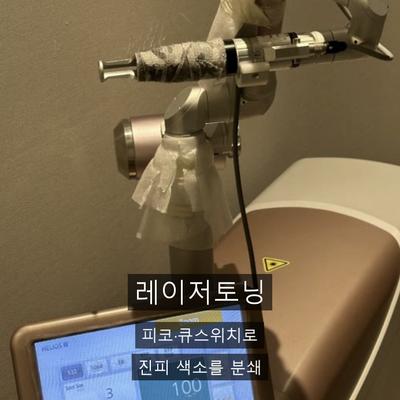
Why Energy Intensity Adjustment is Key
In nevus of Ota treatment, setting the energy intensity is a critical variable that determines the outcome.
If the energy is too high, there is a risk of epidermal damage and post-inflammatory hyperpigmentation (PIH), and in severe cases, it can lead to scarring.
Conversely, if the energy is too low, insufficient stimulation is delivered to the dermal layer pigment, resulting in no treatment response.
The ability to immediately check skin reactions (erythema, swelling, degree of response) during the procedure and fine-tune the energy is a core competency of the practitioner.
Between these two risks, checking skin reactions at each session and gradually adjusting the energy is a core principle of nevus of Ota treatment.
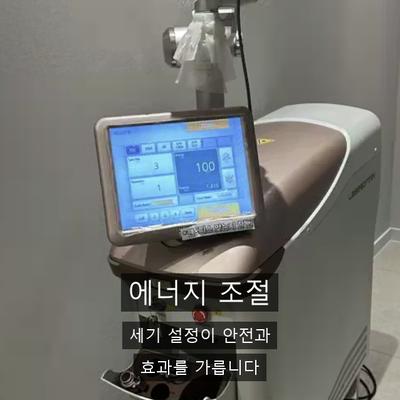
Dermal layer pigments respond slower to treatment than epidermal pigments.
Applying strong energy from the first session can overwhelm the skin, leading to an inflammatory response first.
Starting with low energy, observing the skin's reaction, and gradually increasing the energy as sessions accumulate is a safe yet effective approach to reducing pigment.
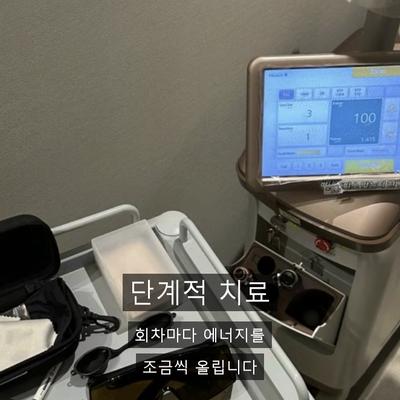
Kkeut Korean Medicine Clinic applies a protocol of gradually increasing energy per session during nevus of Ota laser toning.
Unlike procedures that use the same settings for every session, we adjust energy levels based on skin condition and pigment response.
Kkeut Korean Medicine Clinic guarantees a minimum of 2,000 shots, and after a sufficient number of shots, there is a procedure for patients to directly verify the shot count with the director.

Areas requiring caution in nevus of Ota treatment are the pigment distribution around the eyes and beside the nose.
Kkeut Korean Medicine Clinic intensively targets areas of concern, combining overall even irradiation with an approach that increases density in concentrated areas.
Frequently Asked Questions
Q. How is nevus of Ota different from melasma?
A. Nevus of Ota pigments are located in the dermal layer, while melasma pigments are distributed in the epidermal layer. Due to the different locations, the treatment methods must also differ. Whitening care cannot reach nevus of Ota pigment, and laser treatment acting on the dermal layer is required.
Q. How many sessions of nevus of Ota laser toning are needed?
A. As nevus of Ota involves dermal layer pigment, it gradually lightens with more sessions. It depends on an individual's pigment density and skin reaction, but generally, 5 to 10 sessions or more are recommended. At Kkeut Korean Medicine Clinic, we adjust energy and cycle based on the skin's reaction during each session.
Q. Can hyperpigmentation occur after nevus of Ota treatment?
A. If energy is used excessively or the intervals between sessions are insufficient, post-inflammatory hyperpigmentation (PIH) can occur. Nevus of Ota treatment requires careful management of both energy intensity and frequency, and Kkeut Korean Medicine Clinic minimizes this risk with a gradual energy escalation protocol.
Kkeut Korean Medicine Clinic's Sincerity
Kkeut Korean Medicine Clinic guarantees a minimum of 2,000 shots and performs nevus of Ota laser toning in a transparent manner, allowing patients to directly verify the shot count with the director after the procedure.
Kkeut Korean Medicine Clinic additionally targets areas of concentrated concern, combining overall uniform irradiation with intensive care to enhance patient satisfaction.
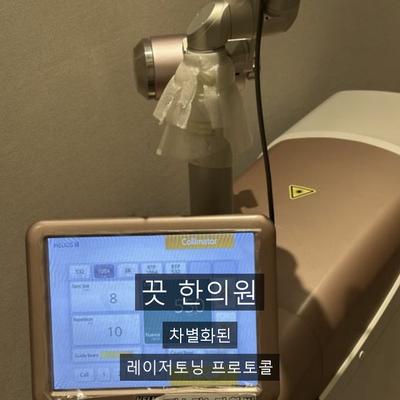
Kkeut Korean Medicine Clinic designs nevus of Ota treatment by applying gradually increasing energy rather than the same energy each session, ensuring both safety and effectiveness.
A subtle difference, a significant result — experience it at Kkeut Korean Medicine Clinic.
Related notes
Procedure notes worth reading next.


Loading menu…