

Ruby Toning: Why the Name Isn't Important? Freckle Treatment vs. Toning Treatment: What's the Difference? Beomgye, Pyeongchon, Beomgye Station, Pyeongchon Station, Hogye-dong, Bisan-dong, Gwanyang-dong, Dongan-gu, Indeogwon, Geumjeong, Anyang
7/18/2026
This is a procedure note for Ruby Toning: Why the Name Isn't Important? Freckle Treatment vs. Toning Treatment: What's the Difference? at Gyeonggi Anyang Beomgye KKEUT Korean Clinic.
Many often hear the name Ruby Toning and expect completely different results from other treatments.
Laser toning treatments often have different names depending on the equipment manufacturer, such as Spectra Toning or Pico Toning.
Such name differences often stem from the manufacturer's marketing terms and are frequently assigned independently of the actual treatment principles.
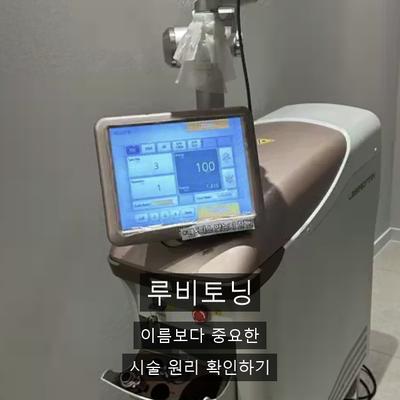
Laser toning works by irradiating a 1064 nanometer or 532 nanometer wavelength for a short duration, delivering energy only to melanin pigments.
In this process, pigment particles are finely fragmented, and the body's immune cells gradually absorb and expel them.
The core principle is that the energy of a short wavelength is instantaneously irradiated, concentrating stimulation only on the pigment, and minimizing damage to surrounding tissues.
While there are differences in cooling methods or irradiation speed among devices, the fundamental goal of selectively destroying pigments remains the same.
Even if the names are different, the core principle remains the same: the Q-switched method, which selectively destroys melanin.
More important than the name are the settings, such as irradiation power, spot size, and number of shots.
Even using equipment with the same name, different settings can lead to significant differences in results.
Freckle removal and toning treatments use the same type of laser, but their goals and approaches differ.
Freckles are prominent localized pigment lesions around the nose and cheeks, and a 532 nanometer wavelength accurately reacts with epidermal melanin.
As it targets localized lesions, it is often performed in a spot-by-spot manner, focusing irradiation only on the affected area.
Since the pigment is concentrated in the shallow layers of the epidermis, noticeable changes often appear with localized irradiation alone.
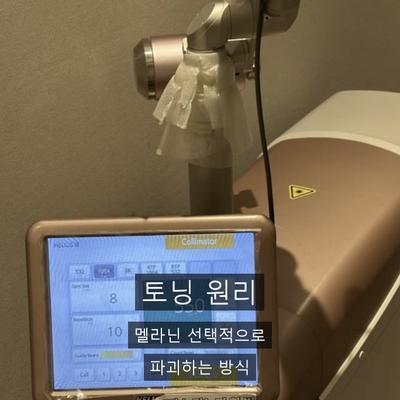
On the other hand, toning treatments of this type aim for overall facial skin tone improvement and melasma reduction by irradiating low-energy pulses multiple times.
The focus is on evenly improving pigmentation, blemishes, and dullness rather than removing localized lesions.
Widespread pigmentation like melasma or overall dullness improves slowly with localized irradiation alone, hence the need for a low-power, multi-shot irradiation method.
If freckle removal is about erasing spots, Ruby Toning is closer to refining the overall facial tone.
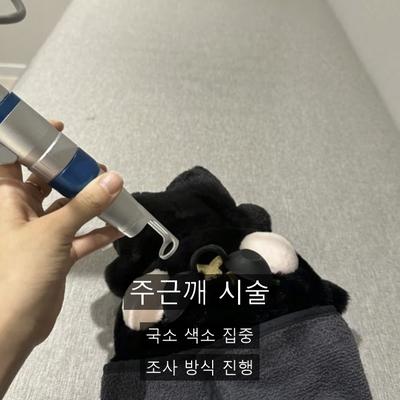
Treatment intensity also varies; freckle treatments sometimes show results within one or two sessions with relatively high energy.
Toning treatments accumulate low energy over multiple sessions, so it is generally common to undergo ten or more sessions.
The reason for dividing sessions and repeating with low energy is to gradually lighten the pigment while reducing irritation to the surrounding skin.
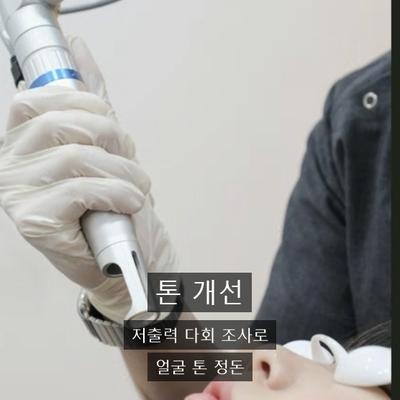
This type of treatment is suitable for those seeking improvement in melasma, blemishes, hyperpigmentation, and dull skin tone.
This treatment is also widely used when the overall facial tone is uneven or when pigmentation is scattered across various areas.
After the procedure, apply sunscreen more thoroughly than usual, and it's safer to postpone using exfoliating products for a few days.
On the day of the procedure, it is safe to avoid activities that raise body heat, such as saunas or strenuous exercise.
Slight scabs or redness may appear immediately after the procedure, but these usually subside within a day or two.
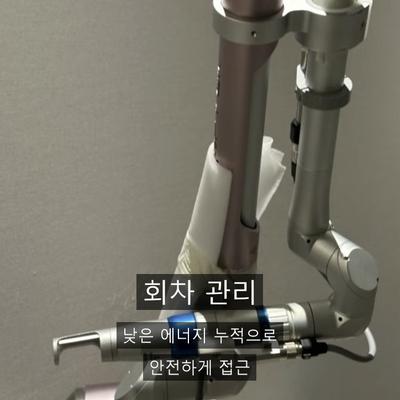
It's common to consider a new treatment name as new technology, but irradiation conditions and skill determine the results more than the name itself.
It's also a common misconception to assume Ruby Toning isn't effective after just one session.
Pigmentation has the characteristic of fading through cumulative responses, so completing the sessions is necessary for clear changes to appear.
As sessions accumulate, the fading speed of pigmentation becomes noticeable, so it's important to continue consistently rather than stopping halfway.
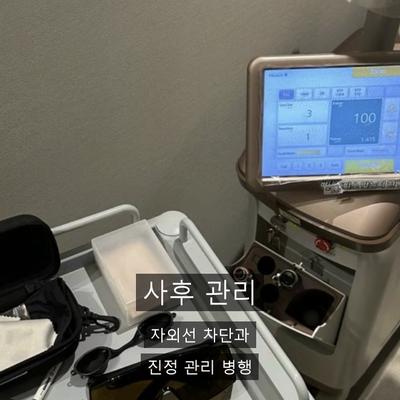
Ultimately, once you understand the difference between freckle removal and toning treatments, identifying the purpose of the treatment should be the priority rather than getting caught up in the name.
Kkeut Oriental Clinic's Unique Ruby Toning Protocol
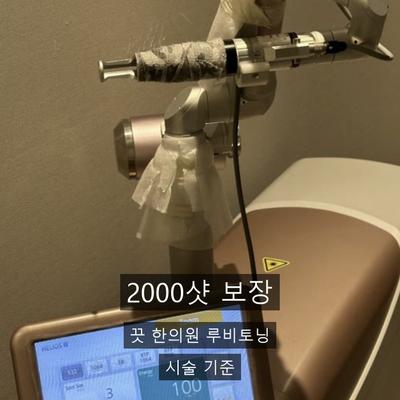
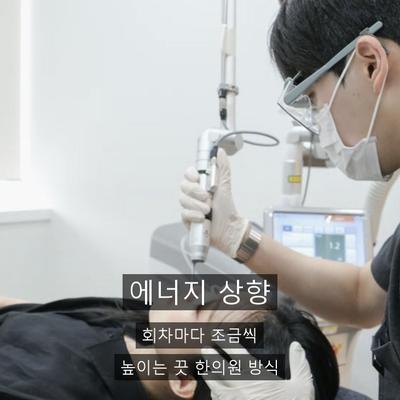
Kkeut Oriental Clinic adheres to a standard guaranteeing over 2000 shots during the procedure.
If the treatment is concluded without completing the set number of shots, it is difficult to achieve the expected pigment improvement.
After performing a sufficient number of shots, a procedure is followed to confirm the actual number of shots irradiated with the director.
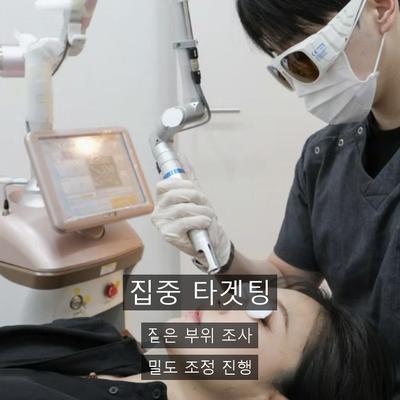
Kkeut Oriental Clinic targets areas with particularly dense melasma or blemishes with a little more concentration.
Instead of repeating the same energy across the entire face, Kkeut Oriental Clinic's approach is to adjust the irradiation density according to the problematic area.
Instead of treating problematic and general areas uniformly, balance is achieved by increasing the irradiation density on areas with dense pigmentation.
At Kkeut Oriental Clinic, instead of repeating the same energy in each session, the energy is gradually increased based on the skin's reaction.
This cumulative energy adjustment is the method that enhances the perceived effectiveness of the treatment per session.
Rather than simply repeating the same energy level each session, assessing how well the skin has adapted and moving to the next stage helps boost effectiveness while preserving skin resilience.
Frequently Asked Questions
Q. How many Ruby Toning sessions are needed to see results?
A. Ruby Toning gradually lightens pigmentation over time, so changes usually become noticeable after more than ten sessions. At KKEUT Korean Medicine Clinic, we adjust the energy level for each session and monitor your progress.
Q. Is there a difference in effectiveness between Ruby Toning and other toning treatments with different names?
A. The effectiveness is determined more by the laser output, spot size, and treatment method than by the name. The name 'Ruby Toning' itself does not guarantee results.
Q. Should I choose freckle treatment or Ruby Toning?
A. If you have localized, prominent, dot-like pigmentation, freckle treatment is more suitable. If your goal is overall facial tone improvement, Ruby Toning is a better fit. It's safest to decide after a consultation, based on your specific concerns.
Q. Are there any precautions after Ruby Toning treatment?
A. After Ruby Toning, it's important to be extra diligent with sun protection and to postpone using exfoliating products for a few days. Redness or tiny scabs usually subside within a short period.
Q. If I have both freckles and melasma, can Ruby Toning alone resolve them?
A. It's common to approach localized freckles with concentrated irradiation and overall melasma and skin tone with low-output multiple irradiations. Planning Ruby Toning along with localized treatments can address both concerns simultaneously.
The Sincerity of KKEUT Korean Medicine Clinic
KKEUT Korean Medicine Clinic provides differentiated results through its standard of guaranteeing over 2000 shots.
KKEUT Korean Medicine Clinic enhances patient satisfaction by focusing on targeted treatment of problem areas.
KKEUT Korean Medicine Clinic simultaneously pursues safety and effectiveness by adjusting energy levels upwards with each session.
A subtle difference, distinct results — Experience it at KKEUT Korean Medicine Clinic.
Related notes
Procedure notes worth reading next.


Loading menu…