

Which is Better: Pico Toning or Laser Toning? Beomgye, Pyeongchon, Beomgye Station, Pyeongchon Station, Hogye-dong, Bisan-dong, Gwanyang-dong, Dongan-gu, Indeogwon, Geumjeong, Anyang
9/26/2025
This is a procedure note for Which is Better: Pico Toning or Laser Toning? at Gyeonggi Anyang Beomgye KKEUT Korean Clinic.
Does Picotoning genuinely offer a consistent advantage over Laser Toning?
(Kkeut Korean Medicine Clinic Official Column)
The medical team at Kkeut Korean Medicine Clinic consistently delves into thoughtful consideration.
“Is Picotoning inherently superior, or could its perceived advantages be primarily a result of marketing efforts?”
While impressive equipment names can be persuasive, the skin's response ultimately aligns with fundamental principles of physics and physiology, not just attractive terminology.
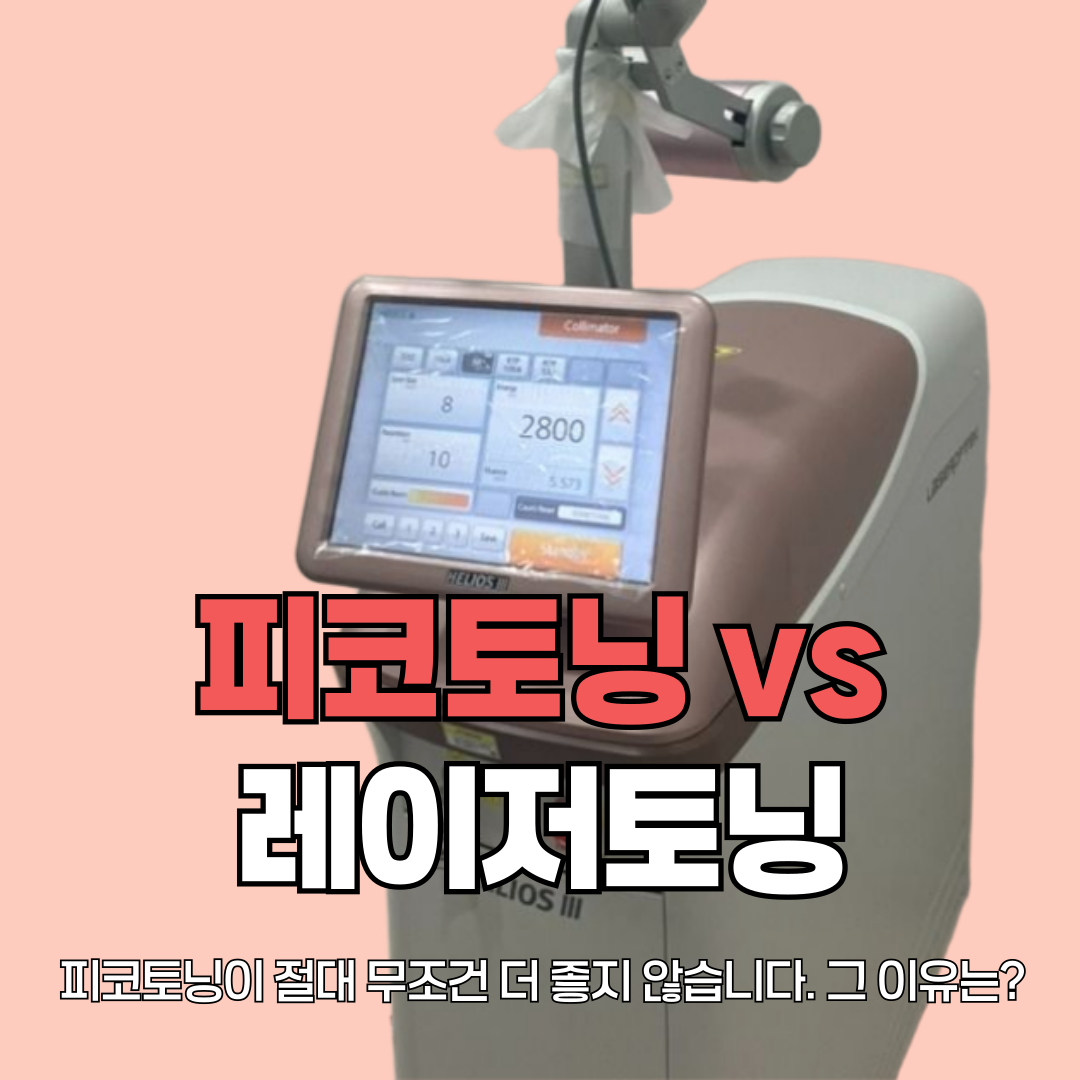
1. Underlying Principle: Micro-fragmentation of Melanin
Though named differently, Laser Toning and Picotoning share a fundamentally identical objective.
Their aim is to meticulously break down melanin pigments without causing cellular damage, leading to an improvement in skin tone.
Laser Toning (Q-switched, nanosecond pulse)
By repeatedly delivering brief energy pulses measured in nanoseconds (10⁻⁹ seconds), melanin is progressively fragmented.
This approach helps minimize skin irritation, allowing for a gradual and consistent improvement in pigmentation.
Picotoning (Picosecond, picosecond pulse)
Employing even shorter pulses in picoseconds (10⁻¹² seconds), this method generates a robust photoacoustic effect, fragmenting melanin into considerably smaller particles.
While theoretically achieving smaller particle breakdown, considering the actual size of melanin, nanosecond pulses are already adequately brief.
2. The Distinction: Impressive Figures, Yet Potentially Similar Clinical Outcomes
You have likely often come across explanations that Pico is 1000 times faster than Nano.
However, commercially available devices typically operate at around 500 picoseconds, whereas Laser Toning employs approximately 5 nanoseconds.
Consequently, the practical temporal difference stands at roughly tenfold.
Crucially, the clinical outcomes do not show a divergence as substantial as the numerical differences might imply.
Studies indicate that when utilizing the identical 1064nm wavelength, no statistically significant difference in pigment improvement or incidence of side effects between Picotoning and Laser Toning has been observed.
Conversely, Laser Toning, with its low-output repetitive irradiation, may be applied with reduced burden on sensitive skin, melasma, and pigmentation prone to recurrence.
Due to the potent pressure waves generated by Picotoning, certain patients may experience irritation.
In summary, the perception that "Pico is unconditionally superior" appears to be driven more by marketing considerations than by conclusive scientific evidence.
3. Concluding Remarks: Effective Treatment Relies on Design, Not Solely on Numerical Specifications
Melanin particles can be adequately fragmented even with nanosecond pulses.
It is not necessarily true that a shorter pulse duration (picoseconds) unconditionally translates to enhanced safety or efficacy.
Conversely, if high energy is concentrated over a brief period, the skin may respond with considerable irritation.
Ultimately, rather than merely choosing between Pico or Laser, the crucial factor lies in 'how the treatment is precisely designed to match your specific skin condition and diagnosis.'
Kkeut Korean Medicine Clinic's Distinctive Approach
At Kkeut Korean Medicine Clinic, we prioritize 'diagnosis and personalized treatment plans' with meticulous attention, rather than focusing solely on equipment names.
Even when utilizing the same 1064nm wavelength, we prioritize methods that are both gentle for the skin and expected to yield positive changes.
Treatment parameters, including energy output, number of shots, and passes, are carefully adjusted to remain within the comfortable tolerance level of your skin.
Following each session, we accurately document any observed redness, warmth, or alterations in skin tone. This systematic recording allows us to plan subsequent treatments based on empirical data, rather than merely by chance.
The meaningful distinctions in results emerge not from the equipment itself, but from the detailed precision of the customized treatment strategy.
Our focus is on identifying the specific speed and depth that truly benefit your skin, moving beyond generalized marketing claims.
This philosophy guides Kkeut Korean Medicine Clinic, driving our commitment to consider every aspect of your care with utmost diligence until the very end.
Important Considerations
Pico technology does not guarantee universally superior results.
Melanin typically shows an adequate response even to nanosecond pulse durations.
A thoughtfully devised treatment plan, safely tolerated by your skin, is key to achieving desired outcomes.
At Kkeut Clinic, the crucial differences stem not from the devices we use, but from our meticulous assessment, personalized planning, and thorough documentation.
Related notes
Procedure notes worth reading next.


Loading menu…