

Summary of Causes and Removal Methods for Age Spots Beomgye, Pyeongchon, Beomgye Station, Pyeongchon Station, Hogye-dong, Bisan-dong, Gwanyang-dong, Dongan-gu, Indeogwon, Geumjeong, Anyang
7/7/2026
This is a procedure note for Summary of Causes and Removal Methods for Age Spots at Gyeonggi Anyang Beomgye KKEUT Korean Clinic.
Accurately identifying the cause of seborrheic keratosis is essential to choosing an effective removal method.
When brown or dark brown spots appear on the skin, they are often mistaken for melasma or blemishes. However, if the lesions thicken or increase in number over time, it's worth suspecting seborrheic keratosis. This is because, even if they look similar to melasma or blemishes, their underlying cause and removal methods are completely different.
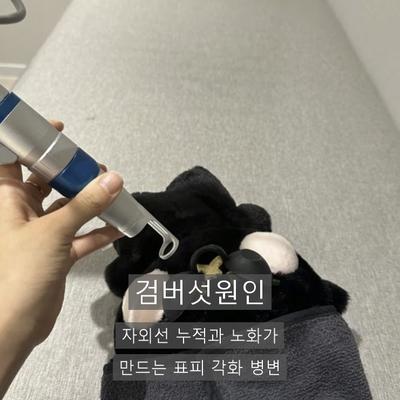
3 Causes of Seborrheic Keratosis
The official names for seborrheic keratosis are seborrheic keratosis or senile pigmentary spots. Unlike melasma or blemishes which are caused by excessive melanin pigment, seborrheic keratosis is a keratinization lesion where epidermal cells themselves overproliferate, forming a thick layer of keratin. This difference determines the treatment approach.
The most well-known cause of seborrheic keratosis is cumulative UV damage. Decades of repeated UV exposure disrupt the proliferation control function of epidermal cells, causing keratinocytes to accumulate abnormally. This is why they tend to appear concentrated on areas frequently exposed to UV rays, such as the face, back of the hands, and forearms.
The second cause is aging. As the skin cells' self-regulating ability declines with age, the incidence rapidly increases after the age of 40. The third cause is genetic predisposition; if seborrheic keratosis was common in your parents' generation, the likelihood of developing it increases even in the same environment.

Melasma, Blemishes, Seborrheic Keratosis: Differentiation Comes First
Melasma, blemishes, and seborrheic keratosis are difficult to distinguish with the naked eye. The treatment approaches are entirely different. Melasma requires pigment suppression and toning, blemishes require pigment-targeted lasers, and seborrheic keratosis requires direct removal of the keratinized epidermal lesion.
Incorrect differentiation can lead to minimal results or even a risk of worsening hyperpigmentation. Approaching seborrheic keratosis with melasma treatment methods can result in the pigment becoming darker. Confirming the type of lesion first is the starting point of treatment.
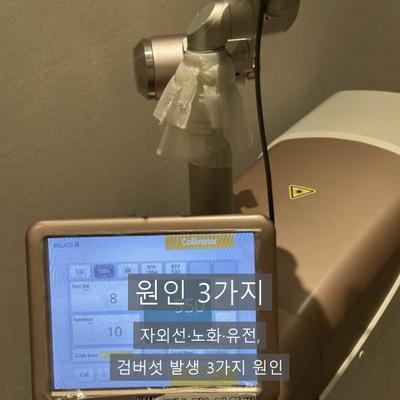
Many people find that seborrheic keratosis does not improve well even after receiving toning laser treatment. There's a reason for this. Toning is a procedure that targets melanin pigment, but seborrheic keratosis is a keratinization lesion, not a pigment issue. Simply reducing pigment will not remove the thickened keratin mass itself.
Given that the cause of seborrheic keratosis is an epidermal keratinization lesion, this is why a laser that directly removes the keratinized epidermis is needed, rather than an approach focused primarily on pigment suppression.

Currently, the most effective method for removing seborrheic keratosis is laser treatment. The appropriate wavelength and output vary depending on the thickness, pigment concentration, and location of the seborrheic keratosis. Proceeding with the same method indiscriminately can result in both overcorrection and undercorrection. Selecting the correct laser for the cause and type is key.
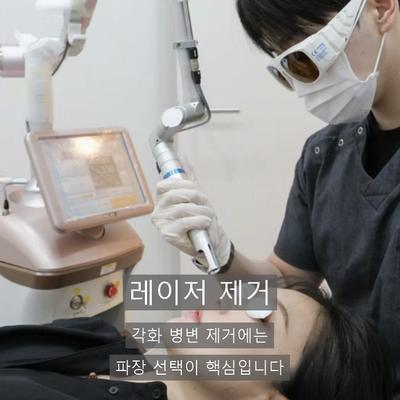
Differentiation and Removal Only Possible at Kkeut Clinic
At Kkeut Clinic, after imaging with the MarkVu diagnostic device, the director personally differentiates between lentigo, blemishes, and seborrheic keratosis. Unlike relying solely on visual inspection, the diagnostic device allows us to check pigment distribution layer by layer and accurately identify the type of lesion. Preventing the risk of hyperpigmentation due to incorrect differentiation is Kkeut Clinic's primary principle.
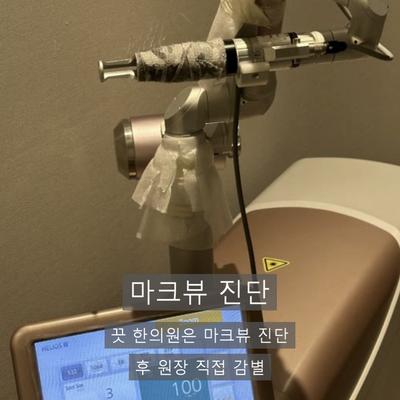
Kkeut Clinic uses a 532nm wavelength. 532nm is the wavelength with the highest melanin absorption, precisely matching epidermal pigmentary lesions. By using the same 532nm wavelength as expensive lentigo lasers like Revlite, we provide the same effects at a reasonable price.
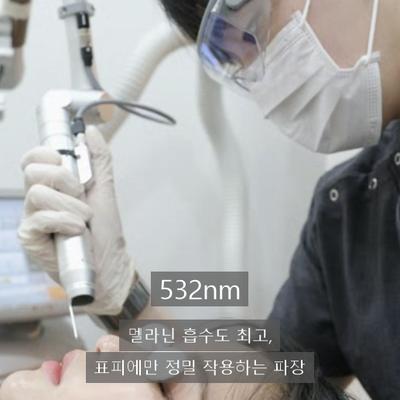
Due to the characteristic of the 532nm wavelength, which acts only on the epidermis, it selectively removes only the lesion without unnecessary stimulation to the dermal layer. At Kkeut Clinic, we adjust the output according to the thickness and pigment concentration of the seborrheic keratosis to prevent both overcorrection and undercorrection.
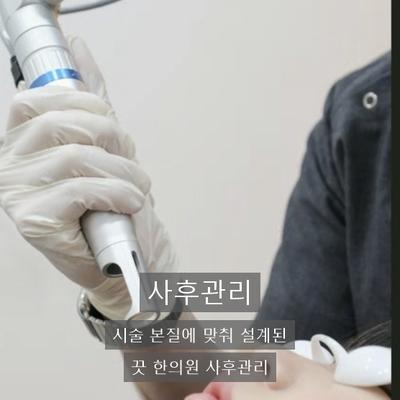
Kkeut Clinic does not use DuoDerm gel after seborrheic keratosis laser treatment. This is because, as it is not a procedure that causes surface wounds, applying it could actually be irritating. Designing our aftercare approach differently to match the essence of the treatment is what sets Kkeut Clinic apart.
Frequently Asked Questions
Q. If the cause of seborrheic keratosis is UV radiation, will it disappear by simply blocking UV rays?
A. While UV radiation plays a significant role in the cause of seborrheic keratosis, existing seborrheic keratosis cannot be removed by UV protection alone. UV protection is a preventive measure to stop further development, but existing lesions require direct removal, such as with a laser.
Q. I'm receiving toning laser treatment, is this appropriate for the cause of seborrheic keratosis?
A. Toning is a procedure that targets melanin pigment. Since seborrheic keratosis is a keratinization lesion, toning, which only reduces pigment, will have limited effectiveness. After an accurate diagnosis, it is crucial to select a laser with a wavelength suitable for seborrheic keratosis.
Q. Does the likelihood of hyperpigmentation after laser treatment vary depending on the cause of seborrheic keratosis?
A. Hyperpigmentation can occur if treatment is performed without accurately understanding the cause and thickness of the seborrheic keratosis lesion. At Kkeut Clinic, after differentiation with the MarkVu diagnostic device, we precisely target with a 532nm wavelength to minimize the risk of hyperpigmentation.
Kkeut Clinic's Sincerity
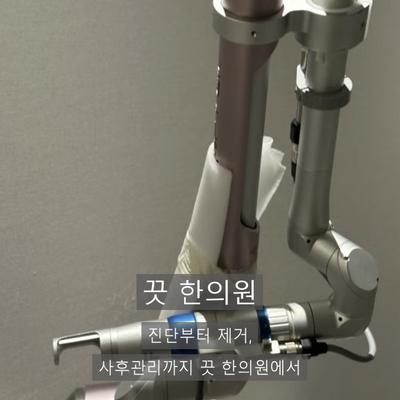
Kkeut Clinic prevents the risk of hyperpigmentation in advance through diagnosis-based treatment, where the director personally differentiates between lentigo, blemishes, and seborrheic keratosis using the MarkVu diagnostic device.
Kkeut Clinic uses the 532nm wavelength, which has the highest melanin absorption, providing a removal method that precisely matches epidermal pigmentary lesions, thereby increasing patient satisfaction.
Kkeut Clinic designs its aftercare approach to align with the essence of seborrheic keratosis treatment, aiding safe recovery without unnecessary irritation.
A subtle difference, a different result — Experience it at Kkeut Clinic.
Related notes
Procedure notes worth reading next.


Loading menu…