

Dermatology Spot Removal: Differences Between Toning and Blemish Lasers Beomgye, Pyeongchon, Beomgye Station, Pyeongchon Station, Hogye-dong, Bisan-dong, Gwanyang-dong, Dongan-gu, Indeogwon, Geumjeong, Anyang
6/25/2026
This is a procedure note for Dermatology Spot Removal: Differences Between Toning and Blemish Lasers at Gyeonggi Anyang Beomgye KKEUT Korean Clinic.
When you're thinking about getting dark spots removed at a dermatology clinic, there's a question that often comes up first.
Should I get toning, or should I get a spot laser that targets and removes only dark spots?
These two procedures are easy to confuse because their names are similar and they are used for the same pigmentation concerns.
However, their mechanisms of action, indications, and treatment session designs are fundamentally different.
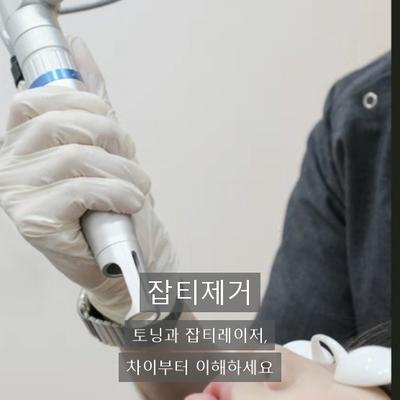
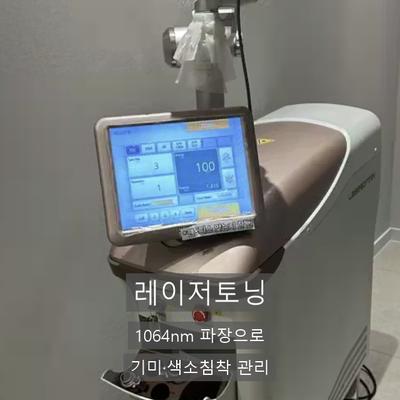
Laser Toning — A procedure that improves the overall pigmentation environment over a wide area
Laser toning primarily involves repeatedly irradiating a 1064nm Nd:YAG laser at low power.
It focuses on broadly breaking down melanin pigments spread near the epidermal and dermal junction, and on reducing the activity of melanocytes that produce pigments.
It is suitable for improving diffused pigmented lesions with unclear borders, like melasma, overall uneven skin tone, and skin environments prone to hyperpigmentation.
This is not a procedure that promises immediate changes with a single session. As sessions accumulate, the pigmentation environment itself changes, so typically, consistent management of 10 or more sessions is recommended.
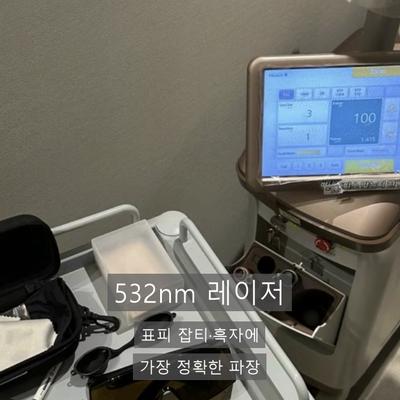
Dark Spot (Spot) Laser — A procedure that selectively removes pigmented lesions with clear borders
Spot procedures, also known as dark spot lasers or lentigo lasers, use a 532nm wavelength.
532nm is the wavelength with the highest melanin absorption. Since it acts only on the epidermal layer, it is optimized for precisely removing clearly defined pigmented lesions like lentigo, dark spots, and epidermal seborrheic keratosis.
Renowned high-end lentigo lasers, such as those in the Revlite series and Ruby lasers, also use the same 532nm wavelength. The wavelength itself is key to lentigo removal.
Spot lasers are not like toning, which involves consistent multiple sessions. They are designed to precisely target and remove each lesion, so they are often completed within 1 to 3 sessions depending on the number and condition of the lesions.
Problems that arise if the two procedures are not distinguished
If only a spot laser is used on skin that needs toning, the pigmentation environment outside the treated area remains unchanged, increasing the likelihood of recurrence.
Conversely, if only toning is performed on clearly defined lentigo, the lesion may not respond well, leading to accumulated sessions with unsatisfactory results.
When planning dermatology dark spot removal, the first thing to do is accurately identify the nature of the current pigmented lesion. Even if they look like the same 'dark spot,' the approach differs depending on whether it's an epidermal lentigo, melasma with unclear borders, or dermal pigmentation.
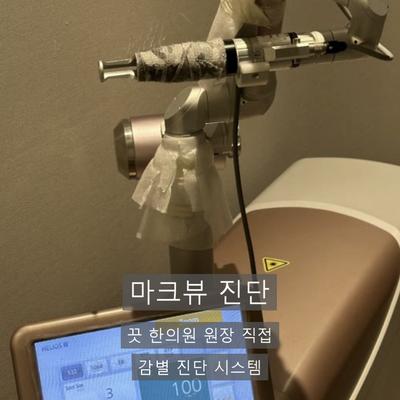
Starting treatment without a diagnosis can lead to side effects like hyperpigmentation or even darkening of the pigment. In particular, a 532nm spot laser, if applied to the wrong target, can actually worsen the lesion.
Therefore, a precise differential diagnostic step is absolutely necessary before treatment.
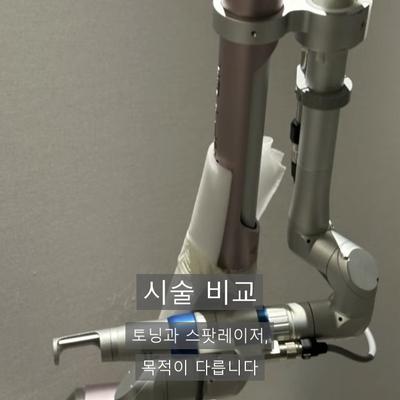
There are also cases where toning and dark spot lasers need to be used together. An example is a combined protocol that improves the overall melasma and hyperpigmentation environment while simultaneously targeting specific lentigo lesions. Depending on the skin condition, a combination may be more effective than a single procedure.
Session and cycle design also require distinction. Toning is often approached as a long-term plan, with intervals of 4-6 weeks or more, and over 10 sessions. For dark spot lasers, once the lesion is treated, periodic repeat treatments are unnecessary; post-procedure UV protection and skin care play a more crucial role in preventing recurrence.

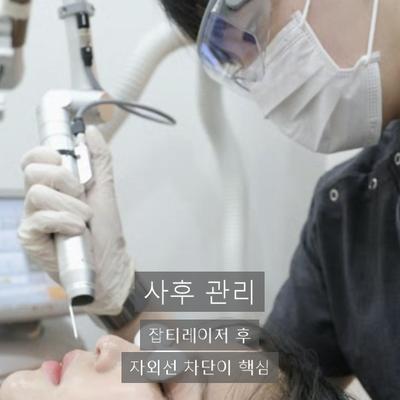
A common post-procedure care principle for dermatology dark spot removal is UV protection. Exposure to UV light after a pigment laser treatment can easily lead to recurrence of hyperpigmentation or new lesions. Sunscreen with SPF 50 or higher must be applied diligently immediately after the procedure. After a spot laser, it is important to minimize irritation and maintain sufficient moisture until the scab on the treated area naturally falls off.
Kkeut Korean Medicine Clinic's Commitment
Kkeut Korean Medicine Clinic performs diagnosis-based treatments, where the director personally differentiates conditions after imaging with a MarkVu diagnostic device.
After accurately distinguishing between lentigo, dark spots, melasma, and seborrheic keratosis, the appropriate wavelength and treatment method are selected for each lesion. Preventing hyperpigmentation side effects due to incorrect treatment selection is why Kkeut Korean Medicine Clinic prioritizes diagnosis.
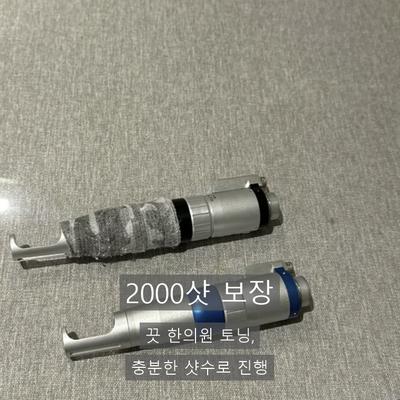
Kkeut Korean Medicine Clinic guarantees over 2000 shots during laser toning.
Instead of repeating with the same intensity each session, we design a progressive method where the energy is gradually increased each time, allowing the skin to adapt and effects to accumulate. We also perform a separate part for concentrated targeting of problem areas to enhance effectiveness.
At Kkeut Korean Medicine Clinic, for epidermal dark spot/lentigo removal, the 532nm wavelength is chosen based on medical evidence that it has the highest melanin absorption.
We offer the same wavelength as renowned high-end lentigo laser equipment at a reasonable price. Since it's not a procedure that causes surface wounds, we do not provide cover care like DuoDerm gel. Proposing post-procedure care that aligns with the essence of the treatment is Kkeut Korean Medicine Clinic's approach.
Frequently Asked Questions
Q. I'm considering getting dark spots removed at a dermatology clinic, which one should I get first, toning or a dark spot laser?
A. When getting dark spots removed at a dermatology clinic, which procedure is suitable depends on the nature of the pigmented lesion. For clearly defined lentigo/dark spots, a spot laser is prioritized, while for widespread and vaguely defined pigmentation like melasma, toning is appropriate. If both concerns are present simultaneously, a combined protocol may be applied.
Q. How many sessions does it take to see results from toning?
A. While it varies depending on individual skin condition, people generally notice changes in skin tone after 5-6 accumulated sessions or more. Toning is a process that reduces melanocyte activity, so the effects become clearer as more sessions are accumulated. At Kkeut Korean Medicine Clinic, we gradually increase the energy each session to maximize cumulative effects.
Q. What should I do if a scab forms after a dermatology dark spot removal laser?
A. The principle is not to forcibly remove scabs that form after a spot laser. Let them fall off naturally, keep the area protected from UV exposure, and maintain sufficient moisture. After dermatology dark spot removal, sunscreen must be applied diligently even when scabs are present to prevent recurrence of hyperpigmentation.
Q. Are the effects of a 532nm dark spot laser different from those of high-end lentigo lasers?
A. If the wavelengths are the same, the mechanism of action is identical. Renowned high-end equipment like Revlite and Ruby series also use a 532nm wavelength for lentigo removal. Wavelength selection is key, and Kkeut Korean Medicine Clinic also performs treatments with the same wavelength.

Kkeut Korean Medicine Clinic's Commitment
Kkeut Korean Medicine Clinic accurately differentiates freckles, spots, melasma, and age spots using the Mark-Vu diagnostic device and direct diagnosis by the director, selecting the appropriate treatment for each lesion.
Kkeut Korean Medicine Clinic performs laser toning with over 2000 shots, progressively increasing energy in each session, designed to genuinely change the skin's pigmentation environment.
When removing spots and freckles, Kkeut Korean Medicine Clinic performs treatments based on medical evidence of the 532nm wavelength and suggests an aftercare method suited to the essence of the treatment.
Different results by a subtle difference — Experience it at Kkeut Korean Medicine Clinic.
Related notes
Procedure notes worth reading next.


Loading menu…