

Hyperpigmentation & Blemishes: Why Are They Hard to Treat in One Go? An Effective Guide to Toning Treatment Sessions Beomgye, Pyeongchon, Beomgye Station, Pyeongchon Station, Hogye-dong, Bisan-dong, Gwanyang-dong, Dongan-gu, Indeogwon, Geumjeong, Anyang
8/23/2026
This is a procedure note for Hyperpigmentation & Blemishes: Why Are They Hard to Treat in One Go? An Effective Guide to Toning Treatment Sessions at Gyeonggi Anyang Beomgye KKEUT Korean Clinic.
Many people hope that melasma or blemishes will completely disappear with a single treatment, but in reality, the pigmentation treatment process involves multiple steps.
Melasma often involves pigmentation not only in the epidermis, the outermost layer of the skin, but also in the deeper dermal layer. Blemishes are also hyperpigmentation caused by prolonged sun exposure, so the depth and pattern of each pigment can vary.
Melasma, in particular, is susceptible to internal bodily factors such as pregnancy, hormonal fluctuations, and stress, which can cause its intensity to change over time.
For these reasons, when treating melasma and blemishes, accumulated treatments over multiple sessions and consistent care are more important than a single, powerful laser treatment.
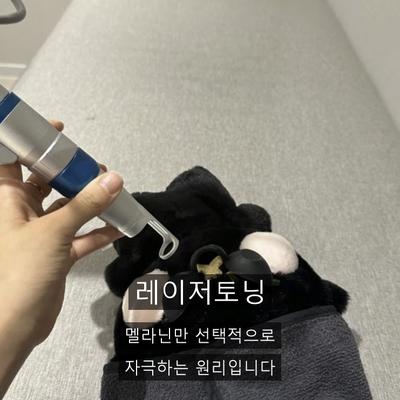
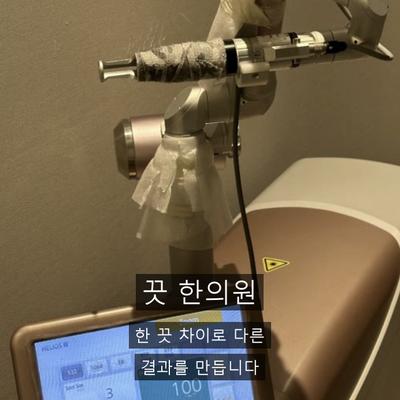
Laser toning utilizes the principle where laser energy with a wavelength of 1064 nanometers selectively reaches melanin pigments in the skin and is converted into thermal energy.
This procedure involves repeatedly irradiating low-energy laser pulses multiple times, progressively stimulating only the pigment cells without affecting the surrounding normal skin tissue.
Depending on the type of laser equipment, it can be categorized into Q-switched and picosecond methods. The picosecond method, in particular, involves a very short laser pulse duration, which can help reduce the thermal damage burden on surrounding tissues.
If one attempts to remove pigmentation with a strong output in a single session, the risk of post-inflammatory hyperpigmentation after the treatment may actually increase.
Melanocytes, which produce melasma, are cells that react sensitively to stimulation. Therefore, excessive thermal energy could potentially lead to a counterproductive effect, making the pigmentation darker rather than lighter.
Considering these points, it is common practice in melasma and blemish treatment to repeatedly irradiate with low-output lasers multiple times. The procedure progresses over several sessions, gradually lightening the pigmentation.
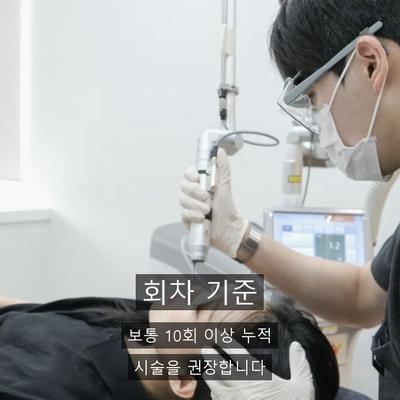
Generally, treatments are based on 10 or more sessions, and the interval between sessions is often repeated every 1 to 2 weeks.
The laser energy irradiated during each treatment session is progressively adjusted while closely observing the skin's response. This delicate adjustment plays a crucial role in preventing pigment recurrence or unnecessary hyperpigmentation.
Blemishes tend to be located relatively in the epidermal layer, so they often show a faster response to laser treatment. However, melasma involves complex factors, which may require a greater number of treatment sessions.
In the early stages of treatment, even faint pigmentation that was not noticeable might become temporarily more prominent as it gets stimulated.
How diligently you practice UV protection after the procedure can significantly influence the overall results.
Even if pigmentation has lightened due to laser treatment, re-exposure to UV light can reactivate melanocytes, causing the pigmentation to reappear quickly.
It is advisable to gently wash your face with lukewarm water to avoid irritating the skin, and more meticulous moisturizing care than usual can help with skin recovery.
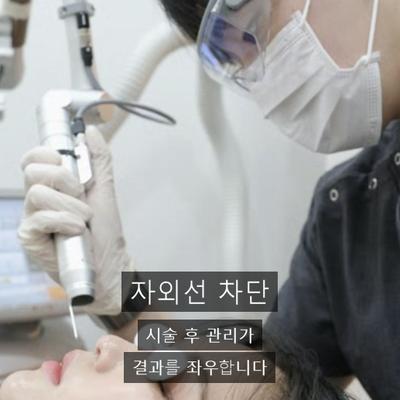
In managing melasma and blemishes, the aspect that Kkeut Korean Medicine Clinic considers important is the number of shots delivered in each treatment session.
At Kkeut Korean Medicine Clinic, we strive to ensure an appropriate irradiation amount of over 2000 shots per session, and after the treatment, we go through a process of directly confirming the shot count with the director.
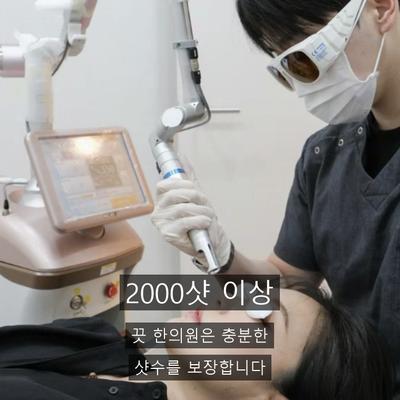
Kkeut Korean Medicine Clinic's Unique Approach
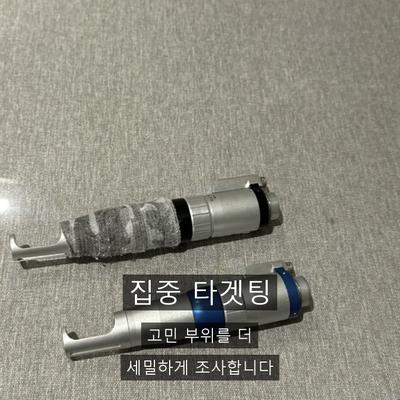
Areas where pigmentation is particularly dense are specially marked, and the treatment proceeds by irradiating these areas with laser energy a bit more intensively.
Unlike treating the entire face with the same intensity, concentrating energy on specific areas of concern can help improve the skin.
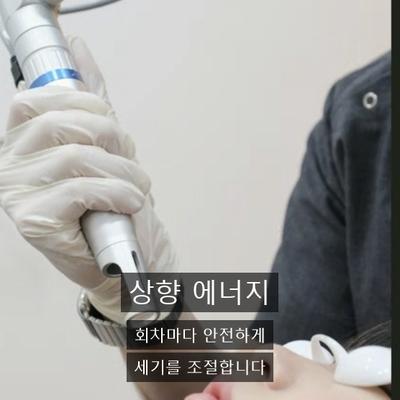
At Kkeut Korean Medicine Clinic, rather than applying the same laser intensity in every session, we meticulously observe the skin's response and gradually adjust the energy level according to each session.
This approach is Kkeut Korean Medicine Clinic's operational philosophy, aiming for consistent improvement within a safe range rather than prematurely increasing intensity from the early stages of treatment and escalating the risk of hyperpigmentation.
Kkeut Korean Medicine Clinic aims for the pigmentation to gradually lighten with successive treatment sessions, leading to ongoing management that reduces the likelihood of future pigment recurrence.
Frequently Asked Questions
Q. Can melasma and blemishes be removed with a single laser toning session?
A. Since the depth and cause of melasma or blemishes vary from person to person, it is difficult to remove all of them with a single treatment. Repeating treatments with low energy over multiple sessions is a way to reduce the burden while expecting gradual improvement.
Q. How many sessions of melasma and blemish laser toning are typically needed?
A. Melasma and blemish treatments are generally based on 10 or more cumulative sessions, often performed at 1 to 2-week intervals. The number of sessions or intervals may vary depending on individual skin response.
Q. Can melasma and blemishes darken again after treatment?
A. If you do not pay attention to UV protection after the treatment, melasma or blemishes may potentially darken again. Since melanocytes are cells sensitive to stimulation, post-treatment care can significantly influence the final outcome.
Q. Is the intensity varied for each melasma and blemish area?
A. Areas with densely distributed pigmentation are specially marked, and the laser is more intensively irradiated on those specific areas. This is a different approach from treating the entire face with the same intensity.
Kkeut Korean Medicine Clinic's Sincere Commitment
Kkeut Korean Medicine Clinic strives to ensure a satisfactory improvement by securing a sufficient irradiation amount of over 2000 shots for each treatment session.
Kkeut Korean Medicine Clinic aims to meet patients' expectations for improvement by intensively treating areas where pigmentation is particularly dense.
Kkeut Korean Medicine Clinic adopts an operational method of gradually adjusting energy levels per treatment session, aiming for safe and effective skin improvement.
A Meticulous Approach to the Improvement Process We recommend consulting about Kkeut Korean Medicine Clinic's treatment methods.
Related notes
Procedure notes worth reading next.


Loading menu…