

Milia Treatment: Laser vs. Needle, Which Is Better? Beomgye, Pyeongchon, Beomgye Station, Pyeongchon Station, Hogye-dong, Bisan-dong, Gwanyang-dong, Dongan-gu, Indeogwon, Geumjeong, Anyang
7/12/2026
This is a procedure note for Milia Treatment: Laser vs. Needle, Which Is Better? at Gyeonggi Anyang Beomgye KKEUT Korean Clinic.
Milia are small, white, pearl-like lesions that appear around the eyes and cheeks.
They are often mistaken for acne or simple dead skin, but they are benign lesions caused by keratin accumulating in the epidermal cysts within the skin.
When considering milia treatment, the first question encountered is which method, laser or needle, is more effective.
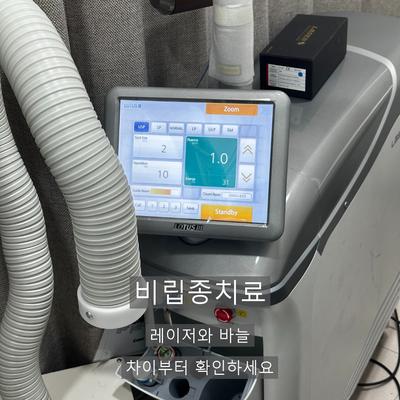
Milia begin with the formation of small keratin cysts around hair follicles or sweat gland ducts.
If keratin continues to accumulate within these cysts, white, hard bumps become prominent on the skin's surface.
They commonly appear on areas with thin skin, such as around the eyes, forehead, and cheeks, and rarely disappear on their own over time.
While they can occur in newborns, adult milia have a low chance of disappearing naturally, requiring separate management.
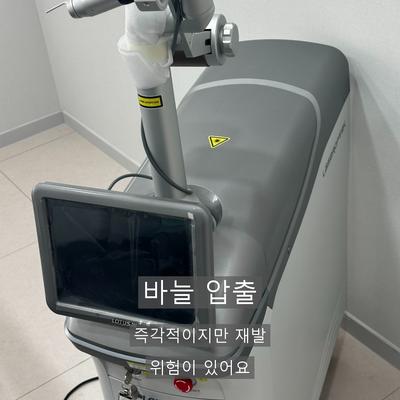
Extraction using a needle is the oldest method.
This method involves gently opening the surface of the keratin cyst with a sterilized needle and squeezing out the accumulated keratin.
The procedure time is short, and the bumps appear to disappear instantly, making it a highly preferred method.
However, if the cyst wall itself is not removed, keratin often refills in the same spot, leading to recurrence.
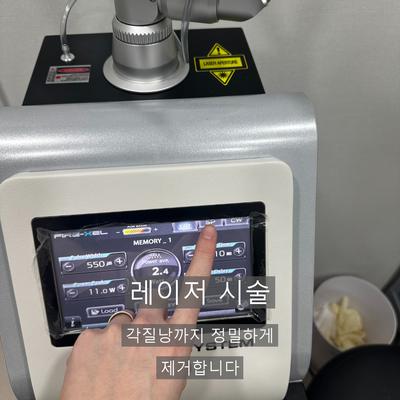
The laser method involves precisely removing the area containing the keratin cyst with an Er:YAG laser.
A distinctive feature is its lower recurrence rate compared to needle extraction, as it destroys the cyst wall along with the contents.
Using a laser with a narrow thermal damage zone can also help manage a relatively short downtime.
For thin, sensitive skin like around the eyes, a high-precision laser method can also be a safer choice.
Ultimately, milia treatment doesn't end with just squeezing out the bumps; the key is how thoroughly the keratin cysts are eliminated.
If you repeatedly squeeze them by hand at home or only perform simple extractions, the cysts often remain, reappearing in the same spot weeks later.
Regardless of whether you choose needle extraction or laser, the process of confirming complete cyst removal determines the outcome.
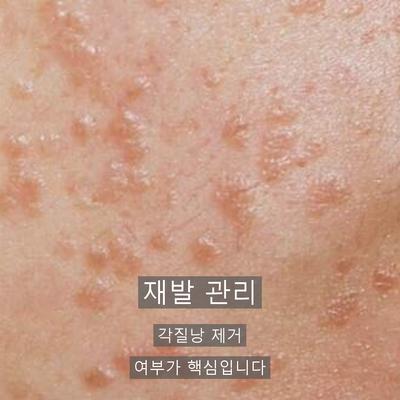
Skin lesions that look like small bumps are divided into several types besides milia, such as syringomas and sebaceous hyperplasia.
Even if they look similar, their causes and treatment approaches differ, so accurate differential diagnosis is the first step.
It's important to remember that not all small bumps frequently appearing under the eyes are milia.
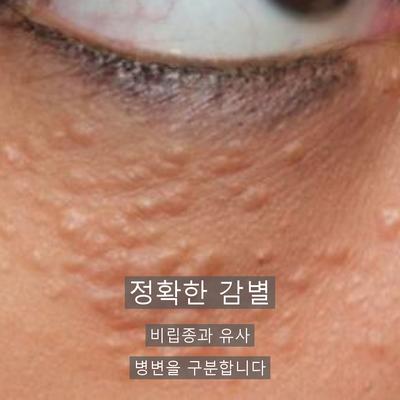
Laser treatment for milia is performed after local anesthesia and generally does not take a long time.
Immediately after the procedure, minor wounds remain, so it's common to manage them by applying a regeneration band.
Consistent sun protection and moisturizing can accelerate the recovery process.
The procedure is considered when lesions are concentrated in a specific area, their number increases, or makeup frequently clumps.
Pain is generally not significant with local anesthesia, and some redness may remain for a day or two after the procedure.
The number of sessions varies depending on the number and size of the lesions, and can be done by treating multiple lesions at once or by dividing the treatment into separate sessions.
To prevent recurrence, it's advisable to avoid excessive extraction or friction and continue moisturizing after the procedure.
Milia tend to appear more frequently when thick eye creams are used often around the eyes or when the skin barrier is thinned.
Milia can also repeatedly appear on skin that has been exposed to UV light for extended periods or has received frequent irritation without soothing.
Before the procedure, a consultation process is necessary to examine the location and number of lesions to determine whether laser or needle is more suitable.
For sensitive areas like under the eyes or close to mucous membranes, a precise laser approach is advantageous; for large and firm lesions, a method of first opening with a needle and then finishing with a laser is also utilized.
For the first day or two after the procedure, minimizing friction during face washing and avoiding irritating cosmetics helps with recovery.
It is recommended to start applying makeup thinly once the wound area begins to heal.
After laser treatment, checking for new lesions every two to three months also helps with recurrence management.
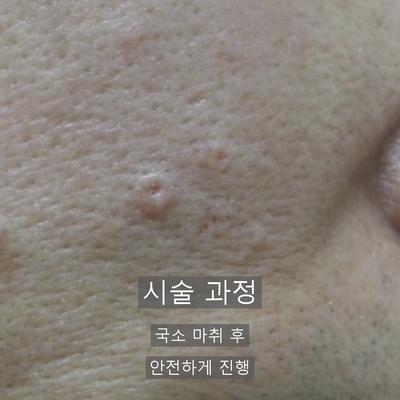
Kkeut Clinic's Precise Keratin Cyst Removal Expertise
Before starting treatment, Kkeut Clinic first differentiates whether the small bump-like lesions are true milia, syringomas, or sebaceous hyperplasia.
Milia are approached with simple removal, while lesions with different causes, such as syringomas and sebaceous hyperplasia, are managed separately with combined programs like Agnes treatment.
Even for similar-looking small bumps, approaching them identically without accurate differentiation makes it difficult to achieve desired results.
Because procedures are performed after accurate differentiation, unnecessary interventions are reduced, and management can be done in a way that lowers the possibility of recurrence.
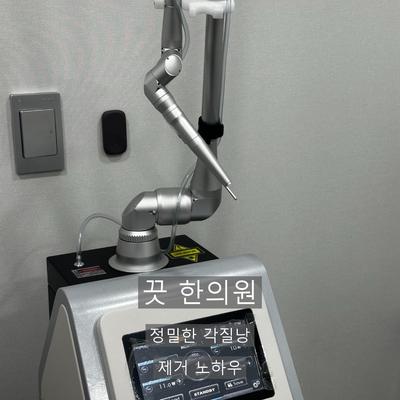
Kkeut Korean Medicine Clinic's milia treatment primarily uses an Erbium-YAG laser to ensure the complete destruction of the keratin cyst.
Considering that recurrence is common if the keratin cyst is not properly removed, we meticulously check each step of the procedure.
The Erbium-YAG laser's narrow thermal damage zone, which results in a short downtime, is another reason Kkeut Korean Medicine Clinic chooses this laser.
By confirming the location of each keratin cyst with every shot, Kkeut Korean Medicine Clinic aims to reduce the need for repeat visits to the same area.
Complete Keratin Cyst Removal Possible Thanks to Kkeut Korean Medicine Clinic
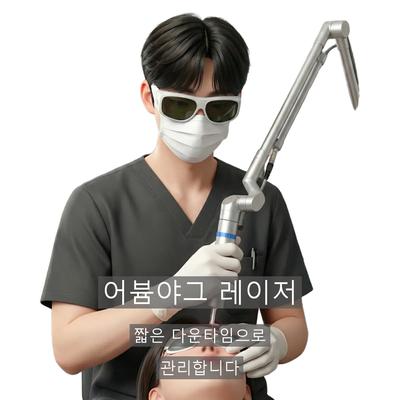
Kkeut Korean Medicine Clinic also pays close attention to post-treatment care.
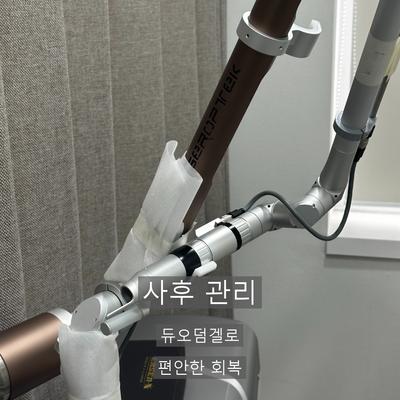
Instead of regular DuoDERM stickers, we use DuoDERM Gel, allowing even those with sticker allergies to experience a comfortable recovery period.
This method offers high satisfaction as it allows for comfortable management without the hassle of applying and removing stickers.
DuoDERM Gel leaves fewer marks on the skin and causes less irritation upon removal compared to stickers, making it comfortable to use even on sensitive areas like around the eyes.
At Kkeut Korean Medicine Clinic, we also monitor for any recurrence of lesions after the procedure and provide guidance on additional care if needed.
Frequently Asked Questions
Q. Which method is better for milia treatment, laser or needle?
A. Needle extraction provides immediate results but often leaves behind the keratin cyst, leading to easy recurrence. For milia treatment, the laser method, which destroys the keratin cyst, is more advantageous for recurrence management.
Q. What is the downtime after milia treatment?
A. Milia treatment using an Erbium-YAG laser generally has a short downtime, and recovery is faster with proper care using a regeneration band.
Q. Can I treat milia myself at home by squeezing them?
A. Squeezing milia by hand is not considered an effective milia treatment because the keratin cyst remains intact. It is safer to receive laser treatment at a clinic.
Q. Will milia not recur after receiving treatment?
A. While milia treatment that thoroughly destroys the keratin cyst significantly reduces the chance of recurrence, individual results may vary depending on post-treatment care.
The Sincerity of Kkeut Korean Medicine Clinic
Kkeut Korean Medicine Clinic provides differentiated results through accurate differential diagnosis.
Kkeut Korean Medicine Clinic enhances patient satisfaction by thoroughly destroying keratin cysts with an Erbium-YAG laser.
Kkeut Korean Medicine Clinic simultaneously pursues safety and effectiveness through meticulous aftercare using DuoDERM Gel.
A Subtle Difference, Distinct Results — Experience it at Kkeut Korean Medicine Clinic.
Related notes
Procedure notes worth reading next.


Loading menu…