

Milia Laser: Why You Should Remove the Entire Keratin Cyst with a Laser Instead of Squeezing It Beomgye, Pyeongchon, Beomgye Station, Pyeongchon Station, Hogye-dong, Bisan-dong, Gwanyang-dong, Dongan-gu, Indeogwon, Geumjeong, Anyang
6/20/2026
This is a procedure note for Milia Laser: Why You Should Remove the Entire Keratin Cyst with a Laser Instead of Squeezing It at Gyeonggi Anyang Beomgye KKEUT Korean Clinic.
Milia Laser Treatment: Why You Shouldn't Squeeze Them
Have you ever found small, white, millet-like bumps under your eyes or on your cheeks and tried to squeeze them out with your fingers or pop them with a needle?
If those are milia, squeezing them won't solve the problem.
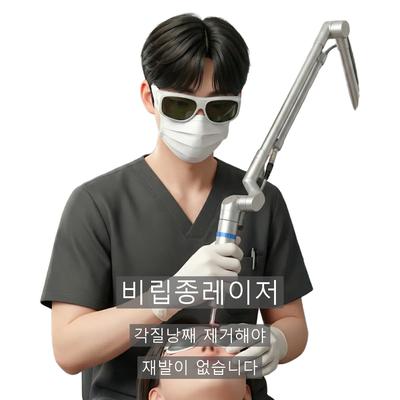
Milia are caused by small sacs formed by accumulated keratin under the epidermis, specifically keratin cysts (keratinous cysts).
Keratin cysts are firmly embedded in the skin. Even if you apply external pressure to squeeze out the contents, the cyst itself remains.
As long as the cyst remains, it will refill with keratin over time, and the milium will recur in the same spot.
Why squeezing at home is ineffective for milia
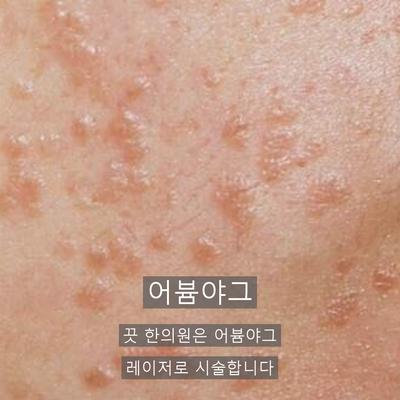
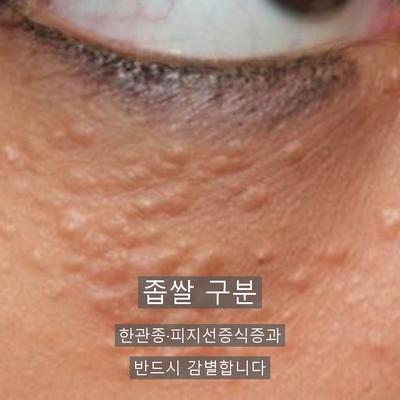
Milia are often confused with syringomas or sebaceous hyperplasia due to their similar appearance.
While all three appear as small, millet-like bumps on the skin, their causes and structures are entirely different.
Milia often form naturally without external stimuli and can occur in both newborns and adults.
They typically appear in areas with less sebum secretion, such as around the eyes, next to the nose, and on the cheeks, and have the form of slightly raised white granules on the skin's surface.
The contents are not oil, but a hard mass filled with keratin (a type of skin protein).
Even if you manage to extract the contents with a needle or your fingers, if the keratin cyst wall remains, it will refill in the same spot.

Repeated irritation to the skin during the extraction process also carries the risk of hyperpigmentation or scarring.
Extraction in unsanitary environments can also lead to secondary infections.
Medical Reasons Why Milia Laser Treatment is Necessary
To fundamentally eliminate milia, the keratin cyst itself must be destroyed.
Lasers precisely vaporize the skin's surface to directly access the keratin cyst and remove the cyst structure itself.
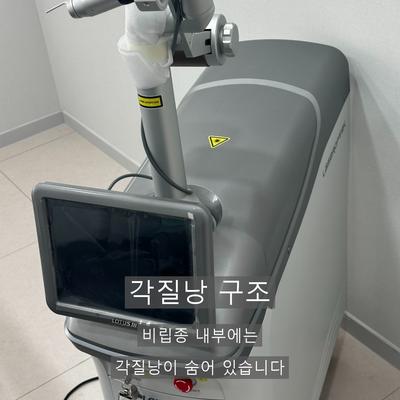
For milia laser treatment, Erbium-YAG (Er:YAG) laser is primarily used.
Erbium-YAG, with its 2,940nm wavelength, has a high absorption rate in tissue water, allowing for precise ablative resection and minimizing damage to surrounding healthy tissue.
Compared to CO2 lasers, it features a smaller range of thermal damage, resulting in shorter downtime and faster recovery.
The procedure itself is performed in a relatively short time, with the duration varying depending on the size and number of treatment areas.
After the procedure, small scabs will form on the treated area and naturally fall off within 1-2 weeks.
While the scabs are falling off, it is crucial to diligently apply sun protection and avoid touching or forcibly removing them.
Even during facial cleansing, ensuring that the treated area is not excessively stimulated is key to rapid recovery.
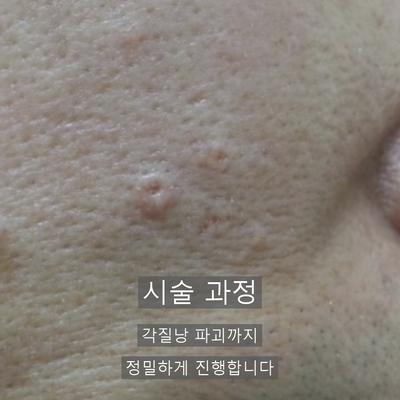
Milia can be removed in a single session, but new ones may form in different locations.
For individuals prone to keratin formation, early removal through regular management is effective.
Frequently Asked Questions
Frequently Asked Questions
Q. Is milia laser treatment very painful?
A. An anesthetic ointment is applied before milia laser treatment, so pain during the procedure is not severe. After the procedure, there may be a slight stinging sensation in the treated area, but it will subside within a few days.
Q. Can I return to daily life immediately after milia laser treatment?
A. Milia laser treatment has a relatively short downtime, and you can resume daily activities on the same day. Small scabs may form immediately after the procedure, but they can be covered with makeup, and you only need to focus on sun protection.
Q. Why should I get laser treatment for milia instead of squeezing them?
A. The cause of milia is a keratin cyst. Squeezing at home only removes the contents, leaving the cyst to recur. Milia laser treatment destroys the keratin cyst itself, resulting in a lower recurrence rate.
Q. Can milia around the eyes also be removed with a laser?
A. Although the area around the eyes has thin and sensitive skin, milia laser treatment is possible. However, accurate diagnosis and skilled application are essential before treatment, and the treatment method may vary depending on the location and size of the lesion.
Q. How do I distinguish between milia and syringomas?
A. Milia and syringomas have similar appearances, making differentiation difficult. Rather than self-diagnosing, it is important to receive an accurate differential diagnosis at a clinic. This is because the appropriate treatment method varies depending on the type of lesion.
The Sincerity of KKEUT Oriental Medical Clinic
Kkeut Korean Medicine Clinic accurately differentiates similar millet-like lesions such as milia, syringomas, and sebaceous gland hyperplasia, and approaches each with appropriate treatment.
Milia are treated with a simple removal procedure aimed at destroying the keratin cyst, while syringomas or sebaceous gland hyperplasia are treated separately with a dedicated program (in conjunction with Agnes) to remove the cause.
Treating all millet-like lesions identically without proper diagnosis can lead to recurrence.
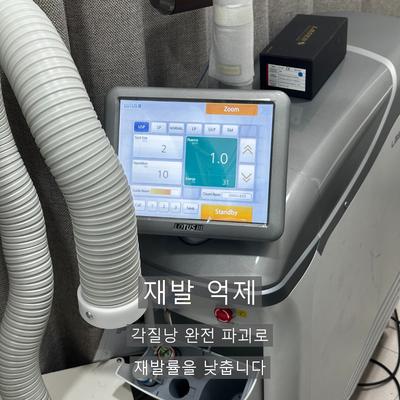
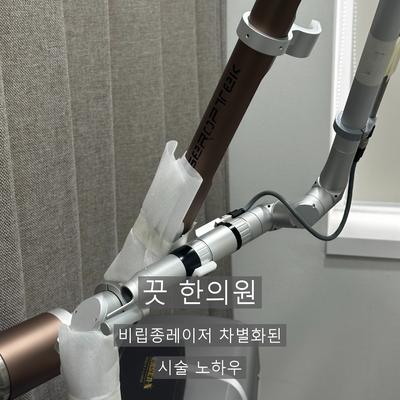
Kkeut Korean Medicine Clinic uses an Er:YAG laser for milia laser treatment.
Er:YAG is a suitable wavelength for reliably destroying keratin cysts with minimal downtime. It not only removes the surface but also eliminates the cyst structure itself, suppressing recurrence.
Effectively destroying the keratin cyst is the core of milia treatment, and Kkeut Korean Medicine Clinic performs procedures that adhere to this standard.
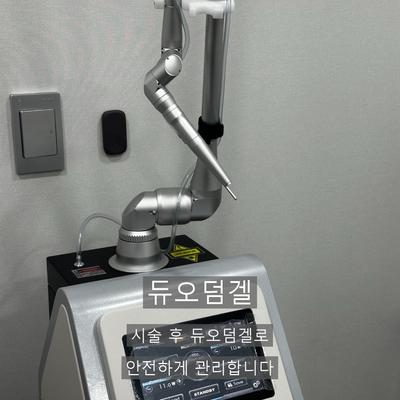
Kkeut Korean Medicine Clinic provides post-procedure care with Duoderm Gel.
It's a gel type, not a regular Duoderm sticker, so even those with sticker allergies can use it comfortably, and there's no hassle of peeling and sticking.
It keeps the treated area moist, helping with scab formation and recovery.
Different results with a subtle difference — Experience it at Kkeut Korean Medicine Clinic.
Related notes
Procedure notes worth reading next.

Effective Milia Removal: Opt for Er:YAG laser, avoid risky needle extraction.
2025. 9. 22.

3 Things to Consider Beyond the Cost of Milia Removal Around the Eyes
2026. 8. 18.

Recurring milia problem? Get spotless results with professional milia removal from between eyebrows and around the eyes.
2025. 12. 16.
Loading menu…