

Finger Wart Removal: Why You Should Hurry Before They Spread Beomgye, Pyeongchon, Beomgye Station, Pyeongchon Station, Hogye-dong, Bisan-dong, Gwanyang-dong, Dongan-gu, Indeogwon, Geumjeong, Anyang
9/7/2026
This is a procedure note for Finger Wart Removal: Why You Should Hurry Before They Spread at Gyeonggi Anyang Beomgye KKEUT Korean Clinic.
Many people who are concerned about warts on their fingers often find that symptoms begin as small bumps.
These lesions can be an early sign of flat warts caused by the human papillomavirus.
Warts occur when human papillomavirus, or HPV, enters the skin surface through tiny cracks.
Fingers are frequently touched and experience friction in daily life, making them an easy environment for viruses to penetrate.
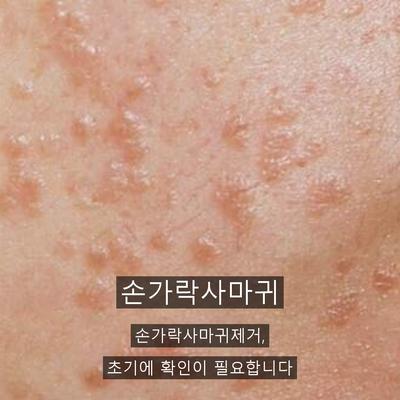
The problem is that wart lesions may not stay in one place but can spread.
If the lesions are repeatedly scratched or irritated, autoinoculation can occur, where the virus spreads to surrounding skin.
It's not uncommon for warts that start on one finger to spread to the back of the hand, around the nails, and even to the face.
Delaying the removal of finger warts can lead to an increase in the number of lesions and a wider area of invasion.
There's also a possibility of transmission through contact with others or shared items, making management more complex the longer it's left untreated.
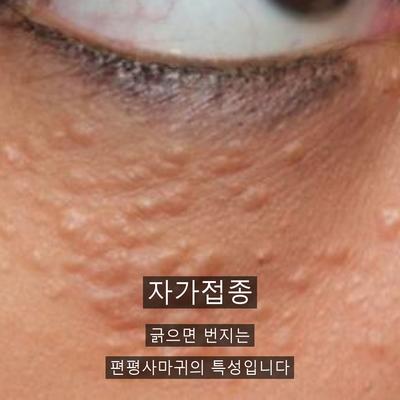
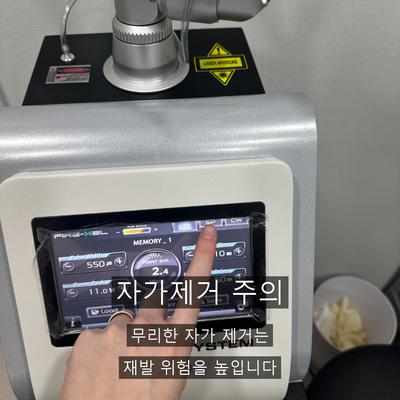
Many people try to remove warts themselves using nail clippers or tweezers.
However, these methods only remove the superficial part of the wart, making it difficult to eliminate the virus from the deeper layers of the skin where it resides.
On the contrary, there's a possibility that the virus could re-enter through the wounded area, leading to further spread of the wart.
Especially when immunity is low, wart lesions can spread even more rapidly.
For these reasons, finger warts are a condition that requires accurate diagnosis and professional laser treatment rather than self-management.
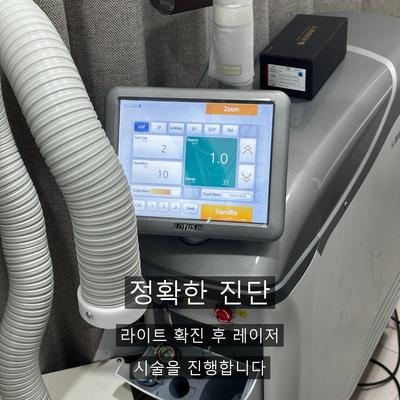
Medical institutions first go through a process of confirming whether the lesion is a flat wart or another skin condition.
Rather than relying solely on visual inspection, it is more accurate to decide on treatment after a clear diagnostic process.
Once the diagnosis is confirmed, removing the lesional tissue using a laser is the generally applied method.
It is important to carefully determine the laser irradiation range, considering not only the lesion surface but also areas where the virus may be latent in the surroundings.
If this range is not sufficiently wide, there is a risk of recurrence if invisible viruses remain.
Post-removal care also significantly impacts the outcome of wart treatment.
Keeping the wound area moist can aid healing and contribute to reducing the likelihood of scarring.
Fingers are a highly mobile area and frequently exposed to water, so meticulous aftercare is required compared to other body parts.
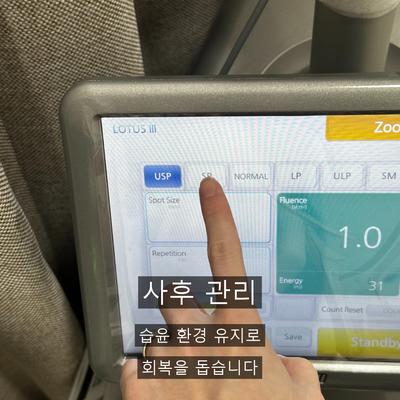
At Kkeut Clinic, during finger wart removal consultations, we carefully observe the lesions using a light and first confirm whether they are flat warts.
We do not rely solely on visual diagnosis but proceed with treatment after a clear diagnostic process.
Combined Erbium-YAG and CO2 Laser Method
Kkeut Clinic uses a method that combines Erbium-YAG laser and CO2 laser to remove wart lesions.
The Erbium-YAG laser can help reduce the recovery period burden after treatment, while the CO2 laser plays a role in managing latent viruses that may remain in surrounding tissues.
Since CO2 laser monotherapy can lead to a longer recovery period, Kkeut Clinic considers the patient's condition and appropriately uses both lasers in combination.
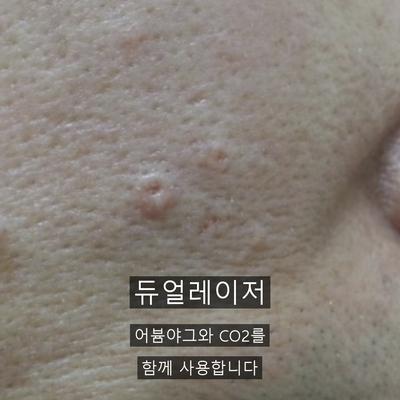
Considering the nature of viral lesions with the potential for recurrence, Kkeut Clinic applies a different fee policy.
Unlimited Treatment Policy Including Retouching
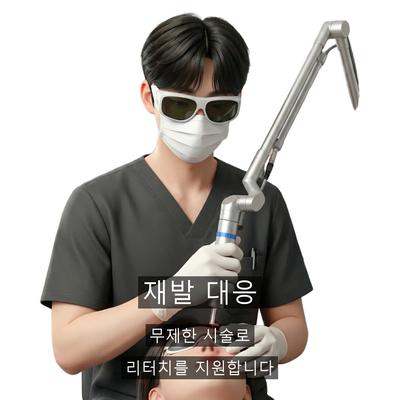
At Kkeut Clinic, when removing finger warts, our unlimited treatment policy allows for retouches without additional cost, even if they recur.
This can provide psychological peace of mind for those who feel the burden of recurrence due to a viral disease.
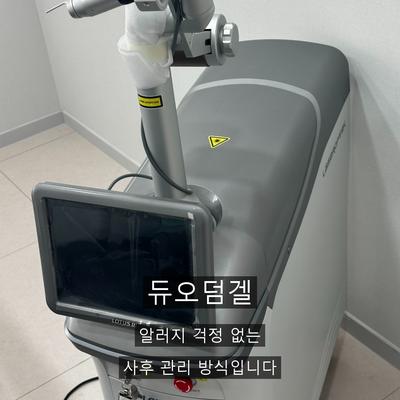
Post-wart removal care is also carried out using Kkeut Clinic's unique method.
By using Duoderm Gel instead of regular Duoderm stickers, we ensure that even those with sticker allergies can continue aftercare without discomfort.
Frequently Asked Questions
Q. Can finger wart removal be completed in a single treatment?
A. There may be differences depending on the size and extent of the wart. Considering the possibility of recurrence, Kkeut Clinic offers finger wart removal retouches under an unlimited treatment policy.
Q. Is there a possibility of scarring after finger wart removal?
A. By focusing treatment with an Erbium-YAG laser and combining it with Duoderm Gel for aftercare, wart removal can be performed while reducing the risk of scarring.
Q. What can happen if finger wart removal treatment is delayed?
If left untreated, finger warts can potentially spread to surrounding areas through autoinoculation. Therefore, considering finger wart removal in the early stages can help prevent the lesions from spreading.
Q. How much pain is there after finger wart removal?
Laser procedures are performed after anesthesia. On the day of finger wart removal, you may feel localized irritation at the treated area, but it is generally a mild discomfort rather than severe pain.
Ggeut Clinic's Sincerity
At Ggeut Korean Medicine Clinic, we accurately identify wart lesions through a light-based diagnostic process.
Through a dual laser approach using both Er:YAG laser and CO2 laser, Ggeut Korean Medicine Clinic strives to help with wart removal.
Ggeut Korean Medicine Clinic operates an unlimited re-touch policy, aiming to assist with the completion of the procedure through re-treatment if necessary.
With a meticulous approach, Ggeut Korean Medicine Clinic is dedicated to wart management.
Related notes
Procedure notes worth reading next.


Loading menu…