

Flat Wart Removal: Why It's Important to Treat Them Before They Spread Beomgye, Pyeongchon, Beomgye Station, Pyeongchon Station, Hogye-dong, Bisan-dong, Gwanyang-dong, Dongan-gu, Indeogwon, Geumjeong, Anyang
7/11/2026
This is a procedure note for Flat Wart Removal: Why It's Important to Treat Them Before They Spread at Gyeonggi Anyang Beomgye KKEUT Korean Clinic.
More and more people are recently considering flat wart removal on the body.
Often, small, flesh-colored bumps, like millet seeds, appear one by one on areas that frequently rub against clothing, such as the neck, arms, or legs, and people often neglect them, not knowing what they are.
Flat warts are skin lesions caused by human papillomavirus (HPV) infection, and it is common for people to watch them, believing they will disappear on their own over time, only to find them spreading instead.
There are also many cases where they are confused with other millet-like lesions and dismissed with self-diagnosis alone, so caution is required.
As the name suggests, flat warts are characterized by their flat and smooth raised surface.
As it is a viral disease, self-inoculation, where it spreads to surrounding skin through scratching or touching, easily occurs.
Flat warts on the body tend to spread faster than those on the face because they experience more frequent friction with clothing and are inadvertently touched by hands more often.
During periods of weakened immunity or when the skin barrier is compromised, lesions may also show a tendency to spread more rapidly.
Lesions on the body are often neglected because they are not noticeable, but the longer they are left untreated, the clearer the tendency for both the number and extent of lesions to increase.
Because of these characteristics, addressing body lesions when they are discovered early is a way to reduce the overall treatment period.
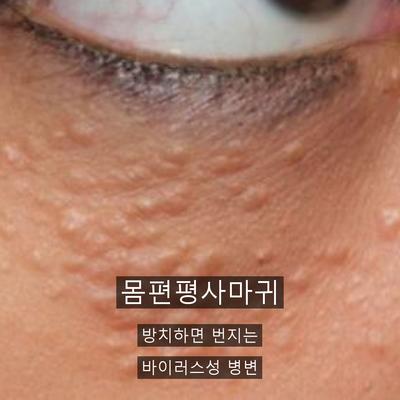
If lesions are removed when there are only one or two, the treatment area is small, and recovery is easier.
In areas where irritation is continuously applied, such as the neck, armpits, and inner arms/legs, if flat warts establish themselves, their spread accelerates noticeably.
This is why delaying flat wart removal on the body leads to an increase in the number of lesions and a wider treatment area.
For flat warts, early intervention determines the outcome.
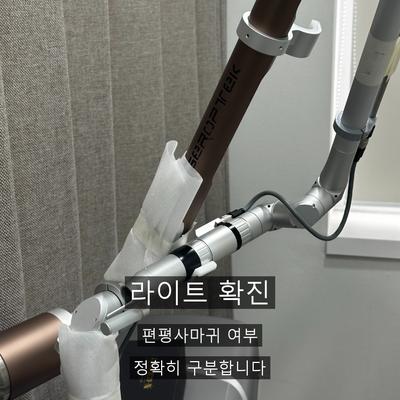
During the consultation phase, it is necessary to first illuminate the lesion with a light to definitively diagnose whether it is a flat wart or another millet-like lesion.
Based on appearance alone, it's easy to confuse them with other lesions like milia or skin tags, so if the diagnostic step is skipped, there's a risk that the procedure will proceed in the wrong direction.
If a procedure is performed based on arbitrary judgment without an accurate diagnosis, it can actually stimulate the lesion and accelerate its spread.
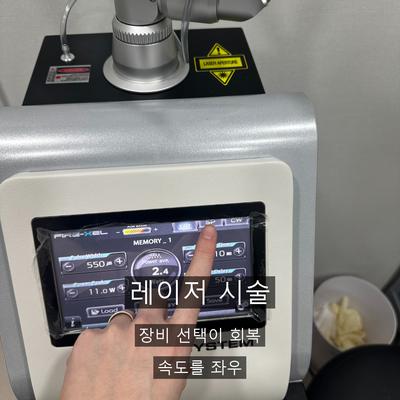
Once the diagnosis is complete, the procedure involves removing the lesion area with a laser after anesthesia.
Since recovery speed and recurrence suppression vary depending on the type of laser, the choice of equipment significantly impacts the outcome.
Erbium YAG lasers have a short downtime, while CO2 lasers have the characteristic of heat transfer to surrounding tissues, so the nature of the two devices is distinctly different.
Adjusting the laser intensity and irradiation method according to the treatment area and lesion depth also influences the results.
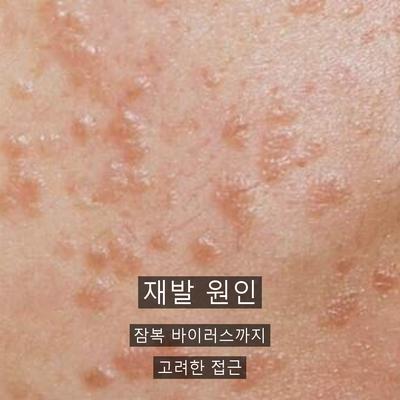
Flat warts are sometimes reported to recur even after removal because the virus remains latently hidden around the lesion, invisible to the naked eye.
If only visible bumps are removed, the pattern of lesions reappearing from latent areas will repeat.
Therefore, a treatment plan that also considers the areas surrounding the lesion plays an important role in reducing the recurrence rate.
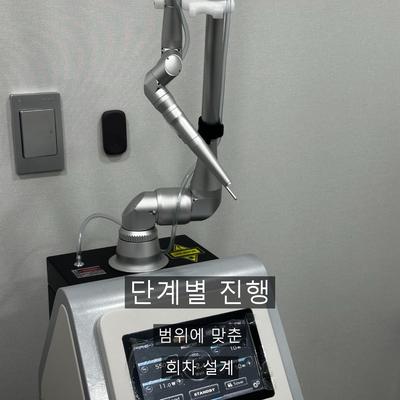
Flat wart removal on the body may be completed in a single session or divided into multiple sessions, depending on the number and extent of the lesions.
If the warts are widely spread, approaching them in stages by dividing the areas rather than removing them all at once is a way to reduce the risk of scarring.
Even if it's not a cosmetically sensitive area like the face, for widely spread lesions on the body, it is safer to perform the procedure in multiple sessions.
Treatment intervals are usually set between 2 and 4 weeks, checking the skin's recovery status before proceeding to the next stage.
The treatment area is numbed with an anesthetic cream before the procedure, so the discomfort from pain is not significant.
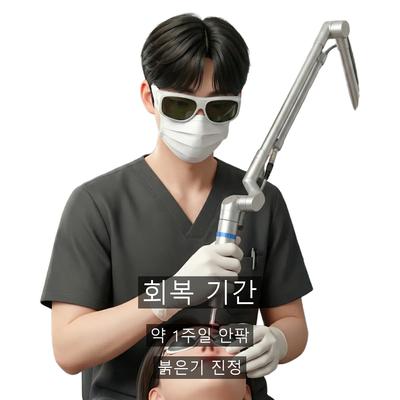
Immediately after the procedure, redness and tiny scabs appear, and recovery typically takes about one week.
If you pick or rub the scabbed area with your hands, it can lead to hyperpigmentation or scarring, so you should wait for them to fall off naturally.
When showering or washing your face, using a mild cleanser and avoiding irritating friction helps with recovery.
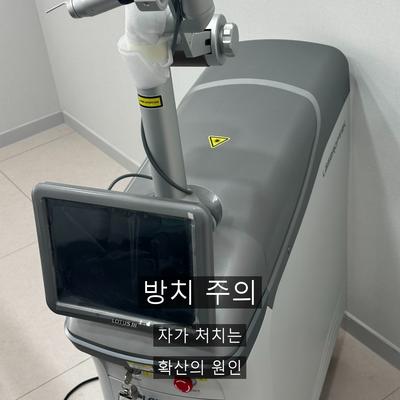
Although some people believe that flat warts will disappear on their own if removal is delayed, due to the nature of viral diseases, neglect often leads to spreading.
Self-treatment such as scratching or picking should be avoided as it can cause the warts to spread to surrounding skin.
Accessories that repeatedly rub against the skin, such as necklaces, shirt collars, and wristwatches, can also be factors that encourage the spread of lesions.
The habit of sharing towels, razors, and other items with family members or cohabitants can also be a transmission route, so it is best to use personal items separately.
Results Possible at Ggeut Clinic
Ggeut Clinic directly illuminates the lesion with a light for definitive diagnosis during consultations for body flat wart removal before designing the treatment.
This is why we go through a procedure that clearly distinguishes the condition from the diagnostic stage, rather than judging based solely on appearance.
By undergoing the light diagnostic procedure, we can prevent situations where other lesions like milia or skin tags are confused, leading to incorrect treatments.
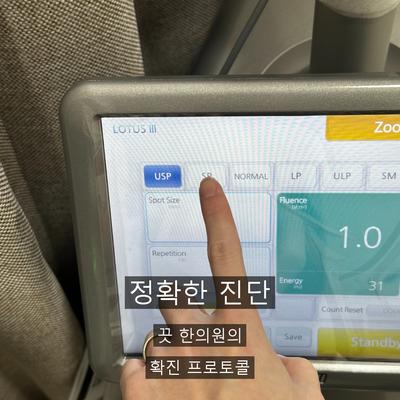
Kkeut Korean Medicine Clinic removes flat warts on the body using a dual laser method that combines Er:YAG and CO2.
We apply the principle of strategically utilizing the peripheral thermal damage caused by CO2 laser to burn away even hidden, invisible viruses.
As using CO2 alone tends to lengthen the recovery period, Kkeut Korean Medicine Clinic adheres to the principle of combining Er:YAG and CO2, tailored to the affected area and condition.
Kkeut Korean Medicine Clinic's Differentiated Treatment Know-how
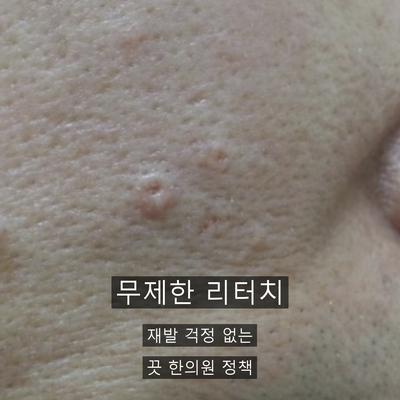
Kkeut Korean Medicine Clinic operates an unlimited retouch policy, meaning flat warts are removed again at no additional cost if they recur.
For patients with a high burden of recurrence due to the nature of viral diseases, this policy is a crucial factor enabling them to continue treatment with peace of mind.
Even with just one policy that reduces the burden of recurrence, the criteria for choosing treatment changes for patients who were hesitant.
After the procedure, the wound is managed with Duoderm gel to aid recovery without the hassle of peeling and sticking patches.
This principle is a strategic decision by Kkeut Korean Medicine Clinic to reduce downtime while simultaneously lowering the possibility of recurrence.
Frequently Asked Questions
Q. How long does flat wart removal on the body take?
A. It varies depending on the number and extent of lesions, but flat wart removal on the body usually shows noticeable changes even with a single session, and in cases of widespread warts, it is performed over multiple sessions.
Q. Can flat warts on the body recur after removal?
A. Recurrence is possible if dormant viruses remain, so treatment planning for flat wart removal on the body is crucial, considering even the surrounding areas. At Kkeut Korean Medicine Clinic, we offer retouches at no additional cost in case of recurrence.
Q. Will scars remain after flat wart removal on the body?
A. It varies depending on the size and depth of the lesion, but the risk of scarring from flat wart removal on the body can be minimized with appropriate equipment selection and post-procedure care.
Q. How much pain is involved in flat wart removal on the body?
A. The procedure is performed after applying anesthetic cream, so the pain during flat wart removal on the body is generally not severe.
The Sincerity of Kkeut Korean Medicine Clinic
Kkeut Korean Medicine Clinic provides differentiated results through a diagnostic stage where lesions are directly confirmed with a light.
Kkeut Korean Medicine Clinic enhances patient satisfaction through a dual laser method combining Er:YAG and CO2.
Kkeut Korean Medicine Clinic pursues both safety and effectiveness simultaneously through its unlimited retouch policy, offering no additional cost in case of recurrence.
A Subtle Difference, Different Results — Experience it at Kkeut Korean Medicine Clinic.
Related notes
Procedure notes worth reading next.


Loading menu…