

3 Key Criteria for Choosing a Mole Removal Clinic and the Principles of Recurrence-Free Treatment Beomgye, Pyeongchon, Beomgye Station, Pyeongchon Station, Hogye-dong, Bisan-dong, Gwanyang-dong, Dongan-gu, Indeogwon, Geumjeong, Anyang
8/21/2026
This is a procedure note for 3 Key Criteria for Choosing a Mole Removal Clinic and the Principles of Recurrence-Free Treatment at Gyeonggi Anyang Beomgye KKEUT Korean Clinic.
Many people visit dermatologists due to concerns about moles on their face or neck.
Moles are lesions whose treatment methods can vary depending on their size, color, and depth within the skin layers.
Shallow moles on the skin surface can be relatively easy to remove, but moles located deep in the dermis require considering different treatment methods.
Moles on areas that frequently rub against clothing, such as the neck or armpits, may grow larger or change shape due to continuous irritation.
For moles in these areas, removal is sometimes considered not only for cosmetic reasons but also to prevent changes due to skin irritation.
First, understand the type and depth of the mole
Moles can be classified into junctional nevi, compound nevi, intradermal nevi, etc., depending on their location.
Junctional nevi are located at the border between the epidermis and dermis, making them relatively shallow, while intradermal nevi are located deep within the dermis and can be considered to have deep roots.
Moles that protrude above the skin usually have tissue formed deep into the dermis, making recurrence highly likely if simply squeezed or tied off with a thread.
Accurately determining the depth of the mole is a crucial step in reducing the risk of recurrence.
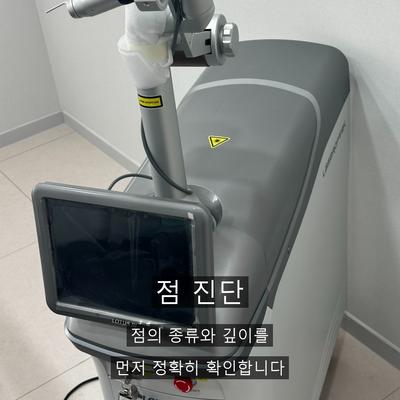
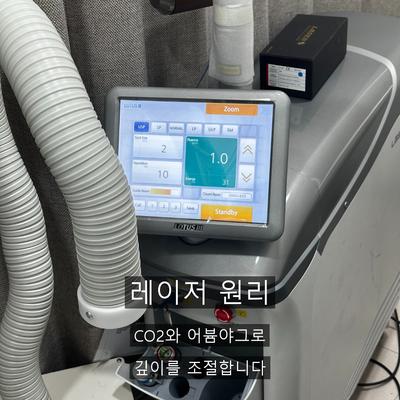
CO2 Laser and Er:YAG Laser, delicately adjusting the depth of moles
The main devices used for mole removal are the CO2 laser and the Er:YAG laser.
The CO2 laser works by evaporating water within tissues to precisely remove the epidermis and dermis of the skin.
Compared to the CO2 laser, the Er:YAG laser causes less thermal damage to surrounding tissues, allowing for relatively faster recovery and reducing the risk of scarring.
Carefully adjusting the laser intensity and number of treatment sessions, considering the depth of the mole, is a crucial part of the procedure.
While shallow moles can be expected to improve with just epidermal removal, moles deeply embedded in the dermis require gradual tissue removal over several sessions to reduce the possibility of recurrence.
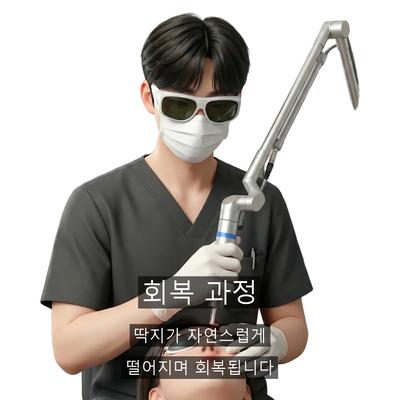
Procedure Process and Recovery Care
Mole removal procedures are performed by applying a topical anesthetic ointment and then using a laser to remove the target tissue. The procedure time may vary depending on the size and number of moles.
Immediately after the procedure, slight redness or minor oozing may occur. In most cases, scabs naturally fall off after about 1-2 weeks, and recovery takes place.
It is advisable to be careful when washing your face for about 1-2 days after the procedure to prevent external contaminants from touching the treated area.
During the recovery period after the procedure, you should pay attention to sun protection to prevent pigmentation and ensure clean healing.
Forcibly removing scabs can lead to scarring, so it is important to let them fall off naturally.
Starting makeup after the scabs have completely fallen off and the skin has stabilized helps minimize irritation.
Factors Influencing Recurrence and Scarring
Recurrence after mole removal can occur if the procedure is completed without adequately removing the mole's root tissue.
If the procedure is performed excessively deep to avoid recurrence, the risk of unwanted scarring or hyperpigmentation may increase.
While reducing recurrence and preventing scars may seem like opposing goals, a balanced outcome can be expected through accurate assessment of mole depth and precise control of laser equipment.
The recovery speed and extent of hyperpigmentation after the procedure may vary depending on individual skin type and mole characteristics.
If hemostasis is not adequately achieved during the procedure, wound healing may be delayed, or scarring may occur.

Considerations When Choosing a Dermatology Clinic for Mole Removal
When choosing a dermatology clinic for mole removal, it is advisable to carefully consider several factors.
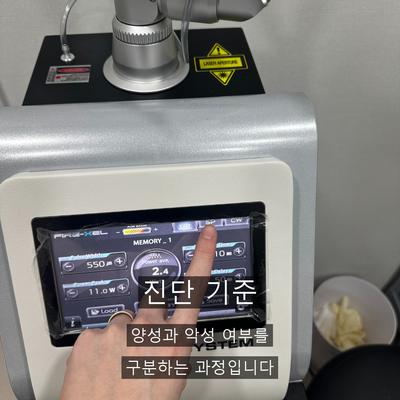
First, it is important to confirm whether a diagnostic process is performed before the procedure to differentiate between benign and malignant moles.
There are cases where what appears to be a mole is actually another skin lesion or has the potential to be a malignant tumor. Therefore, if suspicious findings are detected, it is advisable to check if the clinic has a system in place to refer patients to a higher-level medical institution.
Second, you should check if the clinic flexibly utilizes various laser devices tailored to the characteristics of the mole, such as its depth and location.
It is advisable to consider whether the burden of recovery can be reduced by using Er:YAG lasers in conjunction with CO2 laser treatment, rather than CO2 laser alone.
Experience in procedures for areas requiring delicate approaches, such as around the eyes or protruding moles, can also be an important criterion when choosing a dermatology clinic.
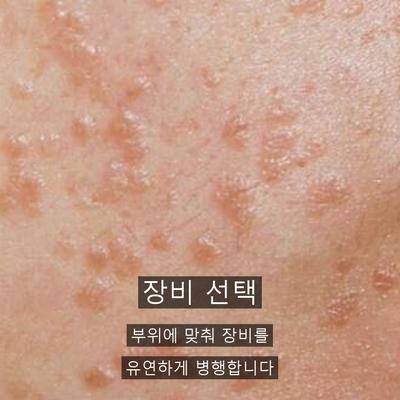
Third, check the post-procedure wound care methods.
Maintaining a moist environment in the treated area during wound healing can help reduce the occurrence of scars.
A clinic that uses less irritating gel-type dressings rather than typical sticker-type dressings may be more beneficial for aftercare.
Receiving sufficient guidance in advance about dressing change cycles and wound changes is also a good management method.
Kkeut Oriental Medicine Clinic's Mole Removal Approach
Kkeut Oriental Medicine Clinic diagnoses and treats various types of moles.
We consider a wide range of mole removal treatments, including raised moles and those in delicate areas like around the eyes, where precise access is required.
If a lesion appearing to be a mole is suspected of being malignant, our clinic immediately refers the patient to a higher medical institution. We prioritize patient safety above simply performing cosmetic procedures.
During pre-treatment consultation, we provide detailed information about the mole's location and depth. We then decide on the appropriate treatment plan together with the patient.

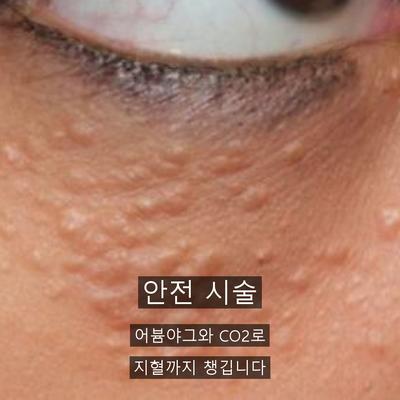
We primarily use Er-YAG laser to minimize the burden of recovery after treatment. If necessary, we also use CO2 laser in conjunction to manage meticulous hemostasis.
Using these two devices together appropriately helps manage bleeding and contributes to keeping the treated area clean.
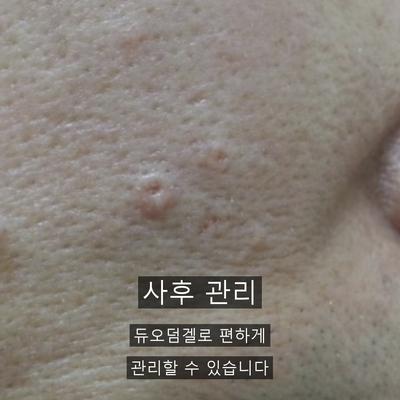
For post-treatment care, we use Duoderm Gel instead of typical Duoderm stickers.
This reduces the hassle of applying and removing stickers, and those with sticker allergies can use it with relative comfort.
Things You Might Be Wondering About
Q. Will mole removal treatment leave scars?
A. By adjusting laser energy according to the mole's depth and shape, the possibility of scarring can be reduced. Our clinic precisely assesses the depth of the mole to avoid unnecessary or excessive treatment.
Q. When choosing a clinic for mole removal treatment, what should I prioritize?
A. It is crucial to ensure there is a process for accurately diagnosing whether a mole is benign or malignant. If there are findings suspected of malignancy, our clinic immediately refers the patient to a higher medical institution, prioritizing patient safety above all else.
Q. Is it possible to remove raised moles while reducing the possibility of recurrence?
A. By meticulously removing the mole's root tissue, the possibility of recurrence can be lowered. Our clinic uses Er-YAG and CO2 lasers tailored to the patient's condition to remove raised moles.
Q. How is wound care managed after treatment?
A. Dressings that maintain a moist environment after treatment help reduce the likelihood of scarring. Our clinic uses Duoderm Gel to enhance convenience in patients' post-treatment care.
Kkeut Oriental Medicine Clinic's Medical Philosophy
Kkeut Oriental Medicine Clinic offers a range of treatments covering various types of moles, and through this, we strive to present appropriate options to our patients.
We operate a safety protocol that refers patients to higher institutions when malignancy is suspected, striving to ensure patients can receive treatment with peace of mind.
Meticulous post-treatment care using Duoderm Gel is our clinic's policy, focusing on achieving positive treatment outcomes while prioritizing safety.
Experience individualized and meticulous care at Kkeut Oriental Medicine Clinic.
Related notes
Procedure notes worth reading next.


Loading menu…