

Scalp mole removal, even moles between hairs can be removed without scarring? Beomgye, Pyeongchon, Beomgye Station, Pyeongchon Station, Hogye-dong, Bisan-dong, Gwanyang-dong, Dongan-gu, Indeogwon, Geumjeong, Anyang
6/18/2026
This is a procedure note for Scalp mole removal, even moles between hairs can be removed without scarring? at Gyeonggi Anyang Beomgye KKEUT Korean Clinic.
Many people hesitate to decide on scalp mole removal, even while considering it.
Even though they might think, 'It's hidden among my hair, so do I really need to remove it?', repeated experiences of it getting caught when brushing or bleeding when scratched by a razor often lead them to seek removal.

The problem is that the scalp's structure differs from that of the face.
It's not an area that can be easily treated at just any clinic because hair follicles are densely packed, blood vessels are abundant leading to easy bleeding, and hair obstructs the treatment view.
The first things to check for scalp mole removal are the 'type of laser' and the 'method of bleeding control'.
Scalp Moles: How They Differ from Facial Moles
The scalp's skin is thinner than that of the face, and its subcutaneous blood vessel distribution is much denser.
If bleeding occurs the moment the laser is applied, the treatment area becomes contaminated, and continuing the treatment in this state can widen the area of thermal damage, increasing the risk of scarring.
Therefore, hemostatic capability in scalp mole removal is not just a matter of convenience; it is a critical factor that directly determines the quality of the outcome.
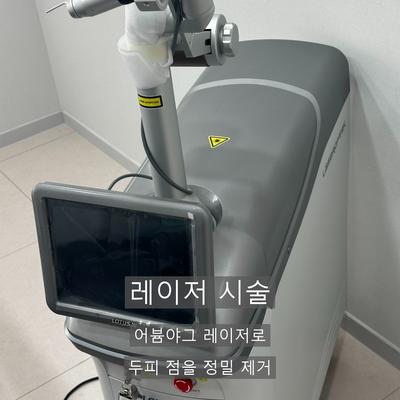
The type of mole also needs to be identified.
Scalp moles are broadly categorized into three types: flat pigmented moles, raised moles protruding above the scalp, and deep-rooted moles extending below the scalp.
Since the type of laser and depth of application vary depending on the mole type, treating them uniformly without prior assessment can lead to recurrence or scarring.
Erbium YAG and CO2 — Why Use Both Together?
Two names frequently encountered in mole removal lasers are Erbium YAG (Er:YAG) and CO2.
Erbium YAG precisely vaporizes tissue with very minimal thermal damage to surrounding areas.
It offers fast skin recovery and a short downtime, making it primarily used for sensitive areas like the scalp.
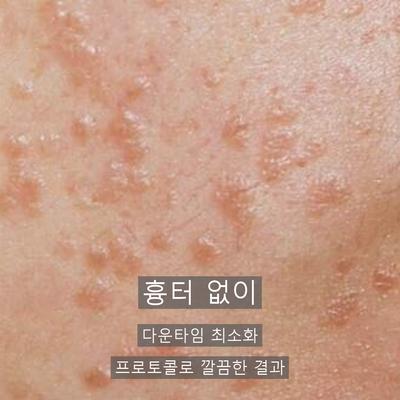
CO2 lasers have strengths in both tissue incision and hemostasis.
While using it alone can cause heat to spread to surrounding tissues, potentially leading to a longer downtime, combining it with Erbium YAG allows for leveraging the advantages of each.
This method involves precisely removing mole tissue with Erbium YAG and immediately stopping bleeding in the treated area with CO2, keeping the treatment surface clean.
This combination is crucial for scalp mole removal because a clean treatment surface directly enables precise application in the challenging environment of the scalp where visibility is often limited.

Scalp Moles, Don't Try to Remove Them Yourself
Attempts to remove them at home with fingernails or by tying them off with thread carry a high risk of infection and scarring.
The scalp is an area where hair follicles are densely packed, so inflammation can damage surrounding follicles and lead to hair loss.
Commercially available mole removal creams are also not recommended for application on the scalp due to the risk of follicle irritation and hyperpigmentation.

Another reason to have scalp moles removed at a clinic is to check for malignancy.
Scalp moles often appear in areas frequently exposed to sunlight, and if they are uneven in color, have irregular borders, or are larger than 6mm, specialist differentiation should precede any approach as a simple cosmetic procedure.
It is important to choose a facility with a safety system in place to check for suspected malignancy before treatment, and, if necessary, to refer you immediately to a higher-level institution.
Scalp Care After Treatment
One of the most inconvenient aspects after scalp mole removal is post-treatment care.
While adhesive dressings can be easily applied and removed on the face, they can get tangled in hair or cause pain during removal on the scalp.
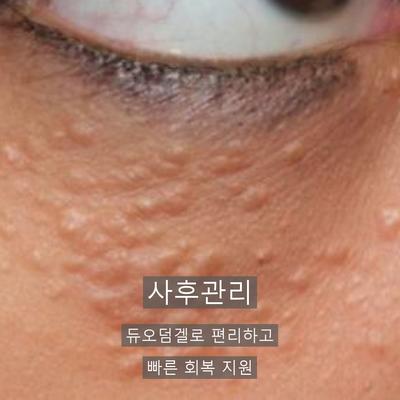
For this reason, the choice of dressing after scalp mole removal greatly influences the convenience of recovery.
Gel-type dressings eliminate the hassle of peeling and sticking like stickers, and they don't get tangled in hair, making them suitable for scalp procedures.
Even individuals with dressing allergies can use gel-type dressings relatively comfortably due to their different skin contact method.
For 1-2 weeks after the procedure, special attention should be paid to UV protection.
As the scalp is directly exposed to sunlight, protecting the treated area with a hat or UV protection spray can reduce the risk of hyperpigmentation.
As a general rule, face washing and shampooing should follow the guidance of the medical staff based on the condition of the treated area.
Generally, it is advisable to avoid direct water contact for 1-2 days immediately after the procedure, and it is recommended not to rub the treated area while the dressing is in place.

Frequently Asked Questions
Q. Do I need to shave my hair for scalp mole removal?
A. While a small amount of hair around the mole may be trimmed during scalp mole removal, most procedures involve minimal trimming of hair around the treatment area. Extensive shaving is rarely required.
Q. Can scars form after scalp mole removal?
A. The downtime and risk of scarring after scalp mole removal vary depending on the laser method. Erbium-YAG-focused procedures involve less damage to surrounding tissue, lowering the risk of scars, but if post-procedure care is neglected, hyperpigmentation or micro-scars may remain. Adhering to post-care guidelines is important.
Q. When can I wash my hair after scalp mole removal?
A. Immediately after scalp mole removal, it is important to avoid getting water on the treated area. Generally, you can carefully shampoo after 1-2 days, and it is recommended to gently rinse the treated area without rubbing. Always prioritize the instructions from your medical team.
Q. How can I tell if a scalp mole is malignant?
A. If a mole is uneven in color, has irregular borders, is larger than 6mm, or has changed rapidly recently, differentiation is essential before scalp mole removal. Before proceeding with scalp mole removal, check if the clinic has a referral system to a higher institution in case malignancy is suspected.

The Sincerity of KKEUT Clinic
KKEUT Clinic minimizes downtime with Erbium-YAG-focused procedures and uses a CO2 laser concurrently for hemostasis, always ensuring a clean treatment area for scalp mole removal.
KKEUT Clinic can treat challenging areas such as raised moles and those near the eyes, and operates a safety protocol that immediately refers suspected malignant moles to a higher institution.
KKEUT Clinic uses Duoderm Gel instead of regular dressing stickers, allowing for convenient and safe post-care even in hairy areas like the scalp.
A Subtle Difference, A Distinct Result — Experience it at KKEUT Clinic.
Related notes
Procedure notes worth reading next.


Loading menu…