

Is at-home mole removal really possible? The real reasons it's difficult... Beomgye, Pyeongchon, Beomgye Station, Pyeongchon Station, Hogye-dong, Bisan-dong, Gwanyang-dong, Dongan-gu, Indeogwon, Geumjeong, Anyang
5/12/2026
This is a procedure note for Is at-home mole removal really possible? The real reasons it's difficult... at Gyeonggi Anyang Beomgye KKEUT Korean Clinic.
At-Home Mole Removal: Is it Really Possible?
You can easily find at-home mole removal pens, medications, and moxibustion products online.
They are often inexpensive and have countless reviews.
However, many people visit our clinic after attempting at-home mole removal, only to find their skin condition has worsened or the mole has grown larger.
We'll explain why it's difficult and the real reasons behind it.
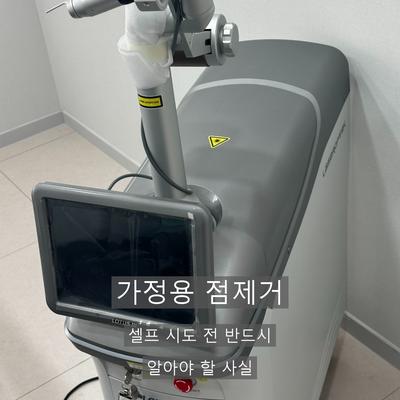
The Biggest Limitation of At-Home Devices — Inability to Control Depth
Moles are not only in the epidermal layer.
Moles where melanin pigment cells are distributed deep into the dermal layer cannot be resolved by merely burning the surface.
At-home mole removal pens work by burning the skin's surface using high-frequency or plasma methods, but precisely controlling the penetration depth to a medical standard is structurally impossible.
If it's too shallow, pigment cells remain and recur; if it goes too deep, dermal damage can lead to scarring.

Hospital lasers adjust the wavelength and energy density to match the mole's depth and size.
Erbium-YAG (Er:YAG) lasers have a high water absorption rate, precisely vaporizing tissue and minimizing thermal damage to surrounding normal tissue.
This precision is an area that cannot be achieved with at-home devices.
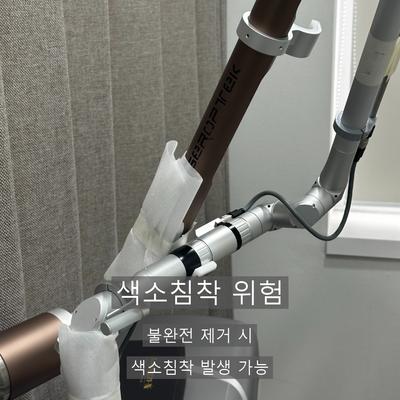
Hyperpigmentation — The Most Common Result of Incomplete Removal
The reason hyperpigmentation occurs after attempting at-home mole removal is clear.
If skin damage occurs without completely removing pigment cells, melanin production can become overactivated.
Exposure to UV light or the wound healing process can lead to post-inflammatory hyperpigmentation (PIH), where the pigment becomes darker.
Ultimately, attempting to remove one mole can result in a larger area of pigmentation.
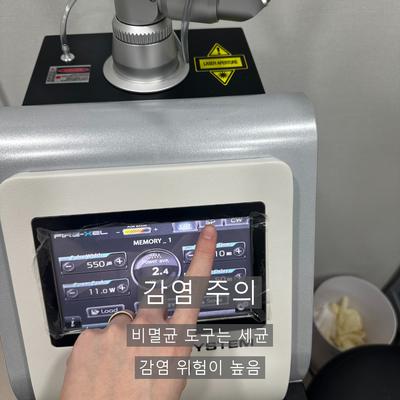
Infection issues also cannot be overlooked.
At-home devices do not provide a sterile environment comparable to a medical institution.
If the skin is intentionally wounded and then exposed to bacteria, secondary infections such as folliculitis or cellulitis can occur, and if scars remain after infection, recovery becomes much more difficult.
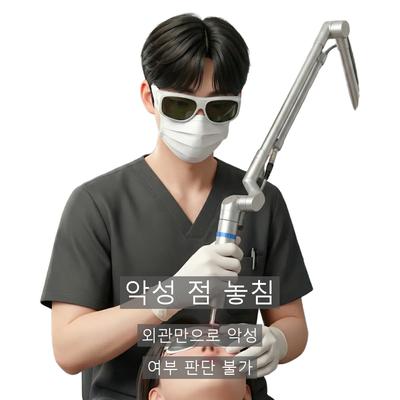
Why You Should Never Self-Diagnose at Home — Malignant Moles
There is a separate, most dangerous aspect of at-home mole removal.
Malignant melanoma or basal cell carcinoma, which are difficult to distinguish from common moles with the naked eye, can exist.
If such moles are burned with an at-home device or corroded with chemicals, the lesion tissue is damaged, making an accurate diagnosis impossible thereafter.
Missing the diagnostic timing can alter the treatment prognosis.
This is why a specialist must confirm the nature of the lesion before removing a mole.
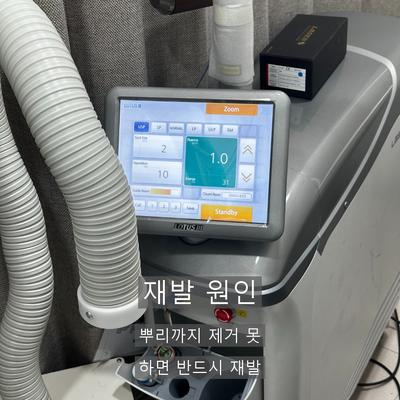
Recurrence is also an unavoidable problem.
The pigment cells of moles often extend like roots beneath the epidermis.
At-home mole removal, which only burns the surface, often fails to reach these roots, and the mole reappears over time.
Recurrent moles often have a more complex tissue state than the first removal, making them more difficult to treat.
Why Kkeut Korean Medicine Clinic's Mole Removal is Different
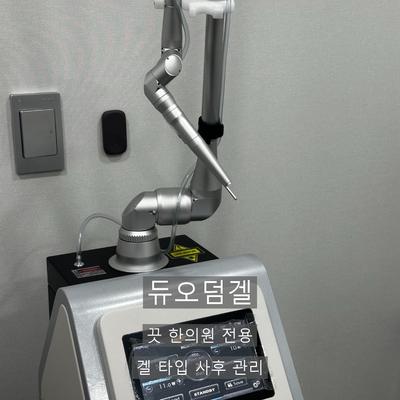
Kkeut Korean Medicine Clinic utilizes both Erbium-YAG and CO2 lasers.
While the Erbium-YAG precisely vaporizes pigment cells, the CO2 laser is used concurrently for hemostasis to ensure a clean treatment surface.
Our goal is complete removal while minimizing downtime.
Protruding moles and those in tricky areas like near the eyes can also be treated.
There's also a difference in aftercare.
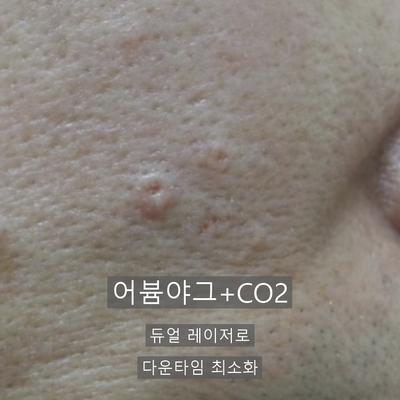
Kkeut Korean Medicine Clinic uses DuoDerm gel instead of standard DuoDerm stickers.
There's no hassle of peeling and sticking like with stickers, and even those with allergies to DuoDerm stickers can use it without concern.
Frequently Asked Questions
Q. I used a home mole removal pen, but the mole reappeared. Why is that?
A. Home mole removal devices typically only burn the skin's surface and often fail to reach the root of the pigment cells. When these remaining cells resurface, the mole reappears. At Kkeut Clinic, we use Erbium YAG and CO2 dual lasers to precisely remove the mole down to its root, reducing the chance of recurrence.
Q. The color seems to have darkened after home mole removal. Is this normal?
A. If skin damage occurs after incomplete removal, melanin production can become overactive due to inflammation. This is called post-inflammatory hyperpigmentation (PIH), a common side effect of home mole removal. At Kkeut Clinic, we systematize wound care with DuoDerm gel after the procedure to reduce the risk of hyperpigmentation.
Q. How can I tell if a mole is malignant? Do I need to check before using a home mole removal device?
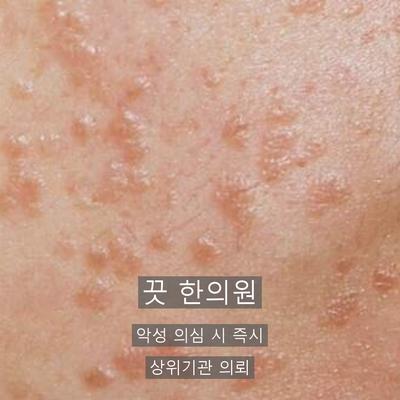
A. It is very difficult to determine malignancy solely by visual inspection. Damaging the lesion tissue with a home mole removal device can make accurate diagnosis challenging afterward. Kkeut Clinic has a safety protocol in place to immediately refer any suspicious moles to a higher medical institution.
Q. Can raised moles also be removed with a home mole removal device?
A. Raised moles often have thicker tissue and deeper roots than flat moles. Complete removal with a home mole removal device is more difficult, and there's a higher risk of scarring or recurrence. At Kkeut Clinic, we safely treat challenging areas, including raised moles and those near the eyes, with lasers.
Kkeut Clinic's Sincere Approach
Kkeut Clinic utilizes Erbium YAG and CO2 dual lasers to achieve precise depth control and hemostasis simultaneously, providing mole removal results with minimal downtime.
Instead of standard stickers, Kkeut Clinic applies DuoDerm gel for aftercare, promoting comfortable wound healing without allergy concerns.
If a suspicious mole is found, Kkeut Clinic immediately activates a referral protocol to a higher medical institution, prioritizing patient safety beyond aesthetic procedures.
A subtle difference, a significant result — Experience it at Kkeut Clinic.
Related notes
Procedure notes worth reading next.


Loading menu…