

Removing Café au Lait Spots: Why Laser Choice Varies with Pigment Depth Beomgye, Pyeongchon, Beomgye Station, Pyeongchon Station, Hogye-dong, Bisan-dong, Gwanyang-dong, Dongan-gu, Indeogwon, Geumjeong, Anyang
6/25/2026
This is a procedure note for Removing Café au Lait Spots: Why Laser Choice Varies with Pigment Depth at Gyeonggi Anyang Beomgye KKEUT Korean Clinic.
The approach to café-au-lait spots on the skin varies completely depending on the location and depth of the pigment. If you are considering removing café-au-lait spots, the key is to accurately determine 'whether the pigment is in the epidermis or the dermis' before focusing on 'which laser to use'.
Café-au-lait Spots: Why Pigment Depth Matters
Café-au-lait spots are pigmentary lesions caused by the abnormal accumulation of melanin pigment in the skin. Depending on whether this pigment remains in the epidermal layer or has penetrated deep into the dermal layer, the laser wavelength and output strategy will vary.
Pigment located in the epidermis responds most strongly to 532nm wavelength lasers. 532nm is a wavelength that matches the absorption peak of melanin pigment, allowing energy to be selectively concentrated on the pigment particles, efficiently destroying the pigment while minimizing damage to surrounding tissues.
On the other hand, pigment that has descended into the dermal layer requires lasers with deeper penetration, such as the 1064nm wavelength. If both epidermal and dermal pigments are present, both wavelengths must be used in the correct sequence. Incorrect wavelength selection can stimulate the pigment, leading to a risk of post-inflammatory hyperpigmentation (PIH).
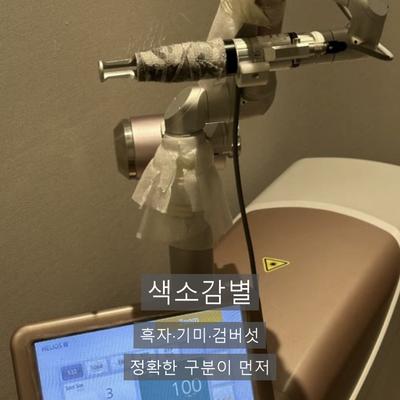
Differences Between Café-au-Lait Spots, Lentigines, and Seborrheic Keratosis
Café-au-lait spots can easily be confused with lentigines, melasma, and seborrheic keratosis to the naked eye. However, these conditions differ in their location of occurrence, activity state of pigment cells, and treatment response.
Lentigines are pigmentary lesions characterized by the proliferation of melanocytes in the epidermal basal layer, and they respond best to 532nm wavelength lasers. Melasma is a state of chronic overactivity of melanocytes, and aggressive laser treatment can actually induce rebound hyperpigmentation, making delicate energy control essential. Seborrheic keratosis belongs to the seborrheic keratosis family, where epidermal cells themselves overproliferate, thus requiring different types of lasers and irradiation methods.
The treatment plan for café-au-lait spots changes depending on which of these three conditions they are accompanied by. Without accurate differentiation, laser irradiation may be ineffective or lead to worsening hyperpigmentation.
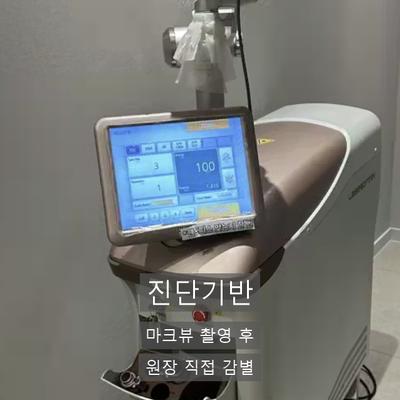
Procedures Without Diagnosis Cause Hyperpigmentation
The reason why the diagnostic stage is crucial for pigmentary lesions is clear. If a practitioner irradiates with a laser without accurately understanding the type and depth of the pigment, instead of the initially intended pigment destruction, surrounding skin irritation intensifies, and melanocytes become even more activated.
This can lead to post-inflammatory hyperpigmentation (PIH: inflammatory hyperpigmentation after treatment), appearing as a darker brown reaction in the treated area than before. Once PIH sets in, it can take several months to recover, and in some skin types, it may persist for a long time.
For this reason, before proceeding with café-au-lait spot removal, lesion photography using specialized diagnostic equipment and direct differentiation by the director must precede the treatment.
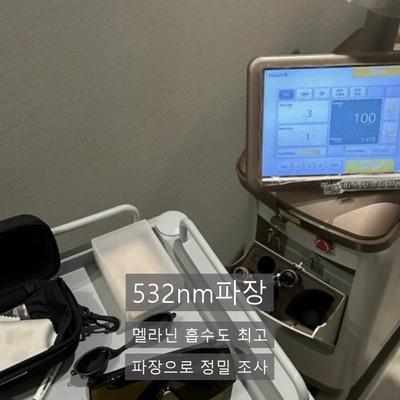
Rationale for Choosing 532nm Wavelength for Epidermal Pigmentary Lesions
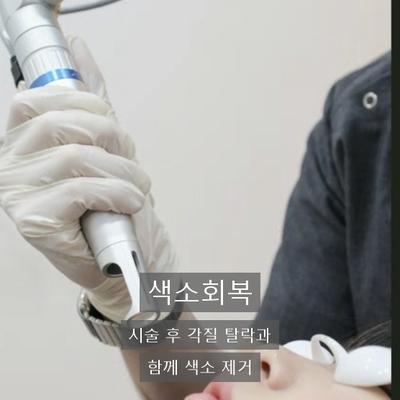
In laser procedures, wavelength is a key variable that determines the treatment goal. The 532nm wavelength is located in the region of the melanin pigment's light absorption spectrum where absorption is highest. When this wavelength is irradiated, melanin particles strongly absorb energy, leading to their decomposition and destruction, while minimizing impact on surrounding collagen or vascular tissues.
Pigments of the lentigo and freckle family located in the epidermal layer precisely match the penetration depth of the 532nm wavelength. Since the wavelength does not exceed this depth, only the pigment can be selectively targeted without unnecessary dermal stimulation.
532nm is a wavelength that has been clinically proven for a long time in the field of pigment lasers, including Revlite and Ruby series. The 532nm laser used at Kkeut Oriental Medical Clinic meets the same wavelength standards as these types of devices.
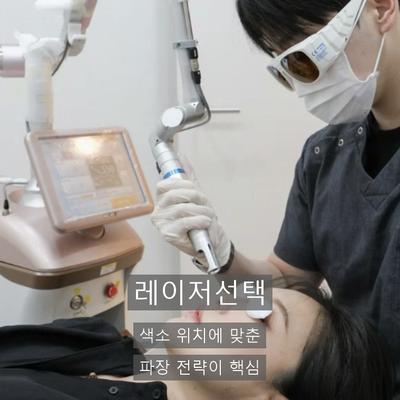
There is a common area of confusion in post-treatment care after laser procedures for pigmentary lesions. In cases where surface wounds occur, such as mole removal or milia treatment, DuoDERM-type dressings are necessary. However, epidermal pigment lasers for lentigines and freckles do not cause physical wounds on the surface, so adhesive dressings can actually become an irritant.
Applying the same aftercare regardless of the type of procedure is not the correct approach. After epidermal pigment laser treatment, it is recommended to maintain normal cleansing and moisturizing, while strictly adhering to sun protection.
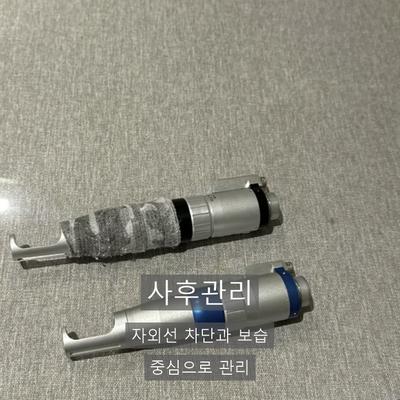
After café-au-lait spot removal treatment, the pigment may temporarily appear darker. This is a normal reaction that occurs during the process of pigment particles being destroyed after laser irradiation, and they will naturally shed over time. Caution is needed during this period, as forcibly removing dead skin cells or using strong scrubs can cause hyperpigmentation.
UV radiation is a major cause of stimulating melanin cells and reducing treatment effectiveness. It is important to meticulously apply SPF 50 or higher sunscreen for at least 4 weeks after the procedure and to minimize direct sunlight exposure.
Frequently Asked Questions
Q. How many sessions are typically needed for café-au-lait spot removal?
A. The number of treatment sessions for café-au-lait spot removal varies depending on the depth, area, and concentration of the pigment. For pigment concentrated in the epidermis, clear changes often appear within 1 to 3 sessions. At Kkeut Oriental Medical Clinic, we provide an estimated number of sessions during the pre-treatment diagnostic stage.
Q. My café-au-lait spots look darker after the treatment. Is this normal?
A. This is a normal reaction. After laser irradiation for café-au-lait spot removal, pigment particles are destroyed, which can temporarily make the color appear darker. They will then naturally shed along with dead skin cells. During this period, diligent sun protection and moisturizing care are crucial.
Q. Can melasma and café-au-lait spots be treated in the same way?
A. The treatment methods are different. For café-au-lait spot removal, directly destroying epidermal pigment with a 532nm wavelength is effective. Melasma requires an approach to stabilize the hyperactive state of melanocytes, so repeated toning treatments are more suitable than aggressive lasers. Kkeut Oriental Medical Clinic clearly differentiates between the two lesions before determining the treatment direction.
Q. How important is sun protection after café-au-lait spot removal?
A. It is very important. After café-au-lait spot removal, exposure to UV radiation can re-stimulate melanocytes, leading to recurrence or worsening of hyperpigmentation. For at least 4 weeks after the procedure, you must use sunscreen with SPF 50 or higher when going out.
Kkeut Oriental Medical Clinic's Commitment
Kkeut Oriental Medical Clinic photographs pigmentary lesions with a MarkVu diagnostic device, and the director directly differentiates between lentigines, freckles, seborrheic keratosis, and melasma before proceeding with treatment. Applying laser treatment without diagnosis carries the risk of hyperpigmentation. Kkeut Oriental Medical Clinic proactively blocks this risk through diagnosis-based procedures.
Kkeut Oriental Medical Clinic uses a 532nm wavelength laser to precisely deliver energy to epidermal pigmentary lesions. It is Kkeut Oriental Medical Clinic's policy to offer the same wavelength effect at a reasonable price, based on the same wavelength standards as high-end pigment lasers like Revlite and Ruby series.
Kkeut Oriental Medical Clinic differentiates its aftercare methods based on the type of procedure. After epidermal pigment laser treatment, as there are no surface wounds, dressings are not applied, and care focuses on sun protection and moisturizing. It is Kkeut Oriental Medical Clinic's principle not to uniformly apply care protocols that do not match the essence of the procedure.
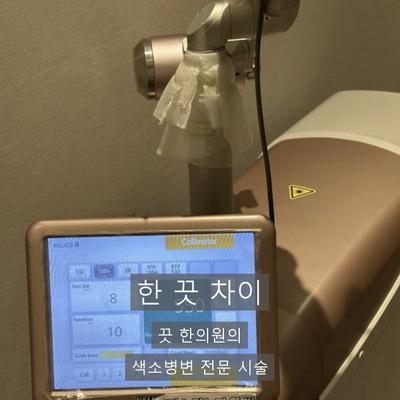
A subtle difference, a distinct result — Experience it at Kkeut Oriental Medical Clinic.
Related notes
Procedure notes worth reading next.


Loading menu…