

Lip mole removal: Is it possible on the lips too? Here's why it's possible with CO2. Beomgye, Pyeongchon, Beomgye Station, Pyeongchon Station, Hogye-dong, Bisan-dong, Gwanyang-dong, Dongan-gu, Indeogwon, Geumjeong, Anyang
7/7/2026
This is a procedure note for Lip mole removal: Is it possible on the lips too? Here's why it's possible with CO2. at Gyeonggi Anyang Beomgye KKEUT Korean Clinic.
Those searching for lip mole removal often have one common question first.
Is it really possible to remove moles from sensitive areas like the lips? — Unlike other parts of the face or body, the lips are thin and highly vascular, making the decision difficult. This article explores how lip mole removal is possible with CO2 laser, starting with its principles.
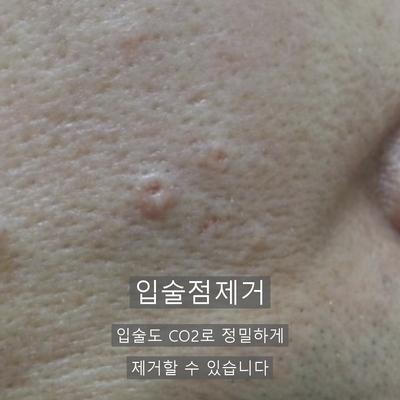
First, it's important to understand the location of the lip mole.
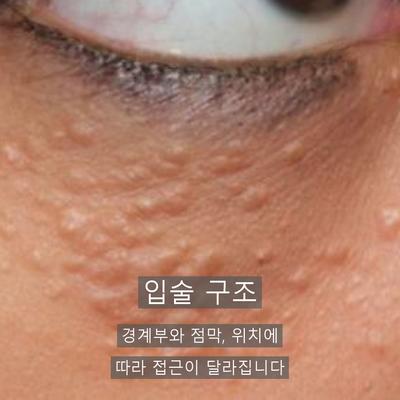
The lips are broadly divided into three areas: the outer border (vermilion border) with skin components, the transitional zone where skin and mucous membrane meet, and the inner part covered by moist mucous membrane. Depending on which area the mole is located, the tissue thickness, vascular distribution, pigment depth, and laser approach will vary.
How CO2 Laser Makes Lip Mole Removal Possible
CO2 laser precisely vaporizes cells as its 10,600nm wavelength is absorbed by water within the tissue.
This vaporization method is key. Instead of simply burning the tissue, it instantly evaporates water, removing layers one by one, allowing the practitioner to control the depth. For shallow moles in the epidermis, removing only the epidermal layer is sufficient. For moles with roots extending into the dermis, deeper access is possible. This depth control capability is what makes lip mole removal possible even in thin tissue areas like the lips.
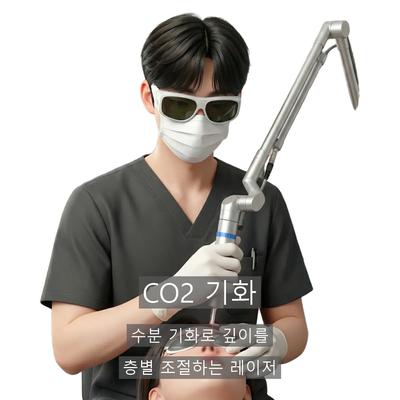
CO2 laser precisely controls treatment depth by adjusting energy density and pulse duration. It's crucial that this adjustment is possible in thin tissue areas like the lips. This allows for accurate targeting of the mole without unnecessary damage to surrounding areas, which is why even sensitive areas can be treated safely.
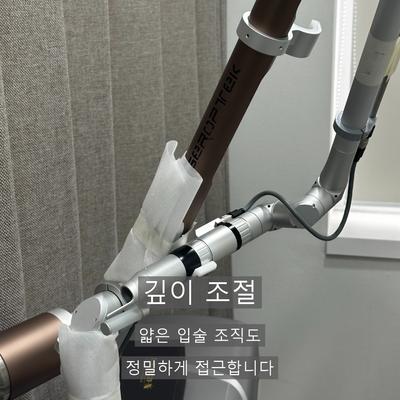
Why CO2's Hemostatic Effect is Important on the Lips
The lips are highly vascular tissue. If bleeding occurs during the procedure, the treatment area becomes unclear, making precise access difficult.
While vaporizing tissue, the CO2 laser also performs a hemostatic action by thermally sealing surrounding micro-vessels. This minimizes bleeding and maintains a clear treatment surface, which is a practical reason why CO2 is chosen for lip tissue, where blood vessels are abundant. The ability to perform hemostasis and vaporization simultaneously is particularly advantageous for the lip area.

The treatment strategy also varies depending on the color and location of the mole. Light-colored and flat moles are likely located in the epidermis, while dark or raised moles often have roots extending into the dermis. Prior to treatment, confirming the mole's color, size, location, and border is a prerequisite, and any lesion suspected of being malignant must be referred to a higher medical institution before laser treatment.

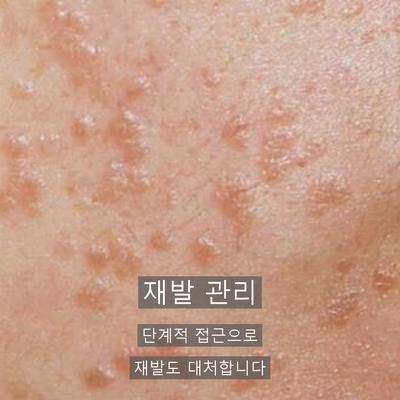
Concerns about recurrence are also common. While removing the mole's roots with CO2 reduces the recurrence rate, if only the epidermal layer is removed, pigment cells may remain in the dermis, leading to gradual recurrence. In such cases, additional treatment can complete the process. The principle is to proceed gradually, checking recovery, rather than aggressively going deep immediately.
Kkeut Clinic's Unique Approach to Lip Mole Removal
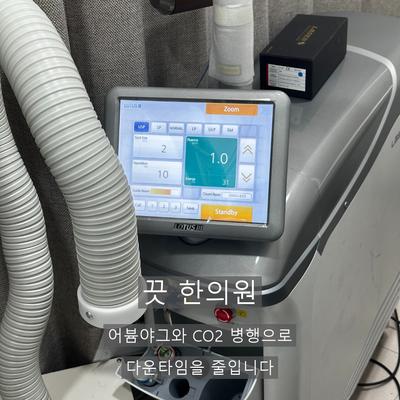
At Kkeut Clinic, we utilize both Er:YAG and CO2 lasers. Er:YAG minimizes thermal damage to tissue, resulting in shorter downtime, while CO2 excels in hemostasis and precise vaporization. For sensitive areas like lip mole removal, we primarily use Er:YAG, but combine it with CO2 for hemostasis, managing both downtime and treatment outcomes simultaneously.
Kkeut Clinic immediately initiates a referral process to a higher medical institution upon detecting any suspected malignant lesions. Even for cosmetic procedures, not skipping the step of confirming patient safety is Kkeut Clinic's fundamental protocol.
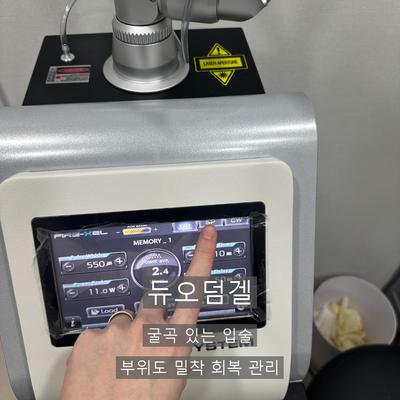
For post-procedure care, Kkeut Clinic uses Duoderm Gel. Unlike regular sticker-type Duoderm, its gel form allows use by individuals with sticker allergies and ensures good adhesion even on curved areas like the lips. Patients can go through the recovery period without the hassle of applying and removing stickers.
Frequently Asked Questions
Q. Is lip mole removal possible for moles on the inner mucous membrane of the lips?
A. Lip mole removal is possible even for the mucous membrane area. The mucous membrane has thinner tissue than skin, requiring different adjustments for laser energy and depth settings. At Kkeut Clinic, laser settings are individually adjusted to suit the specific characteristics of the mole's location.
Q. What is the recovery period after lip mole removal?
A. After lip mole removal, scabs generally fall off naturally within about 1-2 weeks. Due to rich blood supply, lips tend to heal quickly, but initial redness or swelling may occur. It is important to consistently apply sunscreen and moisturize during the recovery period.
Q. Why are Er:YAG and CO2 lasers used together for lip mole removal?
A. The combination of two lasers for lip mole removal is to utilize the strengths of each device according to the specific area. Er:YAG excels at reducing downtime, while CO2 handles hemostasis and precise vaporization. At Kkeut Clinic, the proportion of the two lasers is adjusted based on the mole's characteristics and location.
Kkeut Clinic's Sincere Approach
Kkeut Clinic minimizes downtime and delivers precise treatment results for sensitive areas like the lips by utilizing both Er:YAG and CO2 lasers.
Upon detecting any suspected malignant lesions, Kkeut Clinic immediately initiates a referral process to a higher medical institution, prioritizing safety protocols over mere aesthetic considerations.
With Duoderm Gel post-procedure care, Kkeut Clinic supports patients with sticker allergies and those with curved areas like the lips to undergo the recovery process comfortably.
A subtle difference, a significant result — Experience it at Kkeut Clinic.
Related notes
Procedure notes worth reading next.


Loading menu…