

If I shorten the period for using Duoderm after mole removal, will it really cause a significant problem? Beomgye, Pyeongchon, Beomgye Station, Pyeongchon Station, Hogye-dong, Bisan-dong, Gwanyang-dong, Dongan-gu, Indeogwon, Geumjeong, Anyang
5/7/2026
This is a procedure note for If I shorten the period for using Duoderm after mole removal, will it really cause a significant problem? at Gyeonggi Anyang Beomgye KKEUT Korean Clinic.
Many people wonder if shortening the Duoderm application period after mole removal can really cause problems.
To put it simply, arbitrarily shortening the period significantly increases the risk of hyperpigmentation and scarring.
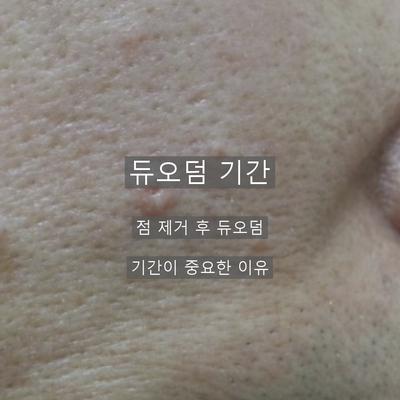
Duoderm's role goes beyond just being a protective barrier.
When moles are removed with a laser, shallow wounds form on the skin's surface.
The most crucial aspect of the wound healing process is 'epidermal re-epithelialization'.
What is Epidermal Re-epithelialization?
When a wound forms, keratinocytes from the wound edges migrate towards the center.
The time it takes for these cells to cover the entire wound is the epidermal re-epithelialization cycle.
If Duoderm is removed before this cycle is complete, cell migration stops.
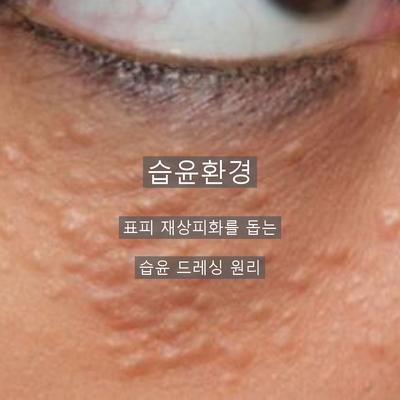
Keratinocytes migrate approximately 3-4 times faster in a moist environment than in a dry one.
The moist environment maintained by Duoderm is a medical condition designed to support this cell migration as much as possible.
In a dry environment, scabs form, and scabs become physical barriers that impede cell migration.

Why shortening the period causes hyperpigmentation
If the skin is exposed to external stimuli before epidermal re-epithelialization is complete, melanocytes become overactive.
When melanocytes receive stimuli such as UV light or friction, they attempt to defend by overproducing melanin.
If the Duoderm application period after mole removal is insufficient, this excess melanin deposits in the skin, leaving behind dark hyperpigmentation.
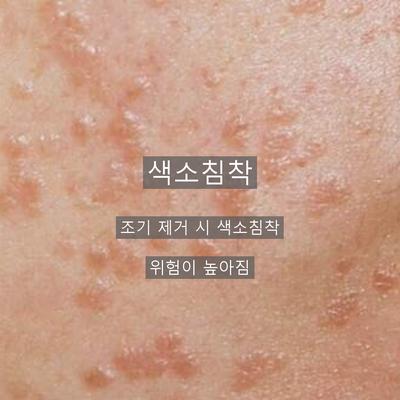
Hyperpigmentation makes the area where the mole was removed appear even darker.
Since this situation results in worse skin condition than before the procedure, adhering to the Duoderm application period after mole removal determines the outcome of the treatment.
How Scarring Occurs
If a scab is forcibly removed or external irritation is applied while epidermal re-epithelialization is incomplete, the wound healing pathway switches from 'epidermal regeneration' to 'fibrous tissue proliferation'.
Excessive proliferation of fibrous tissue can lead to rough tissue or indented/raised scars.
By sufficiently maintaining a moist environment to complete epidermal re-epithelialization, excessive fibrous tissue proliferation itself can be prevented.
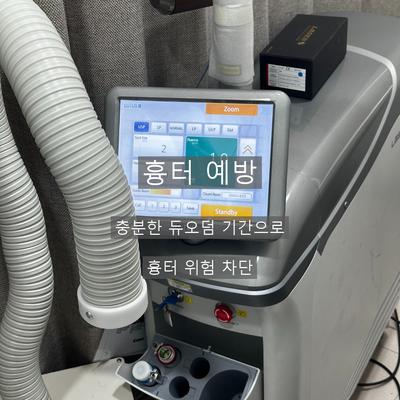
Kkeut Korean Medicine Clinic designs its aftercare protocol based on this mechanism.
Kkeut Korean Medicine Clinic uses Duoderm Gel (gel type) instead of regular Duoderm stickers.
The gel type maintains a more consistent moist environment than the sticker type and causes less irritation to the wound surface during changes.

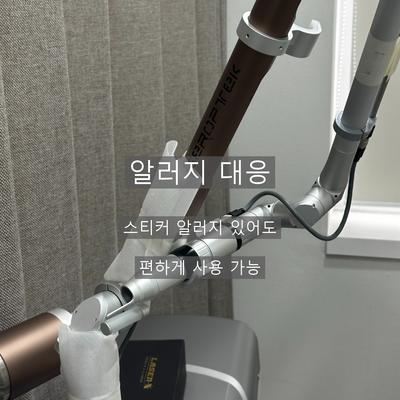
Kkeut Korean Medicine Clinic chose Duoderm Gel because it allows patients with sticker-type allergies to also maintain the same moist environment.
By applying the gel instead of the hassle of peeling and sticking like a sticker, irritation to the wound surface is minimized.
Frequently Asked Questions
Q. Is it problematic to shorten the Duoderm application period after mole removal by even a few days?
A. The Duoderm application period after mole removal varies depending on the wound size, depth, and individual skin regeneration speed. Arbitrarily shortening the period exposes the wound to external factors before epidermal re-epithelialization is complete, increasing the risk of hyperpigmentation and scarring. Kkeut Korean Medicine Clinic assesses each patient's recovery status and provides guidance on the appropriate care period.
Q. What should I do if a scab forms during the Duoderm application period after mole removal?
A. If a moist environment is well-maintained after mole removal, scab formation is suppressed. Following Kkeut Korean Medicine Clinic's Duoderm Gel protocol often results in re-epithelialization without scabs. Arbitrarily removing a scab can damage the cell migration layer, so if one occurs, it is safest to visit the clinic immediately for evaluation.
Q. Can hyperpigmentation occur even after the Duoderm application period for mole removal has ended?
A. Even after re-epithelialization is complete, the new skin remains sensitive to UV light for approximately 4-6 weeks. Even if you diligently follow the Duoderm application period after mole removal, thorough UV protection afterward is crucial to prevent hyperpigmentation.
Kkeut Korean Medicine Clinic's Sincere Commitment
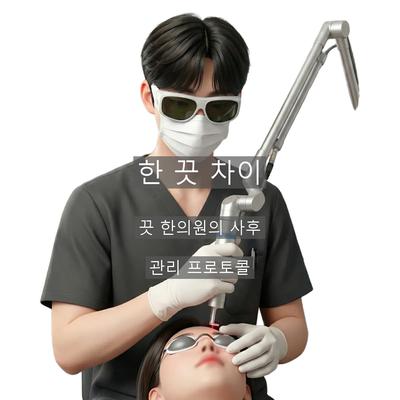
Kkeut Korean Medicine Clinic provides differentiated aftercare by using Duoderm Gel (gel type) to maintain a consistent moist environment and minimize wound surface irritation.
Kkeut Korean Medicine Clinic operates a gel-based aftercare system so that even patients with sticker-type allergies can safely recover with the same protocol.
Kkeut Korean Medicine Clinic designs its mole removal aftercare period based on the epidermal re-epithelialization cycle and the mechanisms of hyperpigmentation and scar formation, taking full responsibility for the completeness of the treatment results.
A subtle difference, a different result — Experience it at Kkeut Korean Medicine Clinic.
Related notes
Procedure notes worth reading next.


Loading menu…