

For tattoo removal clinics, the total cost is ultimately determined by the 'number of sessions'. Beomgye, Pyeongchon, Beomgye Station, Pyeongchon Station, Hogye-dong, Bisan-dong, Gwanyang-dong, Dongan-gu, Indeogwon, Geumjeong, Anyang
6/19/2026
This is a procedure note for For tattoo removal clinics, the total cost is ultimately determined by the 'number of sessions'. at Gyeonggi Anyang Beomgye KKEUT Korean Clinic.
When choosing a clinic for tattoo removal, people often decide based solely on the price per session.
However, the total cost of tattoo removal ultimately depends on 'how many sessions it takes to finish'.
If a single session is cheap but you need 15 sessions, the total cost will be much higher than a place where a single session is a bit more expensive but finishes in 5 sessions.
This article explains why tattoo removal often requires multiple sessions and outlines methods to reduce the number of clinic visits.
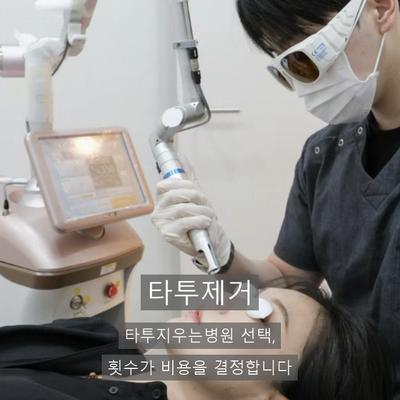
How does tattoo removal laser work?
Tattoo removal lasers work by focusing light energy of a specific wavelength onto tattoo ink particles, breaking them down into very small fragments.
The fragmented pigment particles are then absorbed by the body's immune cells and naturally expelled from the body through the lymphatic system.
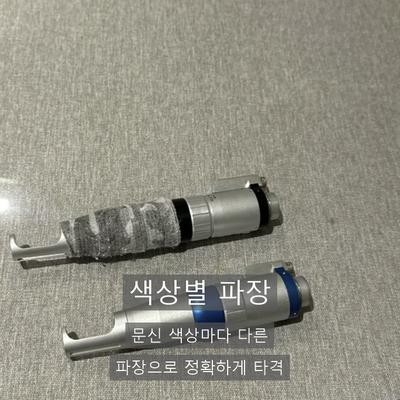
There's an important point here: each tattoo color absorbs different laser wavelengths. Black and navy hues respond more effectively to a 1064nm wavelength, while red and orange hues respond better to a 532nm wavelength.
Tattoos with mixed colors require equipment capable of multi-wavelength treatment and skilled energy settings.
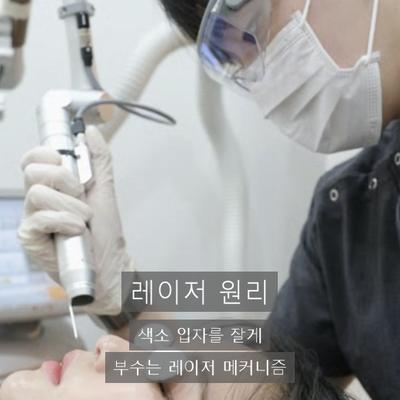
Why do traditional methods require 10 or more sessions?
In traditional tattoo removal methods, a single laser application causes white bubbles (frosting) to appear on the treated area.
These bubbles scatter light, preventing further laser penetration, which typically required waiting 6-8 weeks for them to disappear.
As a result, the amount of pigment that can be treated in a single visit is limited, leading to an average of 10 or more long-term sessions.
When calculating the total cost, 10 or more visits accumulate expenses for transportation, time, and treatment fees. It's important to understand and compare this structure when choosing a tattoo removal clinic.
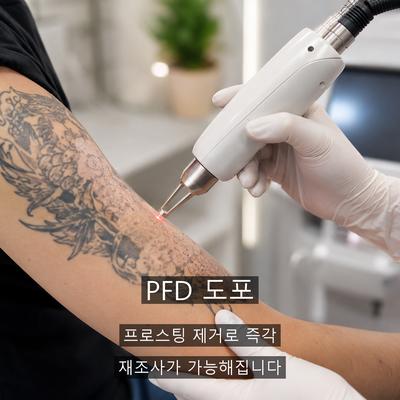
PFD and R0 methods change the number of sessions
PFD (Perfluorodecalin) is a special liquid drug that removes frosting bubbles occurring after laser treatment within seconds.
Using PFD eliminates the need to wait 6-8 weeks for bubbles to disappear, allowing repeated laser applications to the same area within minutes.
This method is called R0 (R-zero). Since the same area is treated multiple times in a single visit, the pigment destruction efficiency per visit significantly increases.
According to research, the R0 method reduces the total number of treatment sessions by approximately 30-50% compared to traditional methods, with 70-90% or more pigment removal reported within about 3 visits.
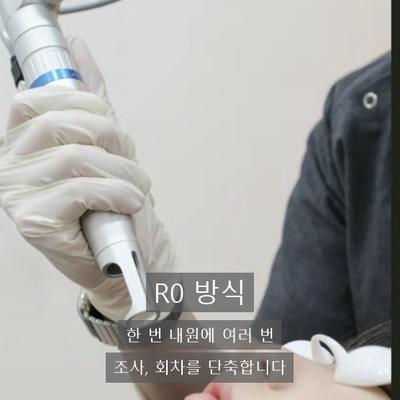
When choosing a tattoo removal clinic, it is wise to ask if they use PFD medication and apply the R0 method.
The idea that 'it must be a pico laser' also needs to be reviewed. While picosecond devices can be advantageous for breaking down particles, complete removal is also perfectly possible with nanosecond lasers.
The key is not the name of the equipment, but how it is operated. Protocol operation methods like the R0 technique are the practical key to reducing the number of sessions.
Post-treatment care also affects the total number of sessions
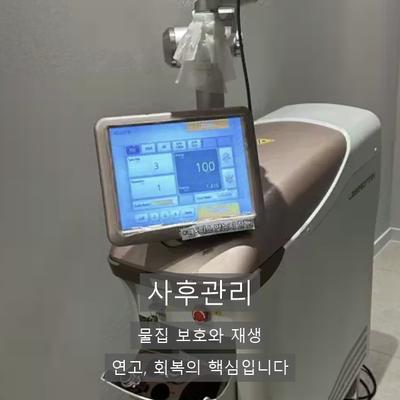
Immediately after the procedure, swelling, redness, and whitening may occur. These usually recover within 1-2 weeks, but there can be individual differences depending on skin condition and tattoo depth.
As a rule, blisters that appear after treatment should never be forcibly popped. Blisters serve to protect the skin, so they should be left to subside naturally.
Apply a regenerative ointment frequently to prevent dryness, and if the treated area is exposed to the outside, diligently use sunscreen. This is because hyperpigmentation can increase the number of sessions.
The Sincere Approach of Kkeut Korean Medicine Clinic
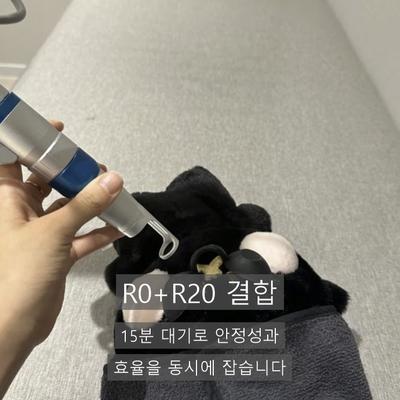
Kkeut Korean Medicine Clinic combines stability and efficiency simultaneously through its R0+R20 hybrid protocol.
Kkeut Korean Medicine Clinic strictly adheres to a 15-minute waiting period after PFD application. This 15-minute period is Kkeut Korean Medicine Clinic's unique know-how, designed to allow the medication to work sufficiently and completely remove frosting, enabling subsequent laser treatments to target the pigment more deeply and accurately.
Kkeut Korean Medicine Clinic adheres to three immediate repeated treatments tailored to Asian skin characteristics. Treatments are performed within a range that safely maximizes efficiency without post-inflammatory hyperpigmentation (PIH) in melanin-sensitive Asian skin.
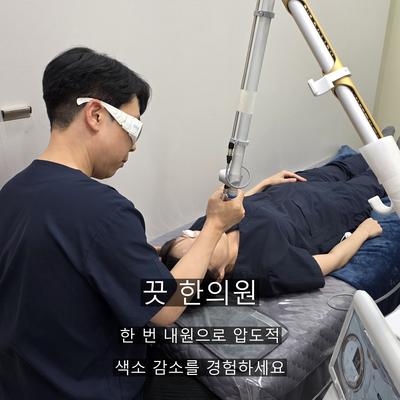
Kkeut Korean Medicine Clinic aims for results over time. While the treatment duration may be longer than conventional methods, Kkeut Korean Medicine Clinic's approach is to reduce the total number of visits for patients and allow them to experience overwhelming pigment reduction even with just one visit.
Frequently Asked Questions
Q. Why do tattoo removal clinics suggest such different numbers of sessions?
A. It's due to the different protocols applied by tattoo removal clinics. Traditional methods, which involve only one laser application per visit, typically require 10 or more sessions. The R0 method, which uses PFD for repeated applications, increases the efficiency of pigment destruction in the same area, reducing the total number of visits. Be sure to confirm which method is used during your consultation.
Q. Is a Pico laser absolutely necessary at a tattoo removal clinic?
A. While picosecond devices have the advantage of breaking down particles more finely, sufficient removal is also possible with nanosecond lasers. When choosing a tattoo removal clinic, the application of PFD and R0 methods and the practitioner's experience are more important criteria than the equipment's name.
Q. My tattoo has multiple colors; can they all be removed?
A. Each color responds to a different wavelength. Multi-wavelength compatible equipment and color-specific energy settings are required, and you must confirm your tattoo colors during the consultation. When choosing a tattoo removal clinic, first ask about the wavelength range of their equipment.
Q. I have blisters after tattoo removal treatment at the clinic; can I pop them?
A. You should absolutely never forcibly pop them. Blisters serve to protect damaged skin. Forcibly popping them increases the risk of infection and hyperpigmentation, which could lead to more return visits to the tattoo removal clinic. The rule is to consistently apply a regenerative ointment and allow them to subside naturally.

A subtle difference, a distinct outcome — Experience it at Kkeut Oriental Medicine Clinic.
Related notes
Procedure notes worth reading next.

Tattoo Removal Reviews: What You Need to Know Before Asking How Many Sessions It Takes to Erase a Tattoo
2026. 7. 3.

Underarm Permanent Hair Removal: The principle of achieving lasting results without hyperpigmentation.
2026. 7. 1.

Eyebrow Tattoo Removal: The Laser Principle for Scarless Removal of Semi-Permanent Pigment
2026. 7. 1.
Loading menu…