

Eyebrow Tattoo Removal: The Laser Principle for Scarless Removal of Semi-Permanent Pigment Beomgye, Pyeongchon, Beomgye Station, Pyeongchon Station, Hogye-dong, Bisan-dong, Gwanyang-dong, Dongan-gu, Indeogwon, Geumjeong, Anyang
7/1/2026
This is a procedure note for Eyebrow Tattoo Removal: The Laser Principle for Scarless Removal of Semi-Permanent Pigment at Gyeonggi Anyang Beomgye KKEUT Korean Clinic.
For those considering eyebrow tattoo removal, the biggest concern is scarring.
This is because there are many stories of pigments not being erased and only traces remaining on the skin if the procedure is performed incorrectly.
Understanding the principle of how lasers remove pigments clarifies why choosing the right clinic makes all the difference in the outcome.
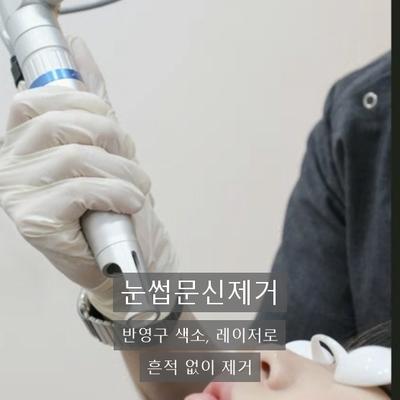
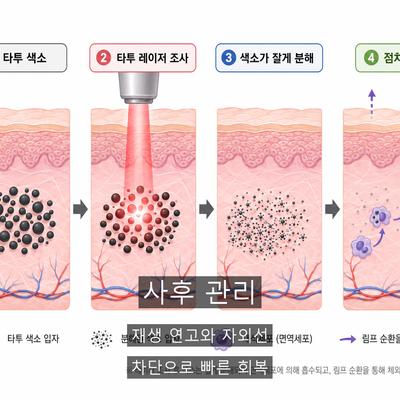
Laser tattoo removal works by directly destroying pigment particles.
When laser energy of a specific wavelength is absorbed by ink particles, heat is momentarily generated, and the particles are shattered into very fine fragments by that impact.
These finely fragmented particles are absorbed by the body's immune cells and naturally discharged from the body through the lymphatic vessels.
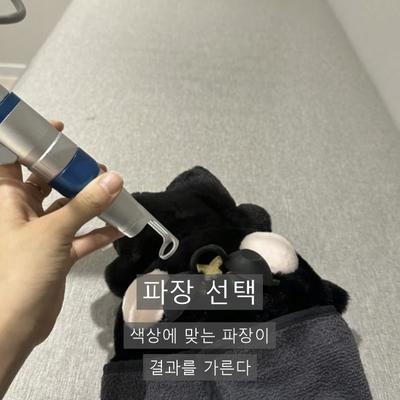
At this time, the laser wavelength must precisely match the pigment color to increase absorption efficiency.
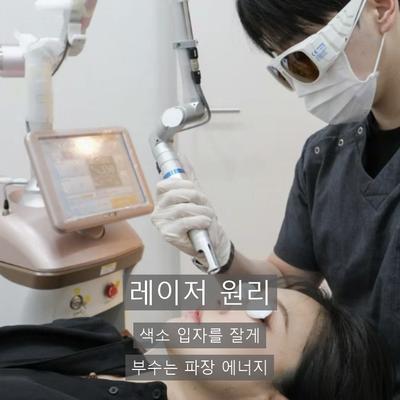
Eyebrow semi-permanent makeup pigments differ in composition from regular tattoo inks.
Since there are many shades of brown, gray, and dark brown, selecting the laser wavelength is crucial.
If a wavelength that matches the pigment color is not used, the energy will not be properly absorbed, leading to residual pigment or unnecessary irritation to the skin.
Semi-permanent eyebrows often change in hue over time.
Pigments that were brown at the time of the initial procedure may turn red or gray.
The older the semi-permanent eyebrows, the wider the pigment distribution and the more layers accumulated, which affects the difficulty of removal.
The starting point is to accurately understand the pigment's condition, color, and age before the procedure and select the appropriate wavelength.
Why R0 Method and PFD Reduce the Number of Treatment Sessions
Traditional laser tattoo removal required waiting several tens of minutes after each shot.
When the laser is fired, white bubbles appear on the skin's surface, and these bubbles scatter light, making subsequent shots impossible.
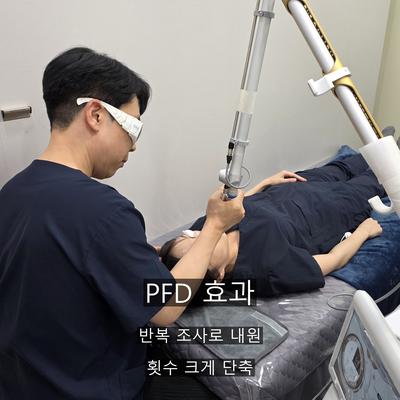
PFD (Perfluorodecalin) is a special drug that removes these bubbles within a few seconds.
Applying PFD quickly eliminates the bubbles, allowing re-treatment of the same area within 1-2 minutes.
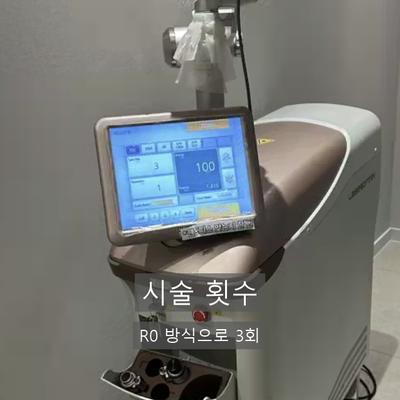
This method, where the same area is repeatedly treated multiple times during a single visit, is called R0 (R-Zero).
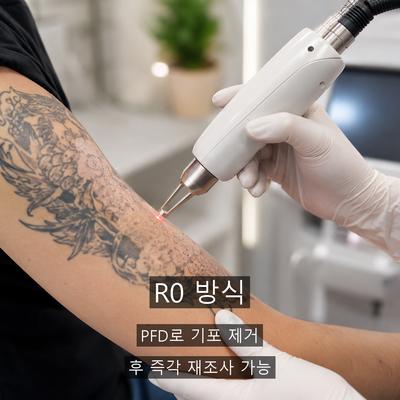
Research shows that applying the R0 method can reduce the total number of treatment sessions by 30-50% compared to traditional methods.
While traditional methods often require more than 10 visits at 6-8 week intervals, it is reported that using the R0 method can achieve 70-90% or more pigment removal with approximately 3 visits.
When the R0 method is applied to eyebrow tattoo removal, the burden of a prolonged treatment period is reduced.
Many people ask about picosecond vs. nanosecond lasers.
Picosecond lasers are considered advantageous for fragmenting pigment particles more finely due to their shorter pulse duration.
Sufficient tattoo removal is also possible with nanosecond lasers.
The use of PFD, the application of the R0 method, and wavelength selection have a more direct impact on the actual results than the type of equipment.
Treatment pain can be sufficiently controlled with anesthesia and powerful cooling.
While the pain is generally greater than when getting a tattoo, combining cooling devices and anesthetic procedures manages it to a tolerable level throughout the treatment.
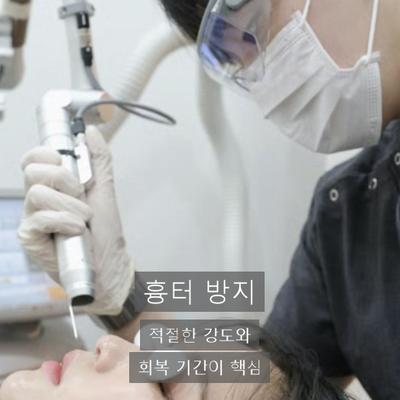
The key to preventing scars after eyebrow tattoo removal is to maintain appropriate intensity and adhere to the recovery period.
If the laser acts selectively only on the ink, there is almost no damage to the skin itself.
If the treatment intensity is excessively high or re-treatment is performed before sufficient recovery, the risk of hyperpigmentation or scarring increases.
Immediately after the procedure, swelling, redness, and whitening may appear and usually subside within 1-2 weeks.
Post-treatment care also affects the results.
If blisters form on the treated area, they should not be forcibly ruptured.
Blisters are part of the skin's protective process, so it is best to let them absorb naturally.
Consistently applying regenerating ointment and thoroughly blocking UV rays are essential for recovery without hyperpigmentation.
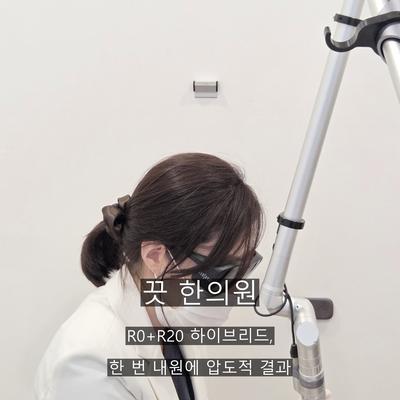
Kkeut Korean Medicine Clinic's Unique R0+R20 Hybrid Protocol
Kkeut Korean Medicine Clinic does not stop at applying PFD and immediately shooting.
Wait 15 minutes after PFD application.
This 15-minute period allows the PFD medication to fully penetrate the skin and ensures existing frosting is nearly perfectly removed.
Afterward, laser treatment delivers energy more deeply and precisely to the pigment.
This is Kkeut Korean Medicine Clinic's unique design, combining the stability of the traditional R20 method with the immediate responsiveness of PFD.
Kkeut Korean Medicine Clinic also considers the unique characteristics of Asian skin.
For sensitive Asian skin, prone to melanin reactions, performing three immediate repeated laser passes within a safe range, rather than using excessive intensity, is the most effective way to achieve maximum results without post-inflammatory hyperpigmentation (PIH).
At Kkeut Korean Medicine Clinic, treatment sessions take significantly longer than conventional methods.
Our goal is for you to experience significant pigment reduction in just one visit.
Reducing the number of required visits is a core commitment at Kkeut Korean Medicine Clinic.
Frequently Asked Questions
Q. How many sessions are needed for eyebrow tattoo removal?
A. The number of eyebrow tattoo removal sessions varies depending on pigment density, the number of tattoo layers, and color. At Kkeut Korean Medicine Clinic, we utilize an R0+R20 hybrid approach with the goal of significantly reducing the number of visits compared to conventional methods.
Q. Will there be scars after eyebrow tattoo removal?
A. Eyebrow tattoo removal lasers selectively target only the pigment, so the risk of scarring is low when appropriate intensity and recovery periods are followed. Excessive intensity or overly aggressive re-treatment are the primary causes of scarring.
Q. Will it be removed faster with a Pico laser?
A. While picosecond lasers can be beneficial for breaking down pigment particles, they are not always essential. The use of PFD, careful wavelength selection, and the number of repeated laser passes have a more direct impact on eyebrow tattoo removal results than the specific laser equipment used.
Q. Is it possible to resume daily life immediately after eyebrow tattoo removal?
A. Swelling and redness may occur immediately after the procedure. It's best to avoid strenuous exercise and saunas for 1-2 days, and consistent moisturizing and sun protection will ensure a faster recovery.
Our Commitment at Kkeut Korean Medicine Clinic
Kkeut Korean Medicine Clinic's unique expertise involves a 15-minute waiting period after PFD application, which creates an optimal environment for deeper and more precise laser targeting of pigment.
Kkeut Korean Medicine Clinic follows the principle of three immediate repeated laser passes, specifically adapted for Asian skin characteristics, to achieve maximum results within a safe range, preventing post-inflammatory hyperpigmentation.
Kkeut Korean Medicine Clinic designs all treatments to achieve outstanding results in just one visit, prioritizing effectiveness even if it requires more time.
The subtle difference for superior results — Experience it at Kkeut Korean Medicine Clinic.
Related notes
Procedure notes worth reading next.


Loading menu…