

Before visiting a dermatologist for corns, 3 things to distinguish them from warts Beomgye, Pyeongchon, Beomgye Station, Pyeongchon Station, Hogye-dong, Bisan-dong, Gwanyang-dong, Dongan-gu, Indeogwon, Geumjeong, Anyang
8/22/2026
This is a procedure note for Before visiting a dermatologist for corns, 3 things to distinguish them from warts at Gyeonggi Anyang Beomgye KKEUT Korean Clinic.
When a hard callus is felt on the sole or toes, most people think it's a corn and immediately look for a corn clinic.
However, after a consultation, it's not uncommon for it to be identified as a wart, specifically a flat wart or plantar wart, rather than a corn.
It's easy to confuse the two lesions just by their appearance, leading to situations where people visit a corn clinic only to receive a wart diagnosis.
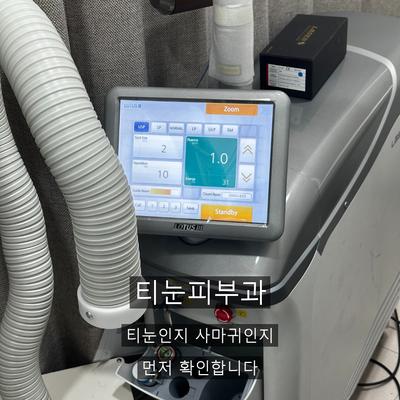
A corn is a lesion that forms when the stratum corneum thickens due to repetitive pressure and friction.
Flat warts and plantar warts are lesions caused by human papillomavirus infection. On the weight-bearing soles of the feet, they become flat and hard like corns due to the compressive force.
Both lesions appear as calluses, making them difficult to distinguish with the naked eye.
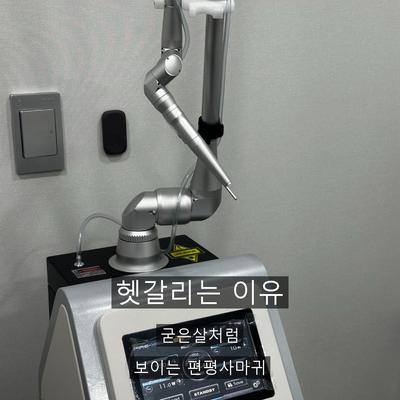
Corns and Warts: How to Distinguish Them
There are three main criteria for distinguishing between corns and warts.
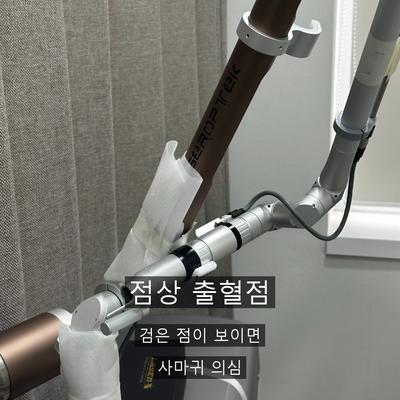
First, you should carefully examine the surface of the lesion to see if small black dots are visible.
As the virus multiplies in a wart, capillaries grow with it. If the keratin is slightly pared away, these clotted blood vessels appear as pinpoint hemorrhages.
These black dots do not typically appear in corns; often, only a smooth keratin layer is observed.
The second criterion is the direction in which pain is felt.
Pain from a corn is clearly felt when pressed vertically.
With warts, pain is often felt more intensely when squeezed from the sides, as if pinching, rather than pressing down from above.
Comparing only the direction in which pain occurs can provide a clue to distinguishing between the two lesions.

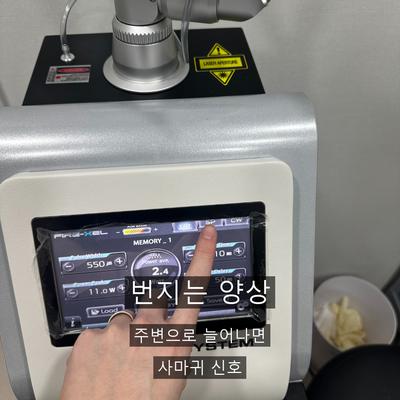
The third criterion is the pattern in which the lesion spreads.
A corn is localized to one spot under pressure and does not spread to the surrounding area.
Warts, being a viral disease, often show a pattern of self-inoculation, where several small new lesions appear around the original lesion over time.
If similar lesions are increasing one by one around your sole or toes, it's advisable to lean towards a wart rather than a corn for identification.
If pinpoint hemorrhages are visible, pain is intense when pinched, and the lesions are spreading to the surrounding areas, the possibility of flat warts or plantar warts should be considered.
Unlike corns, warts are caused by a viral infection, so simply paring away the keratin is not an effective long-term solution.
At Kkeut Clinic, if a wart is suspected during a corn clinic consultation, the lesion is directly illuminated with a light for definitive diagnosis, followed by laser removal.
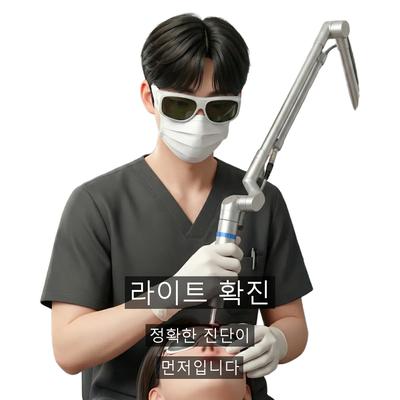
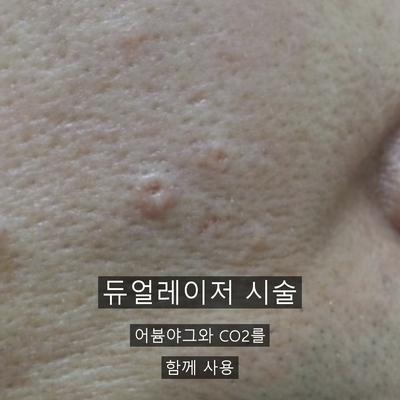
Kkeut Clinic removes warts using a dual-laser method that combines Er:YAG and CO2 lasers.
The Er:YAG laser precisely removes the lesion, reducing downtime, while the CO2 laser has the characteristic of delivering heat to the surrounding area of the treatment site.
Kkeut Clinic strategically utilizes the peripheral thermal damage of the CO2 laser.
This is a strategic choice to clear even the latent flat wart viruses that are not visible to the naked eye.
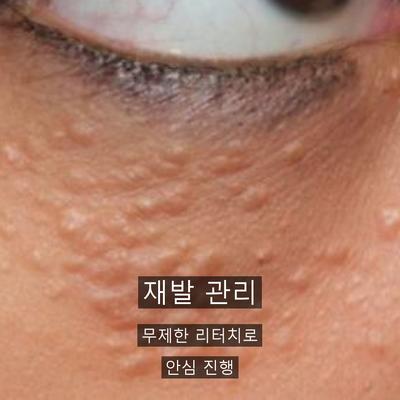
Due to the nature of viral diseases, warts can sometimes recur even after removal, making recurrence management crucial.
Kkeut Clinic operates with an unlimited treatment policy, meaning that if recurrence is confirmed, touch-up treatments are provided without additional cost.
After the procedure, the wound is managed with DuoDERM Gel. Unlike sticker types, it causes less irritation during application and removal, aiding in recovery.
Frequently Asked Questions
Q. What should I do if I went to a corn clinic and was diagnosed with a wart?
A. Even if you visited a corn clinic, if the lesion is identified as a wart, the approach should be laser removal rather than keratin removal. At Kkeut Clinic, we proceed with dual-laser treatment after light-based confirmation.
Q. How do corn clinics distinguish between corns and warts during consultation?
A. Corn clinics distinguish them by examining the presence of pinpoint hemorrhages, the direction in which pain is felt, and the pattern of spreading to the surrounding area.
Q. If confirmed as a wart after a corn clinic consultation, how many sessions are typically needed?
A. If confirmed as a wart after a corn clinic consultation, the number of sessions varies depending on the size and number of lesions. Kkeut Clinic offers unlimited touch-ups in case of recurrence.
Q. Is it okay to leave a wart untreated after a diagnosis at a corn clinic?
A. If diagnosed with a wart at a corn clinic, it is better to have it treated rather than leave it. Flat warts and plantar warts are viral diseases, and the lesions can spread to surrounding areas.
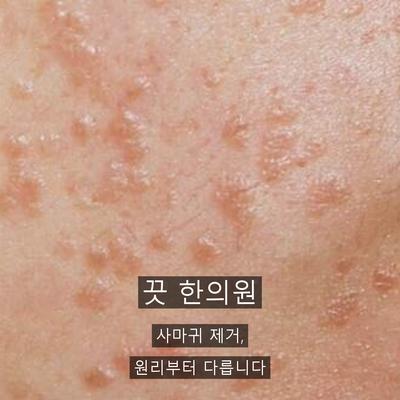
Kkeut Clinic's Sincere Approach
Kkeut Clinic provides differentiated results through a diagnostic stage that involves direct confirmation with light before proceeding to treatment.
Kkeut Clinic increases patient satisfaction through a method that clears even latent viruses using a dual laser combining Er:YAG and CO2.
Kkeut Clinic pursues both safety and efficacy simultaneously through an unlimited retreatment policy.
A subtle difference, a distinct outcome — Experience it at Kkeut Clinic.
Related notes
Procedure notes worth reading next.


Loading menu…