

Why understanding your scar type is important before scar surgery Beomgye, Pyeongchon, Beomgye Station, Pyeongchon Station, Hogye-dong, Bisan-dong, Gwanyang-dong, Dongan-gu, Indeogwon, Geumjeong, Anyang
This is Gyeonggi Anyang Beomgye KKEUT Korean Clinic's procedure note on Why understanding your scar type is important before scar surgery.
When considering scar treatment, people often first look into surgical methods or medical institutions.
However, before that, what needs to be checked is knowing what type of scar one has.
Even if scars appear similar on the surface, depressed scars, raised scars, or scars with only pigment changes differ in their underlying mechanisms and structural characteristics.
Different structures require corresponding treatment methods, so identifying the exact type of scar is the first step in all treatment decisions.
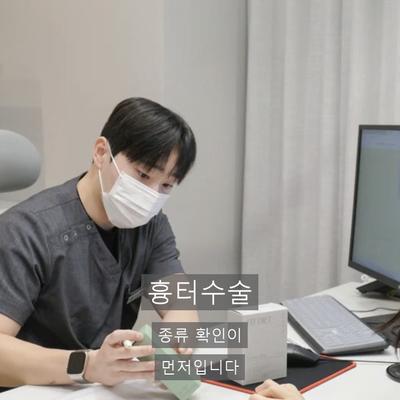
Scars are classified not just by their appearance, but by their underlying structural characteristics.
Depressed scars refer to the condition where the skin surface is sunken due to insufficient collagen production in the dermis when acne or other wounds heal.
These scars can also appear in various shapes, from wide and shallow forms to narrow and deeply indented ones.
In contrast, hypertrophic scars or keloids take on a raised form above the skin surface due to excessive collagen proliferation during the tissue regeneration process after skin damage.
Pigmented scars are cases where, rather than changes in skin elevation, red or brown marks remain and are recognized as scars.
These three types may seem to have similar concerns, but their respective treatments target different skin layers and have different goals.
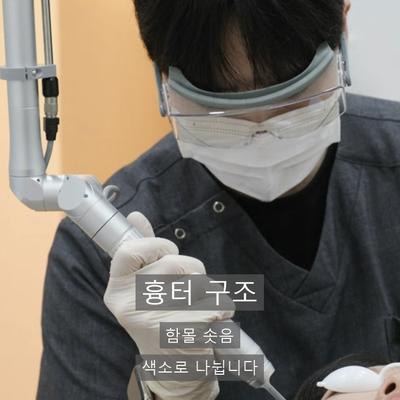
For certain types of scars, surgical approaches are, of course, appropriate.
For example, if it's a wide or prominent linear scar that requires tissue rearrangement and suturing, scar surgery can be the correct approach.
Surgery is a method that changes the overall shape of a scar, so its role can be fully realized for scars that require such changes.
A common problem is deciding on a specific treatment method before accurately identifying the type of scar.
If a treatment method for raised scars is applied to depressed scars, or vice versa, the results may differ from what was expected.
Therefore, before receiving scar treatment consultation, clearly distinguishing your scar type first is the correct approach.
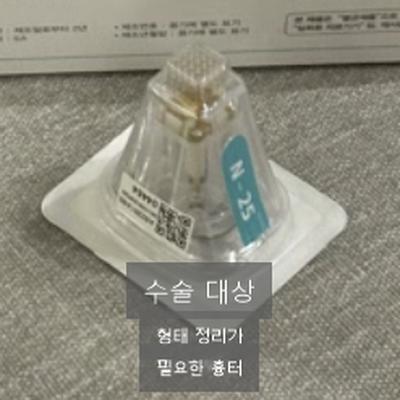
Depressed scars are treated by refilling the sunken dermal layer.
Especially for wide and shallow depressed scars like acne scars, regenerating and filling the collagen within the sunken dermis is often more suitable than excising tissue.
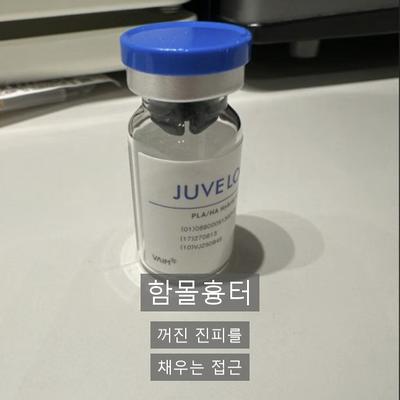
At Kkeut Korean Medicine Clinic, we utilize Juvelook treatment for this approach.
Juvelook is a skin booster composed of PLLA and HA, designed to induce new collagen production in the skin's dermal layer.
Kkeut Korean Medicine Clinic recommends Juvelook treatment to individuals who consult with our director desiring improvement in pores, fine lines, and acne scars.
This treatment has the characteristic of effectively stimulating collagen synthesis, which can be a suitable approach for improving depressed scars caused by collagen deficiency.
If scar surgery reshapes the scar, Juvelook is a method of filling in the sunken areas beneath the skin. These two methods perform different roles.
Raised scars and pigmented scars require different treatment approaches.
Since Juvelook works on the principle of filling in depressed areas, it is generally not recommended for scars that are raised above the skin.
For raised scars or keloids, we first accurately differentiate the type in the consultation room and then provide individualized treatment plans based on the findings.
Since pigmented scars primarily involve hyperpigmentation rather than changes in skin elevation, they are classified separately from depressed scars when identifying scar types.
Undergoing such a clear classification process helps reduce unnecessary treatments and allows us to focus on the truly necessary ones.
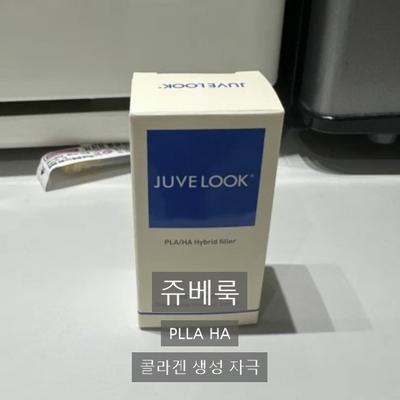
Juvelook Treatment Approach at Kkeut Korean Medicine Clinic
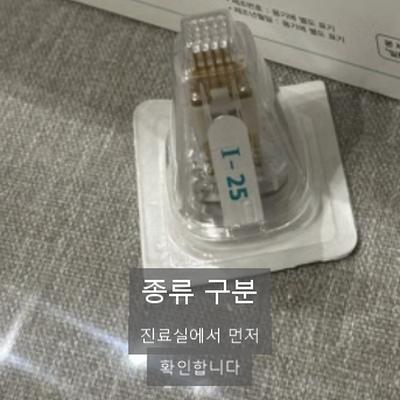
At Kkeut Korean Medicine Clinic, we do not use the manual injection method for Juvelook treatment.
This is not merely a choice for cost reduction, but a decision based on thorough medical judgment.
Direct injection carries the risk of nodule formation and has the limitation that the Juvelook components may not be evenly absorbed into the dermal layer.
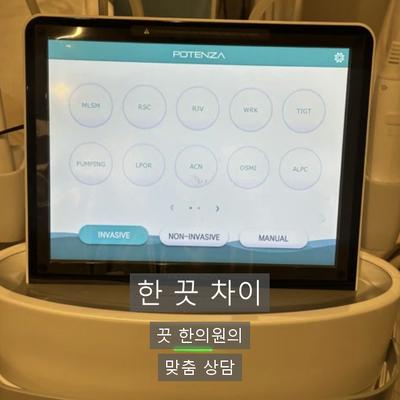
At Kkeut Korean Medicine Clinic, we utilize a method where we first create micro-channels on the skin surface using a pumping tip or a needle RF device, and then apply the Juvelook solution over them.
This method is designed to ensure that the Juvelook components are delivered more uniformly into the dermal layer through the created micro-channels.
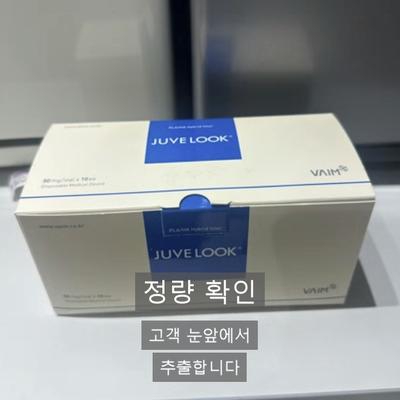
At Kkeut Korean Medicine Clinic, we open and prepare the authentic, specified amount of Juvelook directly in front of the patient.
You can visually confirm the authenticity and quantity used before the treatment.
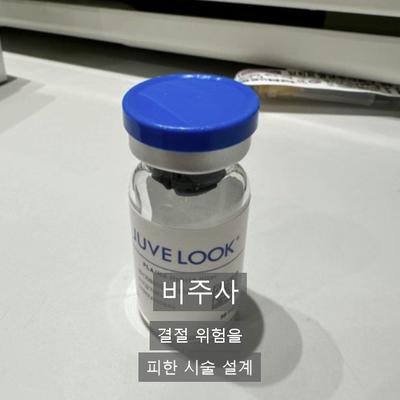
Compared to direct manual injection, the channel formation method can help reduce pain during the procedure.
Since no noticeable wounds are left on the skin surface after the procedure, complex post-treatment care may not be necessary.
This approach is designed to reduce the burden of post-treatment care for those visiting with scar concerns.
Accurately identifying the type of scar and choosing the appropriate treatment method is a fundamental step in consultations at Kkeut Korean Medicine Clinic.
It's important to choose the right approach for your specific scar type. We differentiate between scars that might need surgery and those that can be improved with non-surgical treatments to replenish the dermis.
Frequently Asked Questions
Q. How do I know if I need scar surgery?
A. To decide on the best scar treatment, we first need to understand its shape – whether it's indented, raised, or just a discoloration. When you visit us, we'll carefully analyze your scar type and recommend the most suitable treatment plan.
Q. In what cases can I receive Juvelook instead of scar surgery?
A. For depressed scars, like acne scars, where the skin has an indentation, treatments like Juvelook that stimulate collagen production in the dermis to fill them in might be more suitable than surgery. It's always best to consult with a specialist to decide which treatment is right for you.
Q. If I'm considering scar surgery but choose Juvelook, will it be very painful?
A. Juvelook treatment is performed differently from scar surgery and typically involves less discomfort than direct injections. We use a method where medication is applied after creating micro-channels, which means minimal irritation to the skin's surface after the procedure. This often allows for an easier return to daily activities without needing extensive aftercare.
Our Medical Team's Philosophy
We prefer a method that involves creating micro-channels on the skin and then applying the medication, without using needles. This approach is both gentle and aims to maximize your comfort during the procedure.
We ensure transparency by directly showing you the exact quantity of medication used, right in front of you, aiming to build trust in your treatment experience.
We prioritize methods that reduce discomfort during the procedure and minimize the need for extensive aftercare. This helps ensure our patients have a comfortable experience and achieve the results they're hoping for.
Through meticulous treatment, we always strive to achieve improvements that exceed your expectations.
Related notes
Procedure notes worth reading next.


Loading menu…