

Accu-toning: Why Pigmentation Doesn't Fade in a Single Session Beomgye, Pyeongchon, Beomgye Station, Pyeongchon Station, Hogye-dong, Bisan-dong, Gwanyang-dong, Dongan-gu, Indeogwon, Geumjeong, Anyang
8/20/2026
This is a procedure note for Accu-toning: Why Pigmentation Doesn't Fade in a Single Session at Gyeonggi Anyang Beomgye KKEUT Korean Clinic.
AccuToning is considered one of the most commonly chosen laser toning procedures in clinics for pigment treatment.
Many people expect melasma or blemishes to noticeably lighten after just one AccuToning session, but the actual response pattern is not that simple.
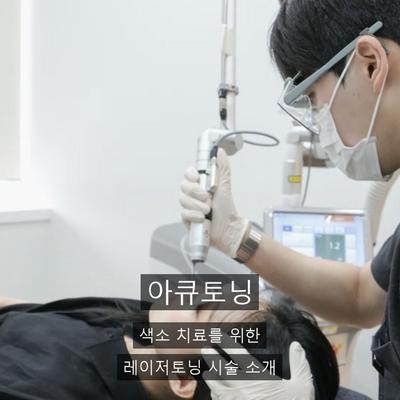
AccuToning is not a method that delivers high energy at once, but rather a low-intensity, multi-session irradiation method where low energy is delivered multiple times at short intervals.
It works on the principle that 1064-nanometer wavelength laser light is selectively absorbed only by melanin pigments in the skin, breaking down pigment particles into minute units.
These finely fragmented melanin particles are gradually expelled from the body through the epidermis' natural turnover process and the action of macrophages.
The basic principle of AccuToning is that pigments with different causes and depths, such as melasma, freckles, and hyperpigmentation, gradually lighten through this process.
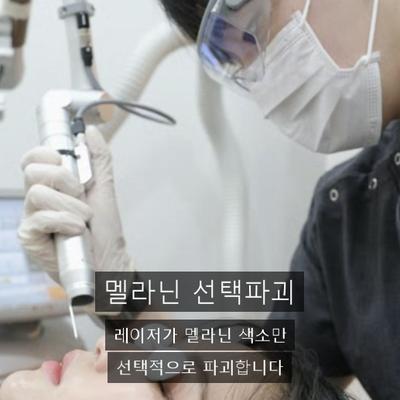
There are several reasons why pigments do not lighten all at once with AccuToning.
First, AccuToning does not strongly burn away pigments; instead, it uses a method of stimulating them multiple times with low output to minimize side effects.
Melasma and hyperpigmentation often spread widely across the epidermal-dermal junction, making it difficult for the entire pigment layer to respond uniformly with a single irradiation.
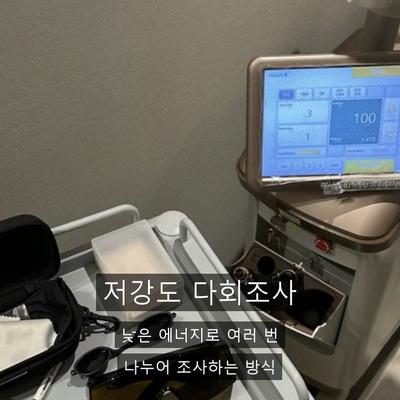
It takes at least several weeks for melanin particles broken down by the laser to be completely expelled from the body, and this process needs to be repeated over several sessions for pigments to gradually lighten.
In particular, melasma is a pigment with many recurrence factors, such as hormonal changes or UV exposure, so there remains a possibility of it darkening again without consistent cumulative management.
AccuToning is generally recommended to be performed cumulatively for 10 or more sessions at 1-2 week intervals.
As sessions accumulate, pigments often noticeably lighten, so discontinuing the treatment midway may make it difficult to achieve the expected degree of pigment improvement.
The recommended number of sessions may vary slightly depending on skin type and pigment depth, so an accurate diagnosis must precede the treatment.
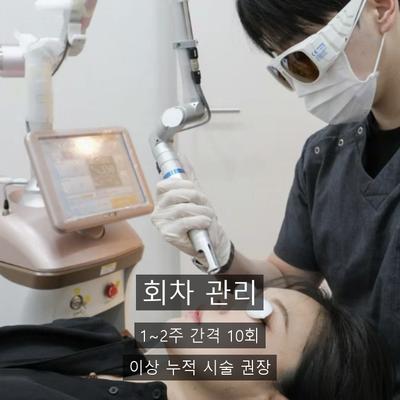
AccuToning is generally considered a treatment with minimal pain and almost no downtime, causing little disruption to daily life.
Mild redness may appear immediately after the procedure, but it usually subsides within a short time, allowing for a smooth return to daily life.
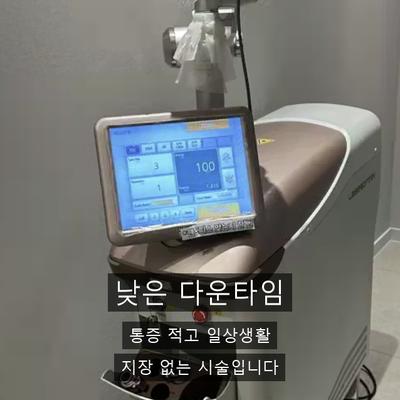
Many people expect pigments to disappear completely after just 1-2 sessions, but this expectation does not align with the operating principle of AccuToning.
Because the speed of response varies depending on the depth and type of pigment, consistent cumulative treatment is a key factor in determining the results.
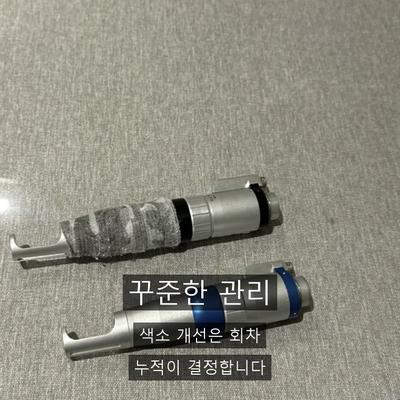
AccuToning is also widely applied to those who wish to improve melasma, freckles, hyperpigmentation, and dull skin tone.
After the procedure, applying sunscreen more thoroughly than usual helps prevent pigment recurrence.
Before AccuToning treatment, an accurate pigment diagnosis must precede the process of distinguishing whether it is melasma, freckles, or hyperpigmentation.
When undergoing AccuToning, the most important point is to plan based on completing the full course of sessions rather than opting for a single treatment.
Kkeut Oriental Medicine Clinic's Unique AccuToning Approach
Kkeut Oriental Medicine Clinic ensures a sufficient shot count of over 2000 shots per session for pigment improvement, and after the treatment, patients go through a process of directly checking the shot count with the director.
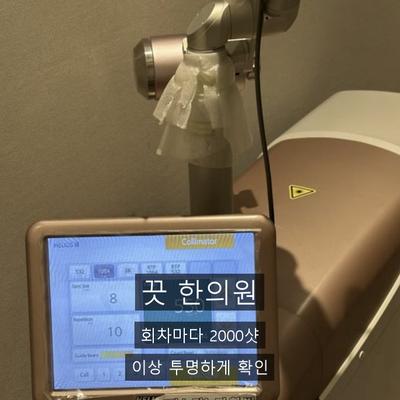
The reason for transparently disclosing the shot count is that for treatments like AccuToning, where cumulative sessions are crucial, verifying that sufficient stimulation was delivered in each session directly impacts the results.
Kkeut Oriental Medicine Clinic, instead of uniformly irradiating areas where pigments are particularly dense, specifically targets problematic areas to accelerate the speed of pigment improvement.
Kkeut Oriental Medicine Clinic performs AccuToning by observing the skin's response and gradually adjusting the energy upwards, rather than repeating the same energy level in each session.
This method is Kkeut Oriental Medicine Clinic's operational know-how to deliver optimal stimulation in each session, aligning with the principle of AccuToning where pigments gradually lighten.
Kkeut Oriental Medicine Clinic's principle for AccuToning is to consistently build up stimulation within a safe range rather than excessively increasing energy and raising the risk of side effects.
Frequently Asked Questions
Q. How many AccuToning sessions are needed to see pigment improvement?
A. With AccuToning, pigments often noticeably lighten after 10 or more cumulative sessions, typically at 1-2 week intervals. At Kkeut Oriental Medicine Clinic, we adjust the timing of the next treatment based on the skin's response in each session.
Q. I received AccuToning, why didn't the pigments lighten immediately?
A. AccuToning involves delivering low energy in multiple divided irradiations, so it takes time for the destroyed melanin to be expelled. Kkeut Oriental Medicine Clinic performs AccuToning by adjusting the energy in each session, taking this process into consideration.
Q. What should be the interval between AccuToning sessions?
A. AccuToning typically recommends 1-2 week intervals, which may be adjusted based on skin condition. Kkeut Oriental Medicine Clinic informs you of the next AccuToning session after confirming your individual skin response.
Q. Is there any downtime after AccuToning?
A. AccuToning is a procedure with almost no downtime, with only mild redness appearing immediately after the treatment. Kkeut Oriental Medicine Clinic meticulously adjusts the AccuToning intensity to ensure no disruption to daily life.
Kkeut Oriental Medicine Clinic's Sincerity
Kkeut Oriental Medicine Clinic provides differentiated results by transparently disclosing a sufficient shot count of over 2000 shots per session.
Kkeut Korean Medicine Clinic increases patient satisfaction by intensively targeting heavily pigmented areas.
Kkeut Korean Medicine Clinic simultaneously pursues safety and effectiveness by gradually increasing energy levels with each session.
Different Results with a Subtle Difference — Experience it at Kkeut Korean Medicine Clinic.
Related notes
Procedure notes worth reading next.


Loading menu…