

How can Laser Toning effectively clear up facial blemishes? Beomgye, Pyeongchon, Beomgye Station, Pyeongchon Station, Hogye-dong, Bisan-dong, Gwanyang-dong, Dongan-gu, Indeogwon, Geumjeong, Anyang
This is Gyeonggi Anyang Beomgye KKEUT Korean Clinic's procedure note on How can Laser Toning effectively clear up facial blemishes.
Blemishes that appear on the face often become a concern for many people because once they settle, they don't easily disappear. It's often difficult to hide them even with makeup.
Blemishes are actually a term that encompasses various types of pigmented lesions. Therefore, to set an accurate direction for improvement, it's crucial to understand their individual causes and types.

Reasons Why Blemishes Appear
Melanocytes in the skin's epidermal layer produce melanin pigment to protect the skin when exposed to ultraviolet (UV) light.
If the melanin produced in this way accumulates excessively in certain areas or is not properly expelled from the skin, it can appear as brown, spot-like blemishes.
Prolonged exposure to sunlight is considered one of the most common causes of blemish formation.
Post-inflammatory hyperpigmentation resulting from acne, other skin injuries, or repeated friction can also be classified as a type of blemish.
Hormonal changes or an innate skin constitution are also factors that can make hyperpigmentation more prominent.
The habit of not carefully applying sunscreen or not reapplying it when necessary can lead to a gradual accumulation of pigment.
UV rays affect the skin even on cloudy days or indoors, so consistent sun protection is important regardless of the season or external environment.
Unnecessarily exfoliating or touching skin troubles like acne with your hands can irritate the skin and cause hyperpigmentation.
These lifestyle habits significantly impact the long-term effectiveness of treatments, so if you are considering a procedure, it is advisable to also review and improve your lifestyle habits.

The Process of Classifying Blemish Types
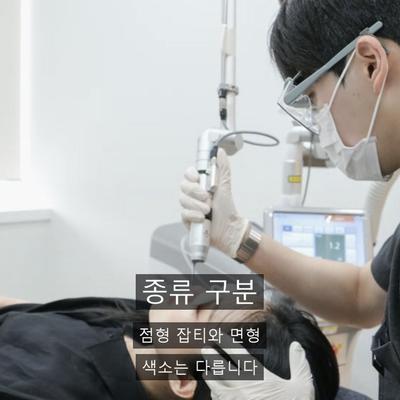
Brown, spot-like pigmentation that appears due to prolonged sun exposure usually has clearly defined borders.
On the other hand, post-inflammatory hyperpigmentation that remains after skin troubles or inflammation disappear can appear as patchy, irregular forms along the affected area.
Pigmentation that spreads widely, like melasma, appears over a broad area rather than as a single spot, making it clearly distinguishable to the naked eye.
The recommended treatment approach varies depending on the type and depth of the pigmentation, so a process of accurately identifying the type of pigmentation must precede the start of any treatment.
Looking in a mirror yourself to distinguish whether it's a clear-bordered spot or a widely spread patch can be helpful for an initial assessment.
If the pigmentation appeared on an area that previously had troubles or injuries, you might consider the possibility of post-inflammatory hyperpigmentation.
However, there are inherent limitations to distinguishing the depth or exact type of pigmentation with the naked eye. A detailed examination of the skin condition by a specialist is necessary.
What is Needed for Pigmentation Improvement
Melanin pigment that has already settled deep within the skin is difficult to effectively remove with ordinary cleansing or basic cosmetics alone.
Therefore, a procedural approach that directly targets melanin pigment is necessary, and at the same time, consistent lifestyle management, such as sun protection, must be combined.
This is because even after pigmentation has lightened, if the skin is re-exposed to UV light, melanocytes can once again react by producing melanin.
Blemish improvement is achieved not by a single method, but by a harmonious combination of treatments, sun protection, and appropriate moisturizing care, which can lead to stable results.
Even pigmentation that has lightened through treatment can darken again if continuously exposed to UV light. Therefore, it is important not to stop management.

Principle of Laser Toning
Laser toning is a treatment method that selectively targets melanin pigment using Q-switched or picosecond lasers operating at a 1064nm wavelength.
It works by having laser energy absorbed by melanin pigment within the skin, micro-destroying the pigment.
During the procedure, laser energy can be delivered uniformly across the entire face, making it a promising treatment not only for specific blemishes but also for overall skin tone improvement.
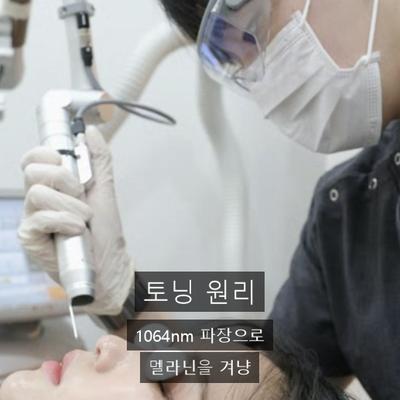
It can primarily be considered for melasma, various blemishes, post-inflammatory hyperpigmentation, and skin tone improvement.
Toning treatments aim not to whiten the skin color itself, but to regulate excessively accumulated melanin pigment to achieve a more even skin tone.
Treatment results may vary depending on the type and depth of pigmentation, as well as individual skin reactions. There can be individual differences even when receiving the same toning treatment.
This treatment uses an approach that gradually manages pigmentation over multiple sessions, rather than delivering strong stimulation in a single session.
The noticeable rate of improvement after treatment can vary depending on the type and depth of pigmentation, as well as the individual's overall skin condition.
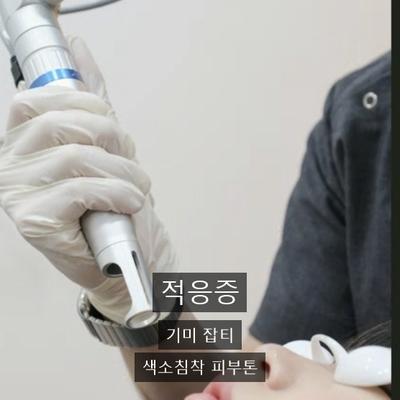
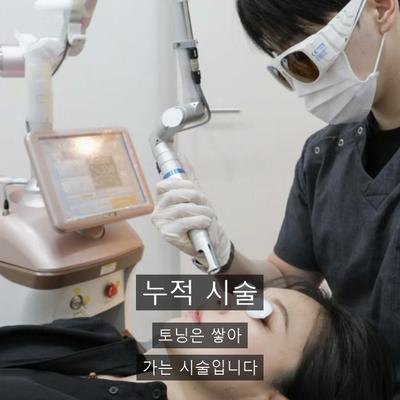
Laser toning is generally not a one-time procedure, but rather a treatment process that is best understood as building up effects gradually by consistently undergoing 10 or more sessions.
After the treatment, it is important to thoroughly use sunscreen and pay attention to moisturizing care.
Special Approach to Laser Toning
During laser toning, it is important to use a sufficient number of shots. After performing an appropriate number of shots, the practitioner can review the treatment details with the patient.
Beyond simply fulfilling a predetermined number of shots, laser energy can be focused more intensely and carefully on areas of particular concern for blemishes.
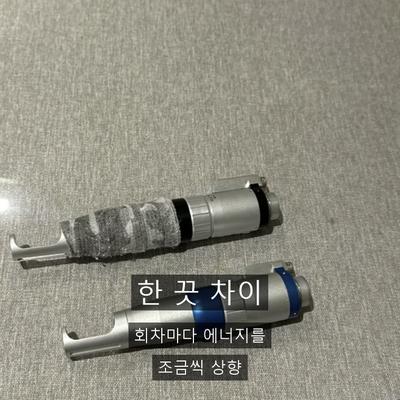
At our clinic, rather than sticking to the same treatment settings every time, we progressively adjust and apply energy according to each session.
Toning treatments focus on managing overall facial skin tone evenly, while also concentrating more intensely on areas of particular concern.
After the treatment, we take time to verify the actual number of shots administered with the director. This allows patients to directly confirm the amount of treatment they received.
At our clinic, we differentiate between dark blemishes like spots and areas of general skin tone concern, meticulously adjusting energy according to the specific characteristics of each for treatment.

Frequently Asked Questions
Q. Can all facial blemishes be improved with laser toning?
A. Facial blemishes may show different treatment responses depending on their type and depth. At our clinic, we first thoroughly diagnose the patient's pigmentation condition and then explain in detail whether toning treatment is suitable.
Q. How many sessions of facial blemish toning are needed?
A. Facial blemish toning generally requires consistent multiple sessions to expect changes, and individual differences may exist. At our clinic, we adjust the energy for each treatment session, considering the patient's skin condition.
Q. How should I care for my skin after a facial blemish treatment?
A. After the treatment, it is important to consistently use sunscreen and pay attention to moisturizing to prevent blemishes from darkening again. Our clinic also provides detailed guidance on post-treatment precautions and care methods.
The Sincerity of KKEUT Clinic
Our clinic aims to provide a reliable treatment experience through meticulous procedures involving over 2000 shots and the director's shot count verification process.
Our clinic aims for more delicate care by focusing treatments on specific areas of concern for patients.
Our clinic strives to prioritize safety while also expecting positive treatment changes by progressively adjusting energy in each session.
The change that a delicate approach can bring. KKEUT Clinic upholds this treatment philosophy.
Related notes
Procedure notes worth reading next.

Hyperpigmentation & Blemishes: Why Are They Hard to Treat in One Go? An Effective Guide to Toning Treatment Sessions

Melasma & Blemish Laser Price: 3 Things You Must Check First

Don't just focus on the price of Ruby laser treatments. It's crucial to first check if a pigmentation removal laser is appropriate for your skin.
Loading menu…