

Why At-Home Laser Hair Removal Devices Aren't Effective and How They Differ from Professional Equipment Beomgye, Pyeongchon, Beomgye Station, Pyeongchon Station, Hogye-dong, Bisan-dong, Gwanyang-dong, Dongan-gu, Indeogwon, Geumjeong, Anyang
9/2/2026
This is a procedure note for Why At-Home Laser Hair Removal Devices Aren't Effective and How They Differ from Professional Equipment at Gyeonggi Anyang Beomgye KKEUT Korean Clinic.
As interest in laser hair removal grows, many people are looking for devices that can be used at home.
At-home hair removal devices are readily available on the market, making them quite accessible.
However, there are also many opinions that people did not experience the expected results after actual use.
This is because there are fundamental differences between at-home laser hair removal devices and professional equipment used in medical institutions.
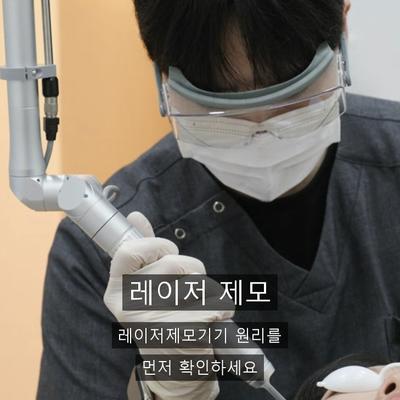
The most significant difference between them lies in their output power.
The output power of at-home devices is limited for safety reasons, making it difficult to deliver effective thermal energy to the hair follicles.
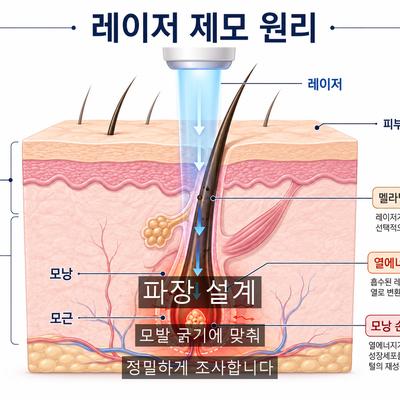
Laser hair removal works on the principle that melanin pigment in the hair absorbs laser energy and converts it into heat. This heat damages the hair roots and follicle tissue, leading to hair removal.
If the output power is weak, only a minimal amount of heat is generated on the skin surface, and insufficient heat may reach the hair roots, making it difficult to achieve the desired hair removal effect.
Some at-home products lack adequate safety systems, which may require users to manually adjust the output intensity or exposure time, posing inconvenience and potential risks.
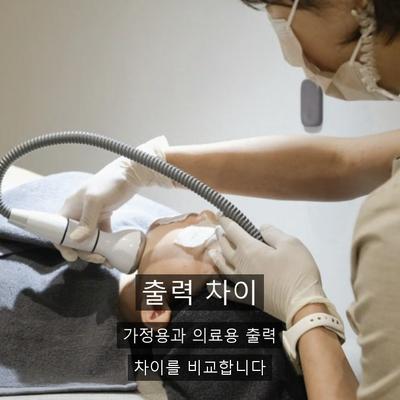
The wavelength range of the laser used is also an important difference.
Medical-grade equipment is designed to precisely deliver specific wavelengths to the skin, allowing for meticulous adjustments tailored to an individual's hair thickness and color during treatment.
In contrast, most at-home products use an IPL (Intense Pulsed Light) method that emits a broad spectrum of light, making it difficult to effectively focus energy on a specific wavelength.
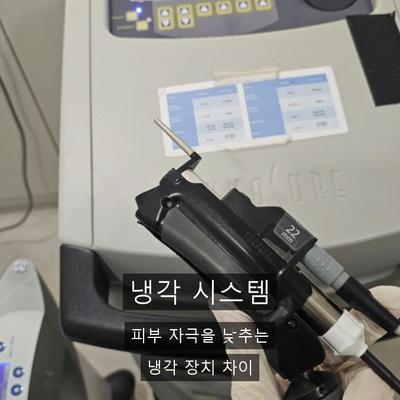
The difference in cooling systems that protect the skin during treatment is also a crucial aspect that cannot be overlooked.
Medical-grade equipment includes cooling devices that spray cool air or gas before and after laser application to reduce skin surface irritation.
At-home devices often lack such sufficient cooling systems, meaning skin irritation can occur more easily when used at similar intensities.
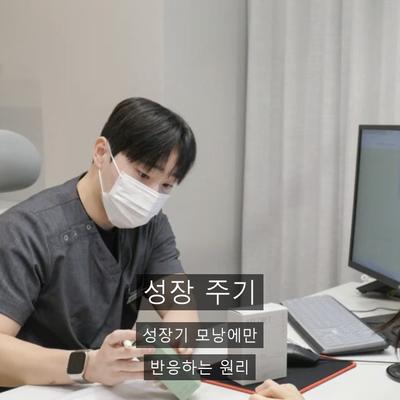
Laser hair removal is closely linked to the hair growth cycle.
Laser energy selectively targets hair follicles in the anagen (growth) phase, which are rich in melanin pigment and actively growing.
Hair in the telogen (resting) phase does not respond to lasers, so multiple, repeated treatments must be scheduled to coincide with the cycle when all hair returns to the growth phase.
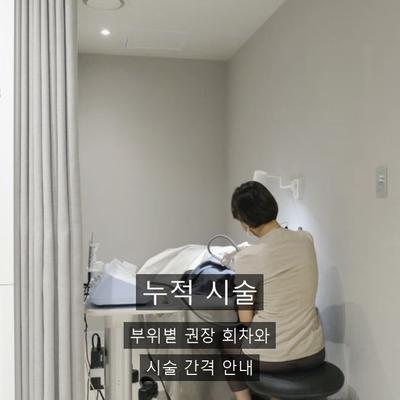
Therefore, cumulative treatments of 10 or more sessions are recommended for each treatment area, typically conducted at intervals of 3-4 weeks.
Particularly for areas with strong characteristics, such as thick, dense beards in men, more than 20 sessions and consistent treatment over a year may be necessary.
Some people believe that using anesthetic cream will eliminate pain entirely.
Anesthetic ingredients primarily act on the superficial layers of the skin, making it difficult to provide complete numbing effects to the deeper parts of the skin where hair roots are located.
The pain felt during treatment is generally similar to the sensation of briefly touching a cold object, and as the number of sessions increases and hair density decreases, the intensity of pain also tends to lessen.
It is advisable to shave the area to be treated cleanly in advance. If the hair is too long, laser energy may be consumed on the skin surface first, increasing the risk of burns, and insufficient energy may reach the hair roots.
During the laser hair removal treatment period, hair must be managed only by shaving, not plucking. If hair is plucked, the hair root itself, which is the target of the laser, disappears, making it difficult to achieve the desired hair removal effect.
There are also points that users of at-home hair removal devices often overlook.
Some people are disappointed when hair grows back after a few uses, which may be because they expected complete results in a short period without fully understanding the hair growth cycle.
If both the limited output and the hair growth cycle are not aligned, achieving the desired satisfactory results can be challenging.
At Ggeut Korean Medicine Clinic, we deeply understand these complex factors and approach treatment planning with a differentiated method from the outset.
Treatment Approaches You Can Expect at Ggeut Korean Medicine Clinic
Ggeut Korean Medicine Clinic adjusts the laser pulse duration considering the hair thickness and color characteristics.
Thick, dark hair is rich in melanin, and delivering energy with short pulses can irritate the epidermis. Therefore, Ggeut Korean Medicine Clinic uses a long pulse width to ensure thermal energy is delivered smoothly to the skin, thus performing treatments that protect the skin.
Conversely, for fine and light hair, we plan treatments to ensure heat is effectively delivered to the hair roots by repeatedly applying energy or finely adjusting the energy density.
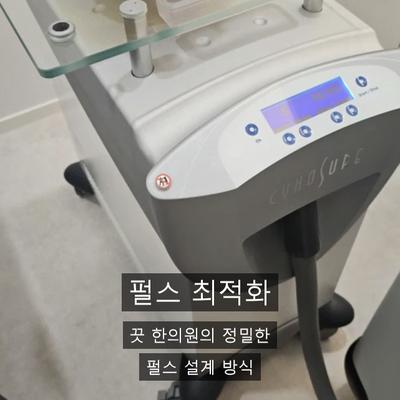
At Ggeut Korean Medicine Clinic, we also precisely adjust the laser's energy density according to the characteristics of the treatment area and hair condition.
For areas with dense hair, energy is efficiently dispersed to reduce irritation from excessive heat accumulation, and for darker skin tones, treatments are performed with even more careful power adjustments to prevent potential side effects.
Ggeut Korean Medicine Clinic's Meticulous Treatment Expertise
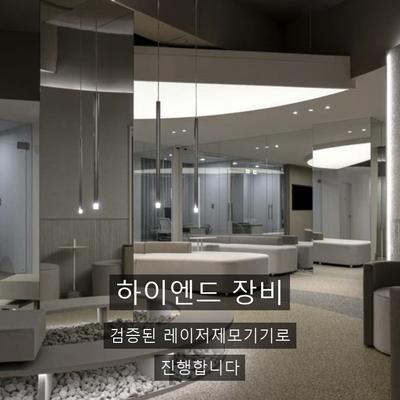
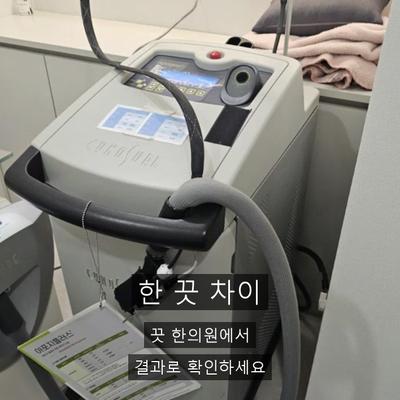
Ggeut Korean Medicine Clinic utilizes reliable laser hair removal equipment such as Apogee and GentleMax.
These devices feature stable cooling systems and verified safety, which can reduce discomfort during treatment and contribute to more satisfactory results.
At Ggeut Korean Medicine Clinic, before the treatment concludes, we check if there are any additional areas of concern and finalize the treatment with the patient's full satisfaction in mind.
Frequently Asked Questions
Q. How effective are at-home laser hair removal devices?
A. At-home laser hair removal devices have limitations in power output and wavelength control, so they can help temporarily reduce hair volume. However, it is difficult to expect permanent destruction of hair follicles. Kkeut Korean Medicine Clinic compensates for these limitations with medical-grade laser hair removal equipment.
Q. Is there a difference in wavelength between at-home laser hair removal devices and those used in medical institutions?
A. Yes, there is a difference in wavelength adjustment methods. Medical laser hair removal devices can finely adjust the wavelength and pulse according to each patient's characteristics, such as hair thickness and skin tone. In contrast, most at-home products emit a broad spectrum of light, making precise control difficult.
Q. How many laser hair removal sessions are generally recommended?
A. Since hair only responds to laser energy during its growth phase, more than 10 repeated sessions may typically be required depending on the treatment area. The treatment interval is generally appropriate to maintain at about 3 to 4 weeks.
Q. Can people with darker skin tones also receive laser hair removal treatment?
A. Yes, treatment is possible. At Kkeut Korean Medicine Clinic, we carefully adjust the energy of the laser hair removal device to match the patient's skin tone. This helps reduce the possibility of side effects and ensures a comfortable and safe treatment.
Kkeut Korean Medicine Clinic's Treatment Philosophy
At Kkeut Korean Medicine Clinic, we meticulously analyze each patient's hair thickness and skin tone to delicately set the pulse duration and energy density. Through this customized treatment approach, we strive to achieve more satisfactory hair removal results.
At Kkeut Korean Medicine Clinic, we operate medical laser hair removal equipment such as Apogee and GentleMax, along with a stable cooling system. This helps patients feel more comfortable during treatment.
At Kkeut Korean Medicine Clinic, treatments are carefully concluded after the patient's final confirmation at the end of the session. Through this process, we pay attention to ensuring safety and achieving good treatment results.
With the delicacy of a subtle difference. Consult Kkeut Korean Medicine Clinic for detailed advice on hair removal treatment.
Related notes
Procedure notes worth reading next.


Loading menu…