

Debunking the Myth: Is Laser Hair Removal Pain Unbearable? Beomgye, Pyeongchon, Beomgye Station, Pyeongchon Station, Hogye-dong, Bisan-dong, Gwanyang-dong, Dongan-gu, Indeogwon, Geumjeong, Anyang
8/10/2025
This is a procedure note for Debunking the Myth: Is Laser Hair Removal Pain Unbearable? at Gyeonggi Anyang Beomgye KKEUT Korean Clinic.
Understanding Laser Hair Removal Pain: Separating Fact from Fiction
With warmer seasons nearing, managing unwanted body hair often becomes a priority.
Laser hair removal has gained significant popularity among individuals seeking lasting hair reduction, establishing itself as a frequently chosen cosmetic treatment.
The growing demand for laser hair removal is evident, prompting many facilities to expand their equipment to accommodate more patients and minimize wait times.
Nevertheless, a common concern for individuals considering this treatment for the first time is often related to the level of discomfort: "Does laser hair removal truly cause significant pain?"
Understandably, reports of intense pain from others may lead to hesitation before undergoing the procedure.
However, the actual sensation of pain can differ significantly, influenced by factors such as the specific laser technology, the effectiveness of the cooling mechanism, and the application of topical anesthetics.
Understanding the Mechanism of Laser Hair Removal Pain
Laser hair removal operates by emitting specific wavelengths of light, which are preferentially absorbed by the melanin pigment present in the hair.
Commonly, wavelengths such as 755nm (Alexandrite laser) or 1064nm (Nd:YAG laser) are employed.
This absorbed light energy targets the hair shaft and follicle, creating a photothermal effect. The resulting heat aims to damage the hair follicle, which may inhibit future hair growth.
During this mechanism, it is important to note that the surrounding skin tissue can also be exposed to some degree of heat, in addition to the hair follicle itself.
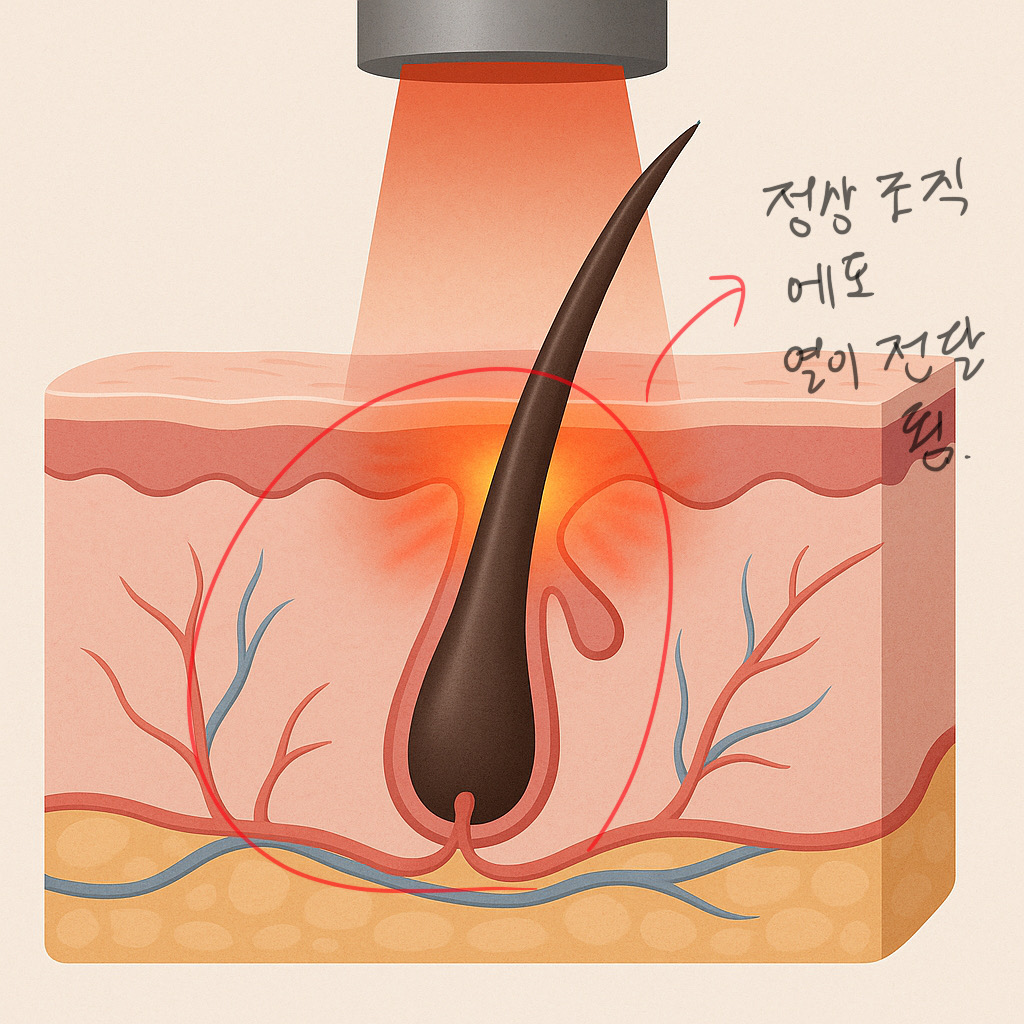
Given the close proximity of hair follicles to skin, intense heat transmission can stimulate nerve endings in the skin, which can result in a painful sensation.
Therefore, the pain experienced during laser hair removal can be understood as an indirect consequence: while the primary goal is heat damage to hair pigment, this thermal energy can also affect adjacent skin nerves.
Factors Contributing to Individual Differences in Pain Sensation
The experience of pain during laser hair removal is highly subjective and varies significantly from person to person.
Several key factors account for this variation.
Firstly, hair characteristics, specifically thickness and color, play a role. Thicker and darker hair typically contains more melanin, leading to increased laser energy absorption.
Consequently, a greater amount of heat is generated, which may intensify the sensation of pain.
Secondly, the specific treatment area's skin thickness and nerve density influence discomfort. For instance, regions with thinner skin and a higher concentration of nerve endings, like the upper lip, often report a more pronounced pain sensation.
Thirdly, an individual's unique pain threshold is a critical element. While some may perceive a mild stinging, others might experience significantly greater discomfort from the same level of stimulus.
This can be attributed to factors such as nervous system sensitivity, psychological state, and prior experiences with similar treatments.
Effective Strategies for Managing Discomfort
Minimizing procedural pain is often possible. One primary approach involves utilizing an advanced cooling system.
Many contemporary, high-quality laser hair removal systems, including models like Apogee or GentleMax, integrate sophisticated cooling mechanisms.
These systems work by rapidly cooling the skin surface directly before or after the laser pulse, which helps to mitigate nerve stimulation and the associated thermal discomfort.
Adequate and precise cooling is crucial not only for easing pain but also for lowering the potential for thermal injury to the skin.
A second strategy involves the application of topical anesthetic cream.
With advanced hair removal devices, the use of anesthetic cream alone can often help to significantly diminish discomfort, making the procedure more manageable.
It is important to apply such creams judiciously, avoiding widespread use across the entire body or leaving them on for durations exceeding recommended guidelines.
The third approach centers on precise power adjustment. A skilled practitioner customizes the laser's energy settings based on hair thickness, skin tone, and the particular attributes of the treatment zone.
Insufficient energy may compromise the effectiveness of hair removal, while excessive energy can elevate pain and the risk of side effects. Therefore, the expertise to carefully balance both safety and efficacy is paramount.
Achieving a More Comfortable Treatment Experience
Recent clinical findings support that the combined application of cooling systems and topical anesthesia can substantially lower discomfort during laser hair removal.
For instance, a 2020 study indicated that pain scores were diminished by over 50% when both cooling and anesthetic cream were utilized, compared to treatments on the same area without cooling.
Observations suggest that when advanced cooling and anesthetic cream are used together, many individuals report the procedure, even in sensitive areas like the upper lip, to be less uncomfortable than anticipated.
Therefore, for those who have hesitated due to concerns about pain, it is worth noting that applying modern technology and suitable pain management techniques can significantly alter the treatment experience.
Our Treatment Philosophy
We hold firm to the principle of recommending only truly necessary procedures for our patients.
Laser hair removal is suggested after careful consideration of individual goals and lifestyle, rather than being presented as a universal necessity. We believe it would be unfortunate if apprehension about potential discomfort led someone to dismiss this option without further inquiry.
Discomfort during laser hair removal is generally well-managed through methods such as anesthetic cream and cooling.
While discomfort is manageable and technology continues to progress, the most significant factors remain personalized treatment planning and the practitioner's diligent care.
If concerns about discomfort are causing hesitation regarding laser hair removal, we employ carefully considered methods to enhance comfort during the procedure. We recommend consulting with a specialist to discuss suitability.
Related notes
Procedure notes worth reading next.


Loading menu…