

Why Sunspots Recur and Why Post-Removal Care is Important Beomgye, Pyeongchon, Beomgye Station, Pyeongchon Station, Hogye-dong, Bisan-dong, Gwanyang-dong, Dongan-gu, Indeogwon, Geumjeong, Anyang
6/5/2026
This is a procedure note for Why Sunspots Recur and Why Post-Removal Care is Important at Beomgye(Opening Soon) KKEUT Korean Clinic.
The recurrence of lentigo is not a problem that ends with a single clean laser removal.
Melanin cells located in the epidermal layer of the skin regenerate pigment whenever they receive external stimuli, including UV rays. Even if the removal procedure itself was successful, depending on how you manage your skin after removal, lentigo may recur in the same spot or even become darker.
What is Lentigo — The Nature of Epidermal Pigmented Lesions
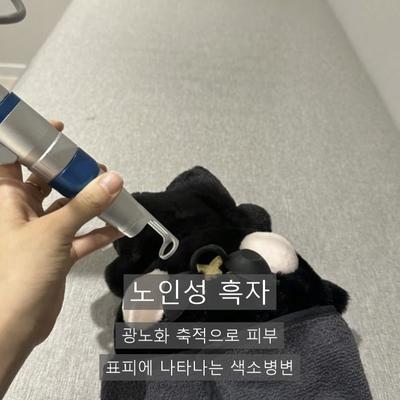
Lentigo is a condition where melanin pigment is locally over-deposited in the epidermal layer of the skin. It is broadly divided into two types: senile lentigo and solar lentigo.
Senile lentigo appears as skin cell regeneration slows down with age and cumulative UV damage accumulates. It primarily manifests as flat, clearly defined brown spots on areas frequently exposed to sunlight, such as the back of the hands, face, and neck. Solar lentigo is the result of hyperactive melanocytes due to repeated exposure to strong UV rays. It can appear even in younger individuals and may temporarily fade when UV exposure decreases.
3 Reasons Why Lentigo Recurrence Is Repeated
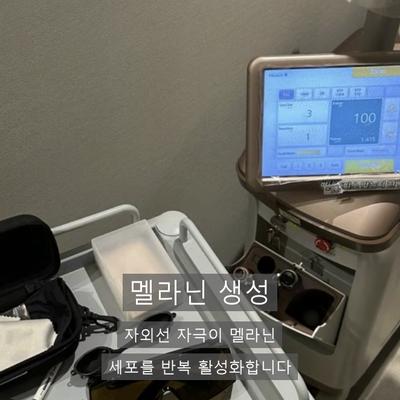
First, insufficient UV protection. Immediately after laser removal of lentigo, the skin is in a sensitive state. If exposed to UV rays during this period, recovering melanocytes immediately react and reproduce pigment. Lentigo recurrence easily occurs if sunscreen is not diligently applied or if one misunderstands that indoor living alone is sufficient.
Second, some skin types have melanin cells that react sensitively to irritation. Even with the same treatment conditions, skin with a faster pigment regeneration rate has a higher chance of recurrence. In such cases, a home care routine including melanin-inhibiting ingredients must be combined after the removal procedure to extend the recurrence interval.
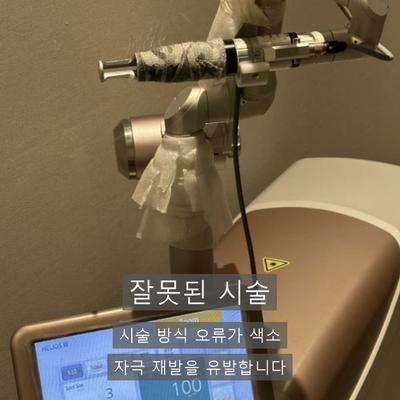
Third, incorrect treatment methods can conversely increase pigment stimulation. If a laser with an unsuitable wavelength for lentigo is used, or if a treatment is performed with an indiscriminately strong output without diagnosis, post-inflammatory hyperpigmentation after epidermal damage can worsen. This is called 'Post-Inflammatory Hyperpigmentation (PIH)', and it can result in darker and wider spread than the original lentigo.
Lentigo and Melasma: Treatments Can Backfire If Not Distinguished
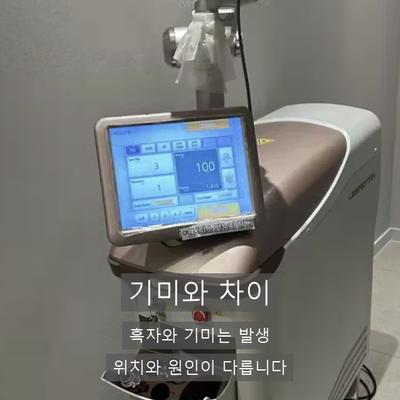
When discussing the issue of lentigo recurrence, it is important to address the confusion with melasma. Although they may appear similar to the naked eye, the two lesions differ in their location and cause.
Lentigo is a lesion where pigment is deposited only in the epidermis. Its borders are distinct, and its color is generally uniform. In contrast, melasma spreads across the epidermal-dermal junction, has indistinct borders, and involves complex factors such as UV radiation, hormones, and heat stimulation.
If a strong 532nm laser, effective for lentigo, is applied directly to melasma, it can stimulate melanocytes and worsen the melasma. Conversely, low-output toning used for melasma management alone will not properly remove lentigo that is firmly established in the epidermis. Accurate diagnosis that distinguishes between the two lesions must precede to enable the correct treatment choice.
Principles of Prevention and Home Care to Prevent Lentigo Recurrence
Key lifestyle habits to prevent lentigo recurrence are as follows:
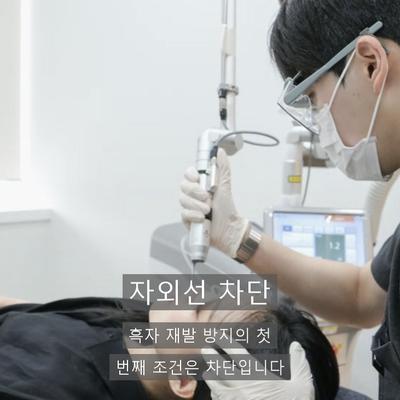
UV protection should be applied daily, regardless of weather or season. It is recommended to use products with SPF 50+ PA+++ or higher and reapply every 2-3 hours when outdoors. Indoor UV radiation (UVA) near windows can also stimulate pigmentation, so sunscreen application is necessary indoors as well.
Intensive care is especially needed for 4 weeks after treatment. Using skincare containing melanin-inhibiting ingredients such as niacinamide, arbutin, and vitamin C during this period can reduce the likelihood of recurrence. Heat-inducing activities like saunas, jjimjilbangs (Korean bathhouses), and strenuous exercise are also factors that stimulate pigmentation, so it is best to refrain from them for 2 weeks immediately after treatment.
If recurrence continues even after lentigo removal, combining melanin-inhibiting treatments is effective. Instead of simply repeating one-off removal procedures, a management plan should be designed to stabilize the skin's pigment environment itself, which can substantially extend the recurrence cycle of lentigo.
The Sincerity of Kkeut Korean Medicine Clinic — 3 Principles to Prevent Lentigo Recurrence
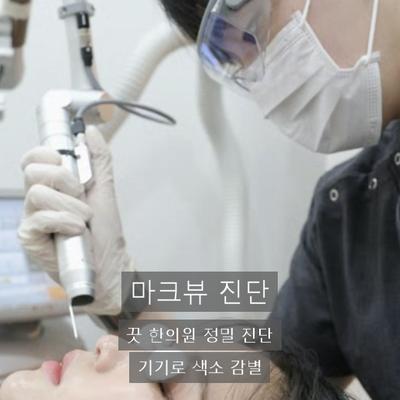
Before lentigo removal, Kkeut Korean Medicine Clinic photographs the pigmented lesions with a MarkVu diagnostic device, and the director directly differentiates them. Accurately distinguishing whether it is lentigo, freckle, melasma, or seborrheic keratosis is the starting point for preventing recurrence. Since proceeding with treatment without diagnosis is the biggest cause of increased risk of post-treatment hyperpigmentation, Kkeut Korean Medicine Clinic adheres to the principle of diagnosis-based treatment.
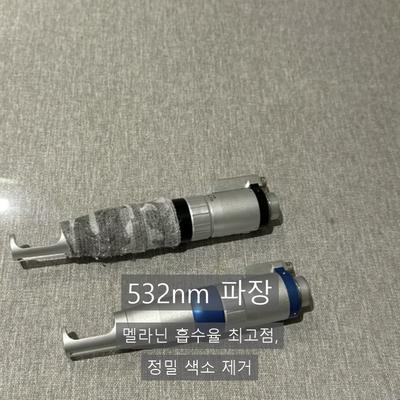
Kkeut Korean Medicine Clinic uses a 532nm wavelength for lentigo removal. 532nm is the wavelength with the highest melanin absorption, precisely matching epidermal pigmented lesions. We apply the same wavelength as famous high-end lentigo lasers such as the Lipo-cut and Ruby series at a reasonable cost. Accurate wavelength selection reduces unnecessary stimulation to melanocytes, which is a direct condition for inhibiting lentigo recurrence.
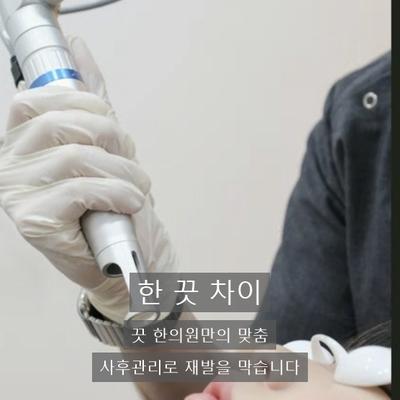
Kkeut Korean Medicine Clinic does not use Duoderm gel after lentigo removal. Since lentigo laser treatment does not create wounds on the epidermal surface, indiscriminately applying sticker-type dressings can actually cause pigment stimulation or problems with a moist environment. Differentiated post-treatment care tailored to the essence of the procedure is how Kkeut Korean Medicine Clinic reduces lentigo recurrence.
Frequently Asked Questions
Q. Is lentigo recurrence unavoidable?
A. While it is difficult to completely prevent lentigo recurrence itself, it is possible to extend the recurrence cycle and reduce the scope of recurrence. The likelihood of lentigo recurrence is significantly lowered when three conditions are met: accurate diagnosis, treatment with an appropriate wavelength, and post-treatment UV protection and home care management.
Q. Can lentigo recurrence turn into melasma?
A. Strictly speaking, they are different lesions, but if hyperpigmentation repeatedly occurs and spreads after lentigo removal, a pigment pattern resembling melasma can develop. This often happens due to insufficient post-treatment care or repeated application of an inappropriate wavelength.
Q. How many treatments are needed to prevent lentigo recurrence?
A. It varies depending on the depth of the lesion and pigment density, but planning additional care based on the skin's condition, rather than a single treatment, is more effective in reducing lentigo recurrence. At Kkeut Korean Medicine Clinic, we assess the skin's reaction after the first treatment and guide the next steps for management.
Q. If lentigo disappears and then reappears, should I receive stronger treatment?
A. Increasing the intensity is not always the correct answer. Excessive output can actually cause epidermal damage and hyperpigmentation. The principle is to determine the appropriate energy level after diagnosing the pattern of lentigo recurrence and the skin condition.
The Sincerity of Kkeut Korean Medicine Clinic
Kkeut Korean Medicine Clinic uses a MarkVu diagnostic device, where the director personally distinguishes between lentigo, melasma, and freckles to perform diagnosis-based treatments.
Kkeut Korean Medicine Clinic delivers energy precisely matched to epidermal lentigo pigments using the 532nm wavelength, which has the highest melanin absorption rate.
Kkeut Korean Medicine Clinic provides customized post-treatment care tailored to the essence of the procedure. We focus on inhibiting lentigo recurrence by minimizing pigment stimulation without unnecessary dressings.
A subtle difference, a significant result — Experience it at Kkeut Korean Medicine Clinic.
Loading menu…