

Herbal Diet Medicine Versus Western Medicine (Like Saxenda): What About Speed? Beomgye, Pyeongchon, Beomgye Station, Pyeongchon Station, Hogye-dong, Bisan-dong, Gwanyang-dong, Dongan-gu, Indeogwon, Geumjeong, Anyang
8/10/2025
This is a procedure note for Herbal Diet Medicine Versus Western Medicine (Like Saxenda): What About Speed? at Gyeonggi Anyang Beomgye KKEUT Korean Clinic.
Many individuals often ask if Traditional Korean Medicine approaches to weight management are slower than those in Western medicine.
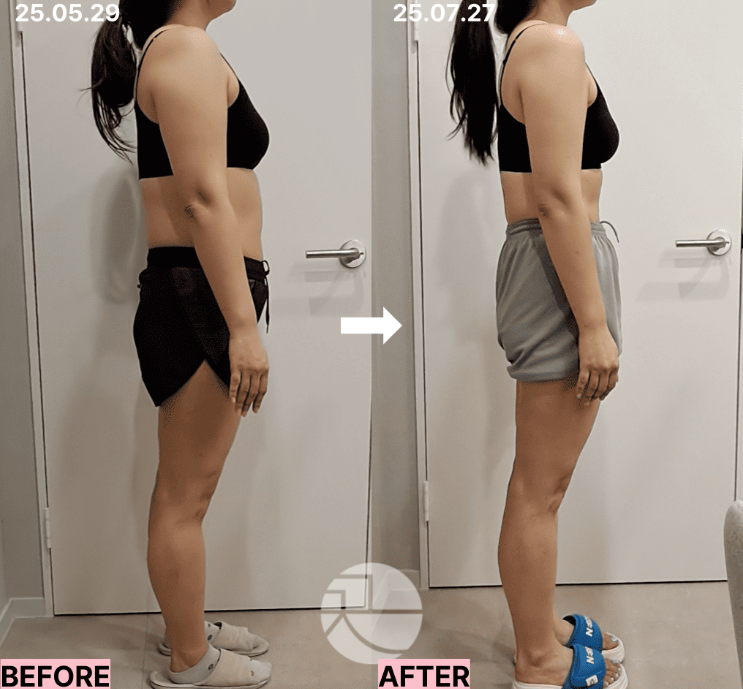
During weight management consultations, we frequently encounter questions similar to this.
Patients often inquire, “Doctor, is it true that Traditional Korean Medicine leads to slower weight loss compared to Western medicine, which offers quicker results?”
There is a general public perception that Western medical treatments provide immediate effects, while Traditional Korean Medicine is seen as a long-term approach.
However, recent international research suggests that this common understanding may not always hold true.
Real-World Patient Study Involving Over 1,300 Individuals
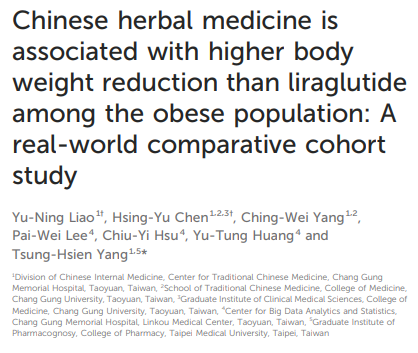
A large-scale real-world cohort study, published in Frontiers in Pharmacology in 2022 (with a corrected version released in 2023),
conducted a comparative analysis of Traditional Korean Medicinal (CHM) diet treatments against liraglutide (Saxenda) for obese patients (BMI ≥ 25 kg/m²).
-Study Period: 2013년부터 2018년
-Traditional Korean Medicine (CHM) Group: 701명
-Liraglutide Group: 659명
-Analysis Duration: 180일 (약 6개월)
-Statistical adjustments (overlap weighting) were made to account for differences in initial diseases, age, and lifestyle factors among participants.
Results
The Traditional Korean Medicine Group Exhibited More Pronounced and Rapid Changes
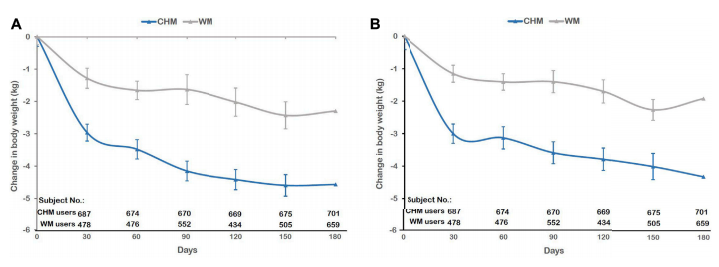
Observed weight changes after 180 days were as follows:
-Average Weight Loss: CHM group showed −4.50 ± 4.07 kg compared to Liraglutide group's −2.15 ± 4.05 kg (p < 0.001).
-BMI Decrease: CHM group exhibited −1.77 ± 1.73, while the Liraglutide group showed −0.90 ± 2.14 (p < 0.001).
-Patients achieving ≥ 5% Weight Loss: CHM group 53.21%, compared to Liraglutide group 22.46%.
-Patients achieving ≥ 10% Weight Loss: CHM group 18.97%, versus Liraglutide group 4.55%.
This indicates that in both average weight loss speed and the proportion of patients who reached specific target weight loss percentages,
the Traditional Korean Medicine (CHM) group demonstrated more favorable outcomes.
Side Effect Characteristics
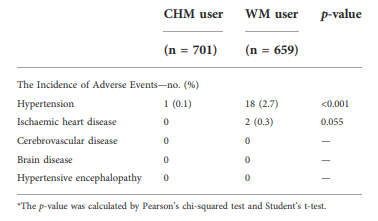
Regarding reported side effects, the Western medicine group showed a higher incidence of hypertension (2.7% vs 0.1%).
Gastrointestinal side effects such as nausea and vomiting were observed more frequently in the Western medicine group,
while the Traditional Korean Medicine group exhibited a relatively stable safety profile, even with extended use.
What Contributed to These Results?
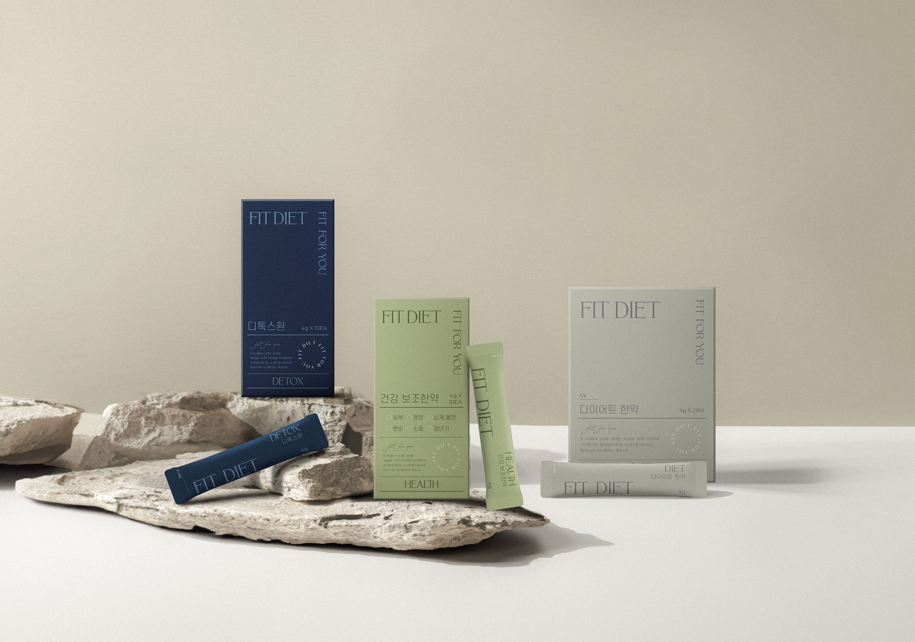
Traditional Korean Medicine prescriptions typically consist of a blend of ingredients designed to support fat breakdown, appetite regulation, and circulation improvement, rather than a single compound.
Specifically, certain prescriptions, particularly those that include Ma Huang (ephedra) ingredients,
-May stimulate the sympathetic nervous system, which could contribute to an increased basal metabolic rate.
-Could improve circulation, potentially accelerating fat oxidation.
-Possess a diuretic effect, which may help suppress weight gain related to edema.
These multifaceted mechanisms are believed to operate concurrently.
This differs from liraglutide, which primarily targets central appetite suppression as its main mechanism.
In Summary
Is the perception that herbal medicine for weight loss is slower than Western medicine necessarily accurate?
Based on this study's findings, this is not necessarily the case.
In fact, at the six-month point, the herbal medicine group exhibited more favorable metrics in both average weight loss and the rate of achieving target weight reduction.
Additionally, the reported incidence of side effects was comparatively lower.
If you are considering a weight management approach that takes both safety and expected effectiveness into consideration,
Herbal dietary prescriptions may be considered as a supportive approach for individuals managing their weight in a healthy manner.
Research Overview
- Title: Chinese herbal medicine is associated with higher body weight reduction than liraglutide among the obese population: A real-world comparative cohort study
- Authors: Yu-Ning Liao, Hsing-Yu Chen, Ching-Wei Yang, Pai-Wei Lee, Chiu-Yi Hsu, Yu-Tung Huang, Tsung-Hsien Yang
- Journal: Frontiers in Pharmacology
- Vol./Article: Vol. 13, Article 978814
- Publication Date: September 9, 2022 (Correction: May 26, 2023)
- DOI: 10.3389/fphar.2022.978814
Related notes
Procedure notes worth reading next.


Loading menu…