

Men's Facial Hair Removal: 3 Things You Need to Know for a Clean Finish, from Beards to Fine Hairs? Beomgye, Pyeongchon, Beomgye Station, Pyeongchon Station, Hogye-dong, Bisan-dong, Gwanyang-dong, Dongan-gu, Indeogwon, Geumjeong, Anyang
6/20/2026
This is a procedure note for Men's Facial Hair Removal: 3 Things You Need to Know for a Clean Finish, from Beards to Fine Hairs? at Gyeonggi Anyang Beomgye KKEUT Korean Clinic.
Men's Facial Hair Removal, Why Is the Face So Tricky?
What most people considering men's facial hair removal realize first is that 'the face is much more complex than other areas.'
Beard, philtrum, under the chin, even the hairline — the thickness, color, and density of hair vary completely from area to area. Applying uniform energy may be ineffective or even put a strain on the skin.
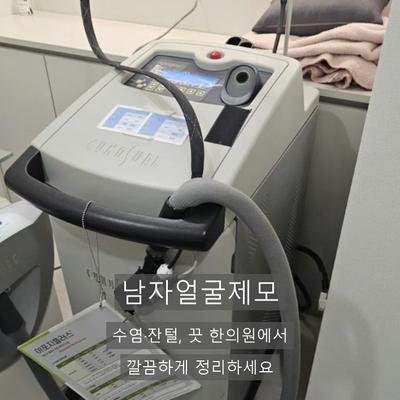
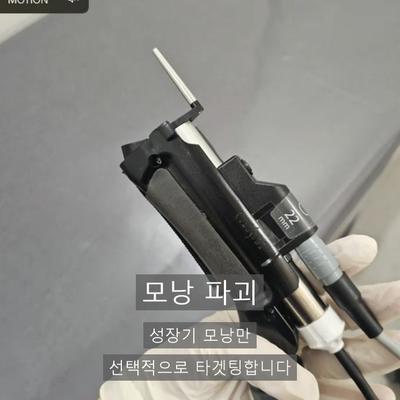
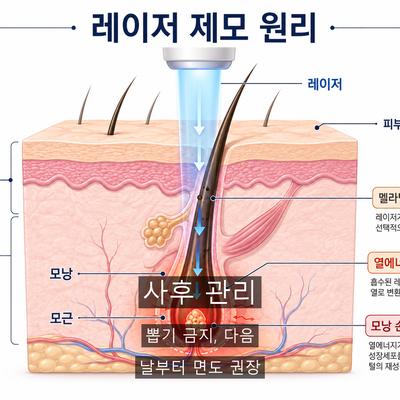
Laser hair removal works by selectively absorbing energy into the dark melanin pigment of the hair, and that heat then destroys the hair root and follicle.
The key is that the laser is only effective on hair follicles in the 'anagen phase' (growth phase). Hair goes through repeating cycles of growth, regression, and resting, but the laser is only effective during the growth phase.
Since not all hair follicles are in the growth phase simultaneously, repeated treatments are absolutely necessary, and adhering to these intervals determines the overall effectiveness.
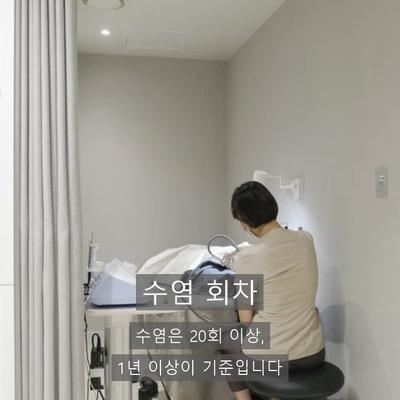
First Thing to Know — Beard Treatment Sessions Differ from Other Areas
Among men's facial hair removal, the beard area has completely different session criteria than other body parts.
While 10 sessions are generally recommended for armpit, arm, and leg hair removal, beards require 20 or more sessions, spanning over a year.
Beard hair follicles are strongly influenced by hormones, making them more resilient than those in other areas, and their hair cycles are complexly intertwined. Since anagen phase follicles exist randomly in one area, complete removal cannot be expected without a sufficient cumulative number of sessions.
Treatment intervals are a minimum of 3 weeks, with 4 weeks recommended. This timing aligns with the skin's exfoliation and regeneration cycle, allowing new anagen hair to emerge, maximizing the efficiency of each session.
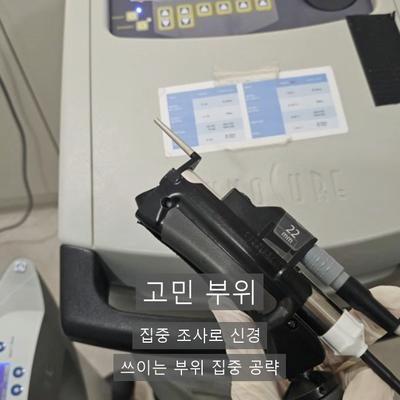
Second Thing to Know — Energy Must Be Adjusted According to Hair Characteristics
The most common failure pattern in men's facial hair removal is 'applying uniform energy.'
Thick, dark hairs like beards have high melanin content, leading to high energy absorption. Using a short pulse duration can cause rapid energy absorption, leading to epidermal damage. For thick hair, using a longer pulse to deliver heat gently is a safe way to protect the epidermis.
Conversely, fine, light vellus hairs on the philtrum or cheeks have less melanin content, resulting in lower absorption. To achieve effectiveness, the energy density (J/cm²) must be increased or repeated irradiation must be used to ensure the heat properly reaches the hair root.
In areas with dense hair, energy must be dispersed to prevent burns from overheating, and for darker skin tones, the output must be delicately lowered to ensure safety, as energy can be absorbed by the skin's melanin.
Receiving treatment without these detailed adjustments will result in reduced effectiveness or unnecessary skin irritation.

Third Thing to Know — Numbing Cream Isn't Everything
Many people think, 'It won't hurt if I just apply numbing cream' before men's facial hair removal. This idea is half right and half wrong.
The numbing cream ingredients primarily act on the skin surface and do not anesthetize deep hair follicles. It's not a procedure where medical anesthesia is essential; its main role is psychological comfort.
The actual pain sensation is comparable to receiving treatment while holding an ice cooler. As the number of sessions increases and the hair itself decreases, the pain also diminishes, so after the first few sessions, it becomes much more comfortable.
Folliculitis may occur after treatment, which is a normal reaction that happens as heat is directly delivered to the hair follicles. Consistent application of regenerative cream will lead to natural recovery over time.
There are absolute rules to follow for aftercare. Plucking hair during the hair removal period is strictly prohibited. If the hair root that the laser is supposed to target disappears, the effect of that session is lost. Shaving is recommended starting the day after the procedure, rather than on the day of treatment. For 1-2 days after treatment, avoid heat stimulation such as saunas, strenuous exercise, or alcohol.
One more thing to know is that 'complete permanent hair removal' does not exist.
The goal of laser hair removal is semi-permanent hair removal. Even if hair follicles are destroyed through a sufficient number of sessions, some very fine hairs may grow back depending on individual constitution, hormones, and lifestyle. Even after completion, maintaining treatment once every 2-3 months can keep the skin smooth for a long time.
Kkeut Clinic's Unique Men's Facial Hair Removal Design
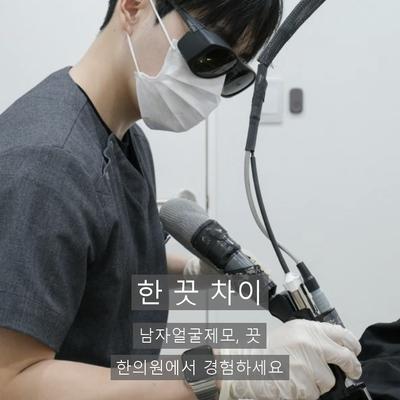
Kkeut Clinic does not approach men's facial hair removal as merely 'shooting a laser and finishing.' We analyze the thickness, melanin content, and density of hair in each facial area to custom design the Pulse Duration and energy density (J/cm²) separately.
For thick, dark beard hair, we use a long pulse to gently deliver heat and protect the epidermis. For fine, light vellus hair, we increase the energy density or use repeated irradiation to ensure it effectively acts on the hair root. In areas with dense hair, energy is dispersed, and for darker skin tones, output is delicately lowered to ensure safety.
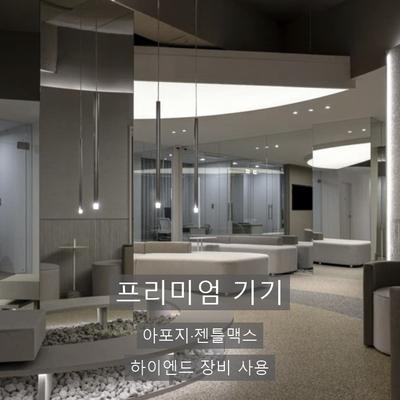
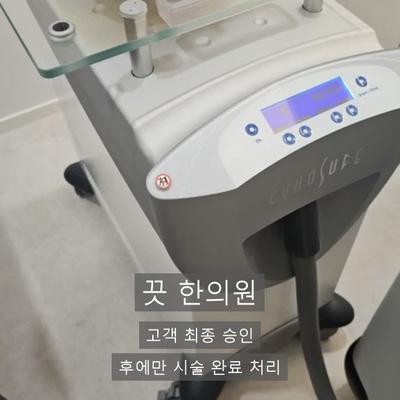
For equipment, we only operate high-end devices like Apogee and GentleMax, which use Alexandrite wavelengths and have undergone global verification. Since the equipment's inherent cooling system and pain control capabilities determine the treatment's perfection, Kkeut Clinic makes no compromises in equipment selection.
Frequently Asked Questions
Q. For men's facial hair removal, how many sessions are needed for the beard area?
A. For men's facial hair removal, beards typically require a minimum of 20 sessions, extending over a period of 1 year or more. This is because the beard area is strongly influenced by hormones, leading to higher hair follicle survival rates compared to other body parts. At Kkeut Clinic, we provide personalized session plans considering the specific characteristics of each area.
Q. Is it essential to apply numbing cream for men's facial hair removal?
A. Numbing cream only temporarily desensitizes the skin surface and does not anesthetize the hair roots. The pain of men's facial hair removal is similar to the sensation of receiving treatment with an ice cooler applied, and as sessions accumulate and hair decreases, the pain also diminishes.
Q. When can I shave after men's facial hair removal?
A. To minimize skin irritation, it's recommended to avoid shaving on the day of the procedure and to start the day after. Immediately after the procedure, the hair might be soft and not shave as cleanly as usual.
Q. What should I do if folliculitis occurs after men's facial hair removal?
A. Folliculitis has a higher chance of occurring as heat is directly delivered to the hair follicles. This is a normal reaction during men's facial hair removal, and consistent application of regenerative cream will lead to natural recovery over time.
Kkeut Clinic's Sincere Approach
Kkeut Clinic does not approach men's facial hair removal as just a 'laser treatment and done.' We operate an unlimited responsibility system where additional areas are reconfirmed before the end of the procedure, and it is only finalized after the client's ultimate approval.
Kkeut Clinic precisely focuses and irradiates energy on specific areas that individuals are particularly concerned about, ensuring that problem areas often overlooked in standard treatments are thoroughly addressed.
Kkeut Clinic utilizes premium devices such as Apogee and GentleMax, which are proven for their performance and safety. It customizes Pulse Duration and energy density based on hair thickness, color, and density, simultaneously ensuring both safety and effectiveness.
A Subtle Difference, Remarkable Results — Experience it at Kkeut Clinic.
Related notes
Procedure notes worth reading next.


Loading menu…