

Must-read if you want to minimize scarring from tattoo removal. Beomgye, Pyeongchon, Beomgye Station, Pyeongchon Station, Hogye-dong, Bisan-dong, Gwanyang-dong, Dongan-gu, Indeogwon, Geumjeong, Anyang
7/10/2026
This is a procedure note for Must-read if you want to minimize scarring from tattoo removal. at Gyeonggi Anyang Beomgye KKEUT Korean Clinic.
Many hesitate to undergo laser tattoo removal due to concerns about tattoo removal scars.
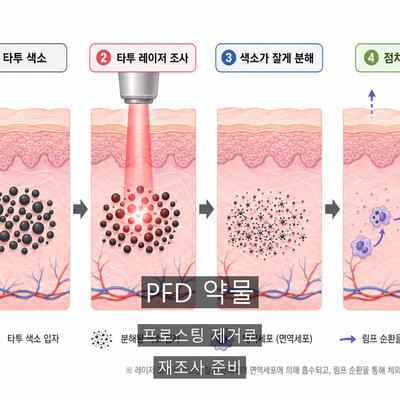
Tattoo removal is not a procedure that shaves off the skin itself, but rather proceeds on the principle of selectively destroying only ink pigment particles.
When laser energy is absorbed by tattoo ink and breaks down the pigment particles, immune cells absorb them and excrete them from the body through lymphatic vessels.
During this process, the epidermis and dermis structures themselves are not significantly damaged, so within the normal scope of treatment, the likelihood of tattoo removal scars remaining is low.
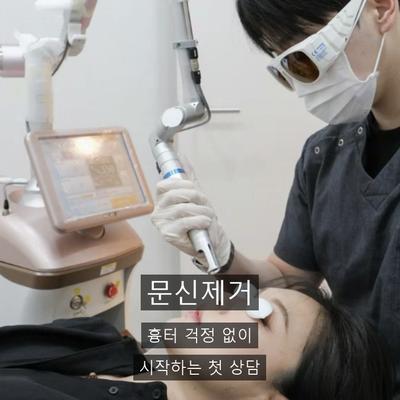
Scars usually result from a failure in aftercare rather than the procedure itself.
Common causes include habits such as popping blisters that form after treatment or forcibly peeling off scabs.
Blisters are a natural protective response of the skin, so it's important not to pop them forcibly. Instead, apply a thin layer of regenerating ointment several times a day to prevent dryness.
UV exposure also increases the risk of both tattoo removal scars and hyperpigmentation, so sunscreen must be carefully applied when the treated area is exposed.
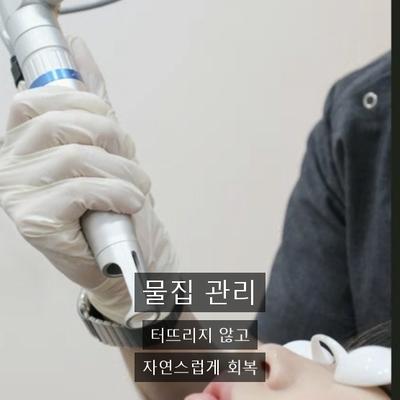
More important than which equipment (nanosecond or picosecond laser) is used is the total number of treatment sessions.
While picosecond lasers are widely considered more effective at breaking down pigment particles into finer fragments, nanosecond lasers can also achieve sufficiently clear results. However, the nanosecond method may require relatively more sessions.
Traditional methods often required an average of 10 or more repeated laser applications with a recovery period of 6-8 weeks.
As the number of sessions increases, skin irritation accumulates, and the risk of tattoo removal scars also grows.
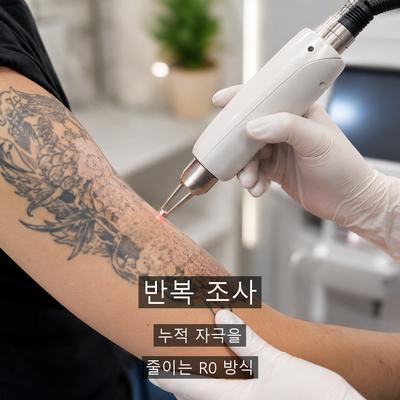
For these reasons, the R0 method, which involves repeatedly treating the same area multiple times during a single visit, has recently gained attention.
This method is designed to quickly remove the white bubbles (frosting) that appear after irradiation using a drug called PFD, allowing for re-treatment within 1-2 minutes.
Research reports indicate that applying the R0 method can reduce the total number of treatment sessions by about 30-50 percent compared to traditional methods. Furthermore, results confirm that over 70-90 percent of pigment removal is possible with only about 3 clinic visits.
As the number of clinic visits decreases, so does the accumulated irritation on the skin, making it a favorable approach in terms of scar management.
Immediately after the procedure, swelling, redness, and a whitening phenomenon may appear, typically subsiding within 1 to 2 weeks. There is some individual variation during this period.
Semi-permanent makeup removal and residual tattoos from other clinics are approached with the same principle. For fainter traces, wavelength selection and intensity adjustment must be more precise to ensure a clean finish without scars.
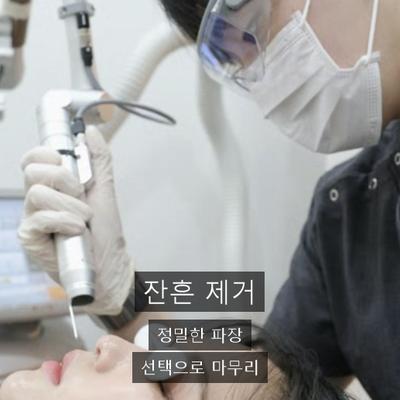
Kkeut Clinic's Unique R0+R20 Hybrid Protocol
At Kkeut Clinic, after applying PFD, we do not proceed with immediate irradiation; instead, we undergo an additional 15-minute waiting period.
During this time, the medication takes full effect, and the frosting subsides almost completely, allowing the next laser irradiation to target the pigment more precisely.
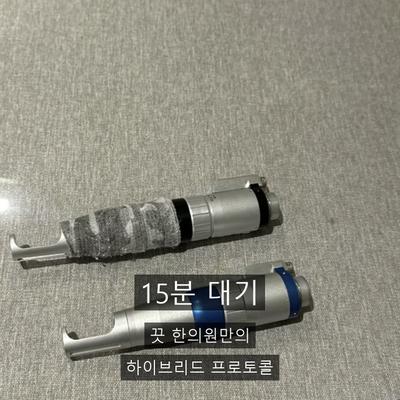
Kkeut Clinic has combined the stability of the traditional R20 method through this waiting period. It is not just a fast procedure, but a method that proceeds to the next irradiation only when penetration and soothing are optimized.
Considering the sensitive melanin response of Asian skin, Kkeut Clinic's principle also includes conducting 3 immediate repeat irradiations within a safe, side-effect-free range.
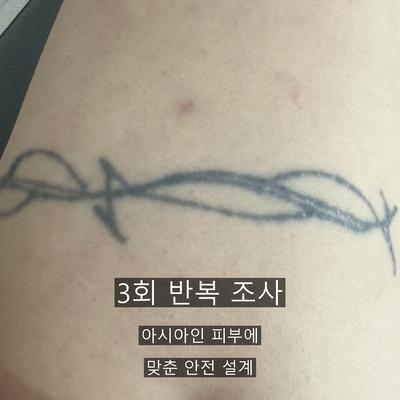
Results Only Possible at Kkeut Clinic
While the procedure time is longer than conventional methods, Kkeut Clinic's goal is to reduce the number of visits, allowing patients to experience significant pigment reduction with just a single visit.
This is the approach Kkeut Clinic recommends for those who wish to see results without worrying about scars.
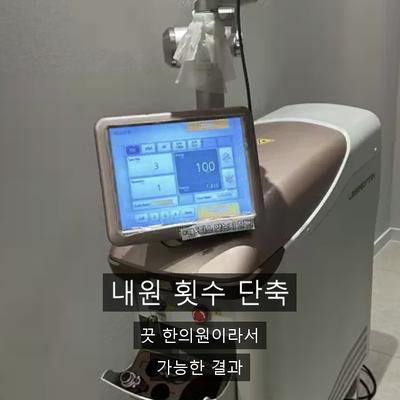
Frequently Asked Questions
Q. How many sessions does it take to determine if there will be tattoo removal scars?
A. The rate of pigment response varies greatly among individuals, so it is more accurate to assess the presence of tattoo removal scars and the degree of pigment reduction after at least 2 to 3 sessions.
Q. When do tattoo removal scars usually remain?
A. Tattoo removal scars often result from a failure in aftercare, such as popping blisters or peeling off scabs, rather than from the procedure itself.
Q. What should be checked to proceed with tattoo removal without scars?
A. The key to preventing tattoo removal scars is to ensure that the clinic meticulously manages wavelength selection, intensity control, and re-treatment intervals. Kkeut Clinic carefully designs and implements these aspects.
Q. Is there a risk of tattoo removal scars with semi-permanent makeup?
A. Semi-permanent makeup removal also uses the same laser principle, so the risk of tattoo removal scars can be kept low if the intensity is appropriately adjusted.
Kkeut Clinic's Sincerity
Kkeut Clinic provides differentiated results through its R0+R20 hybrid protocol, which includes a 15-minute waiting period after PFD application.
Kkeut Clinic enhances patient satisfaction through its penetration optimization know-how, which involves near-perfect removal of frosting to ensure more precise targeting for subsequent irradiations.
Kkeut Clinic pursues both safety and effectiveness simultaneously through its principle of safe, 3-time immediate repeat irradiations, considering the characteristics of Asian skin.
A Subtle Difference, Distinct Results — Experience it at Kkeut Clinic.
Related notes
Procedure notes worth reading next.


Loading menu…