

How to Manage Sebaceous Hyperplasia to Reduce Recurrence? Beomgye, Pyeongchon, Beomgye Station, Pyeongchon Station, Hogye-dong, Bisan-dong, Gwanyang-dong, Dongan-gu, Indeogwon, Geumjeong, Anyang
5/30/2026
This is a procedure note for How to Manage Sebaceous Hyperplasia to Reduce Recurrence? at Gyeonggi Anyang Beomgye KKEUT Korean Clinic.
A significant number of people searching for sebaceous hyperplasia treatment methods have already undergone treatment at least once.
They find themselves questioning the treatment method itself, as the condition recurs in the same spot after removal, or new lesions appear nearby.
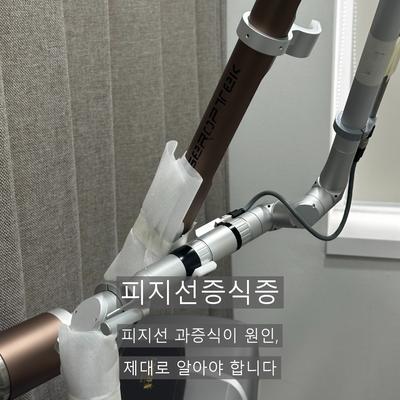
Sebaceous hyperplasia is a condition where the sebaceous glands, which secrete sebum, become abnormally enlarged.
It typically appears as yellowish papules, 1-5mm in size, in areas with active sebum secretion such as the forehead, nose, and cheeks.
Its incidence increases after the age of 40, and the root cause is structural overgrowth of the sebaceous glands themselves.
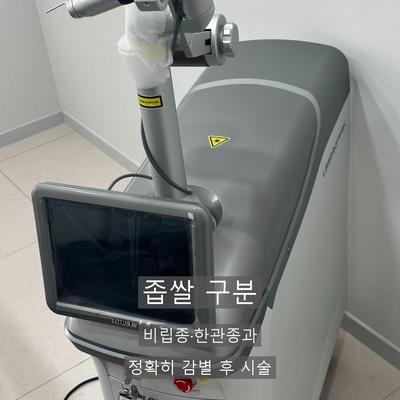
Differentiation from milia and syringomas comes first
Even seemingly similar small, rice-grain-like lesions have completely different causes and structures.
Milia are keratin cysts, syringomas are sweat gland proliferations, and sebaceous hyperplasia is an enlargement of the sebaceous glands themselves; each originates from different tissues.
At Kkeut Clinic, we do not treat seemingly similar small, rice-grain-like lesions as the same without differentiation.
Our fundamental principle at Kkeut Clinic is to perform precise differential diagnosis and then treat each lesion separately with an approach tailored to its specific nature.

Surface removal alone makes recurrence difficult to prevent
The most crucial point in sebaceous hyperplasia treatment is 'what to remove'.
Methods that only remove surface papules leave the already enlarged sebaceous gland structure intact, making it highly likely to regrow in the same spot.
To reduce recurrence, the proliferated sebaceous gland itself must be targeted.

Kkeut Clinic's Unique Cause Removal Program
At Kkeut Clinic, for sebaceous hyperplasia, we offer a specialized combined program that includes Agnes (radiofrequency insulated needle treatment) instead of simple surface removal.
Agnes involves precisely inserting an insulated, ultrafine needle deep into the sebaceous glands within the skin, then directly emitting radiofrequency energy from the needle tip to destroy the sebaceous gland itself.
Since very little energy is delivered to the skin surface and it acts precisely only on the target tissue, it directly removes the causative structure while minimizing damage to surrounding skin.
This is a fundamental approach that differs significantly from conventional laser surface removal.
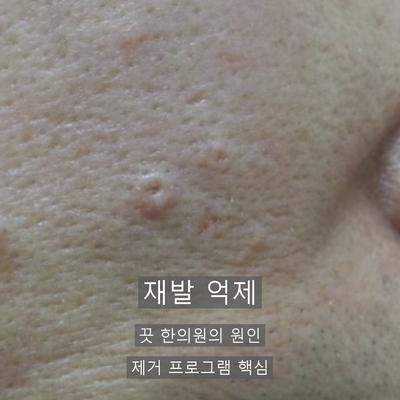
The fact that Kkeut Clinic has a separate pricing structure for the Agnes combined program signifies our genuine commitment to preventing recurrence.
This program was designed with the conviction that only a fundamental approach that destroys the sebaceous gland itself can be truly meaningful as a sebaceous hyperplasia treatment method.
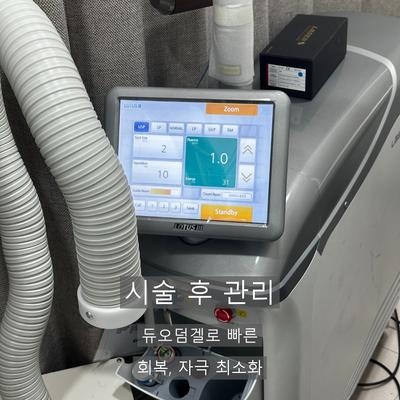
Post-Procedure Care: This is how we proceed
At Kkeut Clinic, we use Duoderm gel after the procedure.
Being a gel type rather than a regular Duoderm sticker, it can be used comfortably by those with sticker allergies, and it reliably protects the treated area without the hassle of peeling and sticking.
Sun protection after the procedure is essential to prevent hyperpigmentation, and daily care to reduce excessive sebum secretion (such as avoiding overly oily cosmetics, proper cleansing habits, etc.) also plays a supportive role in preventing recurrence.

Frequently Asked Questions
Q. I underwent laser removal for sebaceous hyperplasia, but it recurred. Why?
A. In sebaceous hyperplasia treatment, surface lasers alone leave the enlarged sebaceous gland structure intact, leading to a high chance of recurrence. At Kkeut Clinic, we focus on recurrence prevention with a combined Agnes approach that destroys the sebaceous gland itself.
Q. How is it differentiated from milia or syringomas?
A. Although they may look similar, their tissue structures and causes are different. At Kkeut Clinic, we first perform an accurate differential diagnosis and then treat each lesion separately with a method tailored to it.
Q. What is the downtime for sebaceous hyperplasia treatment?
A. It varies depending on the treatment method and scope, but Kkeut Clinic utilizes Duoderm gel to help accelerate post-procedure recovery as much as possible. For detailed information, we recommend receiving personalized guidance during your consultation.
Q. How many sessions of Agnes are typically needed for sebaceous hyperplasia treatment?
A. It depends on the number, size, and distribution of the lesions. At Kkeut Clinic, we will assess your condition directly during your visit and provide a treatment plan outlining the number of sessions.
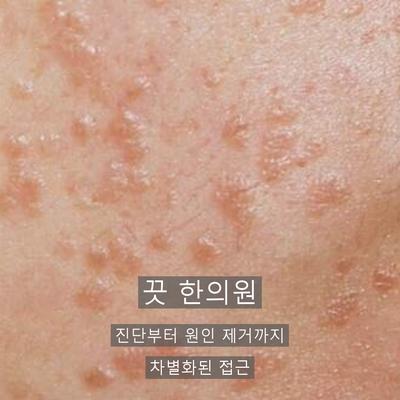
Kkeut Clinic's Sincere Approach
Kkeut Clinic accurately differentiates between similar small, rice-grain-like lesions such as milia, syringomas, and sebaceous hyperplasia, applying distinct approaches to each, thereby providing effective results without unnecessary procedures.
Kkeut Clinic operates a separate Agnes combined program that destroys the sebaceous gland itself, offering a different level of recurrence prevention approach compared to surface removal methods.
Kkeut Clinic has established a post-treatment care environment using the Duoderm gel protocol to assist with rapid recovery without allergy concerns.
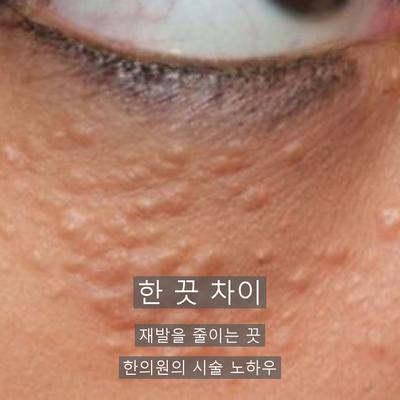
A subtle difference, a distinct result — Experience it at Kkeut Clinic.
Related notes
Procedure notes worth reading next.

Sebaceous Gland Hyperplasia: What Causes It?
2026. 6. 4.

Gold PTT Benefits: Understanding the Principle of Selective Sebaceous Gland Suppression and the Optimal Number of Treatment Sessions
2026. 9. 13.

Considering Aqua Peel for skin peeling and sebum control? Learn who should experience its benefits.
2025. 12. 17.
Loading menu…