

Why it's difficult to remove large moles in a single session Beomgye, Pyeongchon, Beomgye Station, Pyeongchon Station, Hogye-dong, Bisan-dong, Gwanyang-dong, Dongan-gu, Indeogwon, Geumjeong, Anyang
7/11/2026
This is a procedure note for Why it's difficult to remove large moles in a single session at Gyeonggi Anyang Beomgye KKEUT Korean Clinic.
When considering large mole removal, the most common question is whether it can be completely removed in one go.
The older and larger the mole, the more complex the procedure can be than expected.
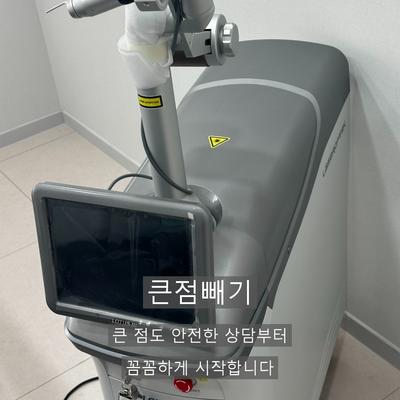
A mole is a benign pigmented lesion formed by clusters of melanin cells.
Small moles are located close to the epidermis, making them relatively easy to remove with a single laser treatment.
On the other hand, large moles often have roots deep in the dermis and spread widely horizontally.
For this reason, older and larger moles require thorough consultation before treatment.
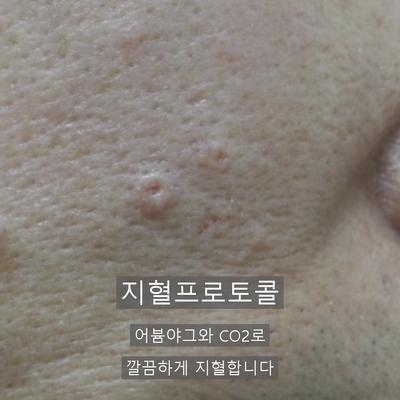
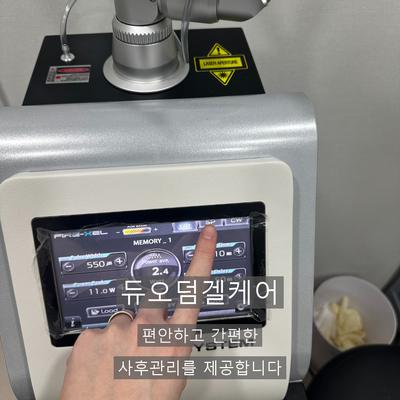
The procedure involves combining Er:YAG and CO2 lasers to ablate the mole tissue.
The Er:YAG laser precisely ablates tissue while minimizing surrounding thermal damage, leading to faster recovery.
The CO2 laser has excellent hemostatic effects and is used together when treating areas with significant bleeding.
Combining the two lasers appropriately for each situation is a key know-how in mole removal procedures.
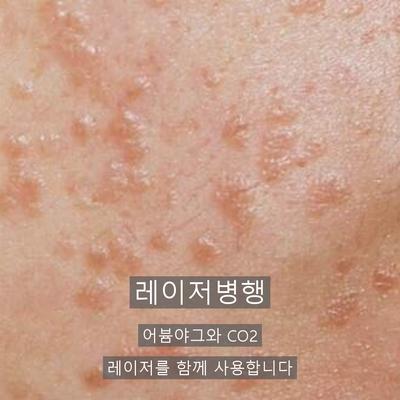
The difficulty of removing a large mole in one go lies in its depth and width.
If the laser is applied too deeply in a single session, the mole may be removed, but the risk of scarring or depressed marks increases.
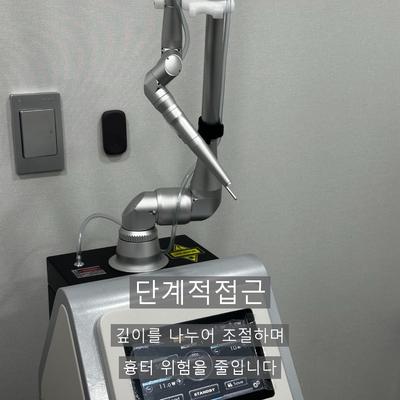
This is why a staged approach is necessary: treating only to a safe depth, observing recovery, and then addressing any remaining pigmentation.
Rather than forcing a single treatment, it is safer to monitor the progress and adjust the treatment speed.
Large moles near the eyes or on protruding areas require particularly cautious approaches.
Large mole treatments are widely applicable, not only for flat moles but also for raised moles and elevated lesions.
Before the procedure, we examine the mole's shape, color, and borders to first check for malignancy.
Afterward, an anesthetic cream is applied, and the mole tissue is progressively removed with a laser.
Depending on the area and size, local anesthesia may also be administered.
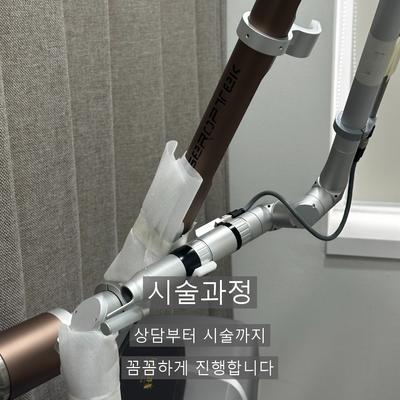
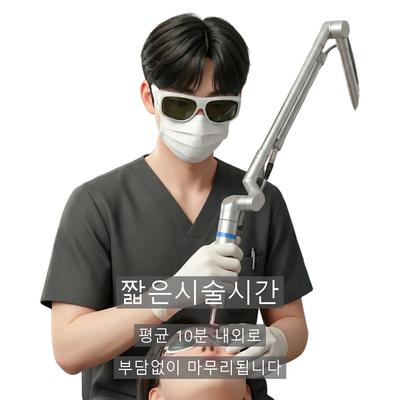
Treatment time varies depending on the mole's size, but it is typically short, averaging around 10 minutes.
Since the procedure is performed after anesthesia, the pain is tolerable, feeling like a slight sting.
Immediately after the procedure, redness and scabs will form and naturally fall off within 1 to 2 weeks.
Even after the scabs fall off, a faint redness may remain, requiring some time for full recovery.
In aftercare, it is most important not to forcibly remove scabs.
Thorough UV protection is essential for clean recovery without post-inflammatory hyperpigmentation.
While there is also a surgical excision method for large moles instead of laser, it can leave an incision scar, so the choice varies depending on the area.
It is advisable to determine the method by considering the area, size, and the extent of scar burden.
Not completely disappearing in one session does not mean it's ineffective; rather, dividing it into multiple sessions leads to safer results.
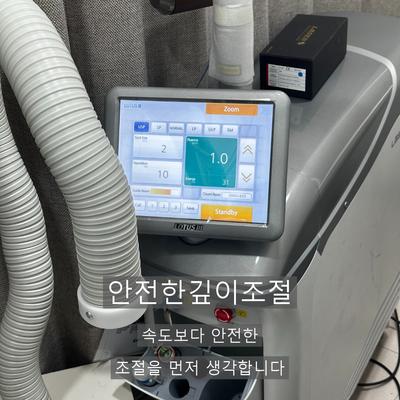
For large mole removal, safe depth control takes precedence over speed
Kkeut Clinic comprehensively handles large mole removal, regardless of the mole's shape or location.
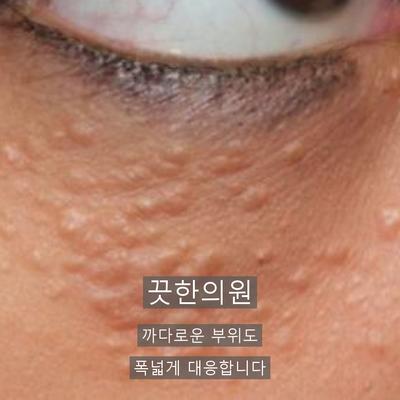
Even challenging areas like raised moles or those near the eyes are carefully treated at Kkeut Clinic.
If the mole's borders or color are suspicious, Kkeut Clinic does not approach it as a cosmetic procedure but immediately refers it to a higher institution, prioritizing safety.
Prioritizing safety over cosmetic purposes is even more crucial in large mole treatments.
Kkeut Clinic uses Er:YAG and CO2 lasers together to minimize downtime for large mole treatments.
The Er:YAG laser is primarily used for precise tissue removal, and CO2 is simultaneously used for hemostasis in bleeding areas, creating a clean treatment surface.
Effective hemostasis is essential for neatly finishing even large moles with a wide surface area.
This combined approach leads to stable results even for large moles with extensive treatment areas.
Kkeut Clinic uses DuoDerm Gel after the procedure to reduce the burden of aftercare.
Even individuals with allergies to regular DuoDerm stickers can comfortably use the gel type.
It absorbs naturally without the hassle of peeling and sticking, making recovery management much easier.
Due to the gel-type characteristics, even with a wide treatment area, the management method is not very difficult.
Kkeut Korean Medicine Clinic's Step-by-Step Mole Removal Know-how
Frequently Asked Questions
Q. Can large mole removal be completed in one session?
A. It depends on the size and depth of the mole, and large mole removal is often performed over multiple sessions. Kkeut Korean Medicine Clinic only irradiates to a safe depth and proceeds to the next stage after monitoring recovery.
Q. Will there be a scar after large mole removal?
A. If irradiated too deeply at once, the risk of scarring increases, so a staged approach to large mole removal is safer. If post-care instructions are followed well, recovery without scars is common.
Q. How is the cost of large mole removal determined?
A. It varies depending on the size, number, and sessions required for the mole. Kkeut Korean Medicine Clinic provides reasonable pricing guidelines through large mole removal consultations.
Q. Can moles recur after large mole removal?
A. Moles with deep roots may reappear faintly even after large mole removal, so monitoring the progress and additional treatment may be necessary.
The Sincerity of Kkeut Korean Medicine Clinic
Kkeut Korean Medicine Clinic provides differentiated results through a safety protocol that broadly addresses challenging areas such as protruding moles and areas near the eyes, and immediately refers to a higher institution if malignancy is suspected.
Kkeut Korean Medicine Clinic enhances patient satisfaction through a treatment method that combines Er:YAG and CO2 lasers to simultaneously achieve hemostasis and minimize downtime.
Kkeut Korean Medicine Clinic pursues both safety and effectiveness through DuoDERM gel post-care.
A subtle difference, a different result — Experience it at Kkeut Korean Medicine Clinic.
Related notes
Procedure notes worth reading next.


Loading menu…