

Nose Hair Laser Removal: Why it's Okay to Get it Done Without Shaving Beomgye, Pyeongchon, Beomgye Station, Pyeongchon Station, Hogye-dong, Bisan-dong, Gwanyang-dong, Dongan-gu, Indeogwon, Geumjeong, Anyang
6/17/2026
This is a procedure note for Nose Hair Laser Removal: Why it's Okay to Get it Done Without Shaving at Beomgye(Opening Soon) KKEUT Korean Clinic.
When looking into nose hair laser removal, you often come across information that shaving is required before the procedure.
However, shaving nose hair itself is not easy.
Due to its special location inside the nose, it's difficult to access with a regular razor, and there's a risk of irritating or damaging the nasal mucous membrane while shaving.
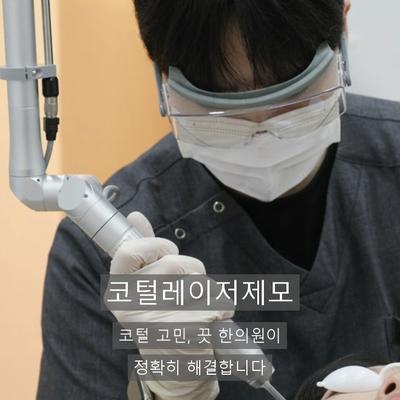
So, can nose hair laser removal be performed without prior shaving?
To get straight to the point, nose hair areas can be treated without prior shaving. The reason lies in the principle of laser hair removal.
Why Does Laser Hair Removal Require Shaving First?
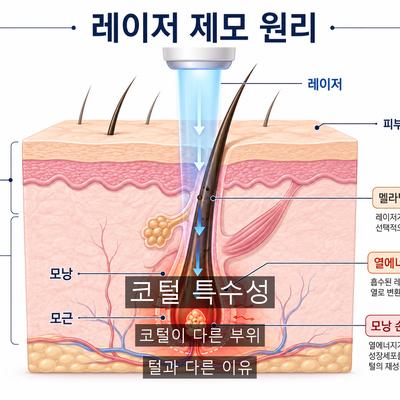
Laser hair removal targets hair follicles and roots beneath the skin, not the hair visible above the skin.
Laser energy is absorbed by melanin pigment in the hair and converted into heat. This heat travels to the hair follicle, damaging the hair root, which is the core principle of hair removal.
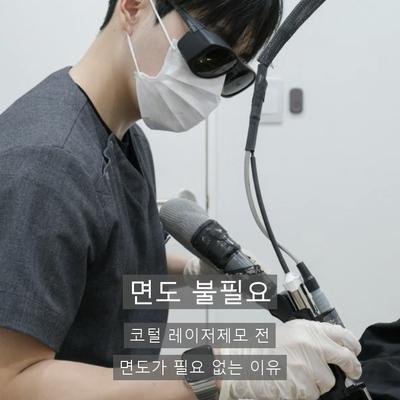
However, if the hair is long and grown out above the skin, a significant amount of laser energy is consumed in the hair shaft exposed on the skin surface.
As a result, insufficient energy reaches the hair follicle, and the epidermis can overheat, increasing the risk of burns. This is why prior shaving is necessary for general hair removal areas.
Why Nose Hair is an Exception
Nose hair is structurally different from hair on other parts of the body.
Most nose hairs near the nasal opening are short and thick, and do not protrude long outside the skin.
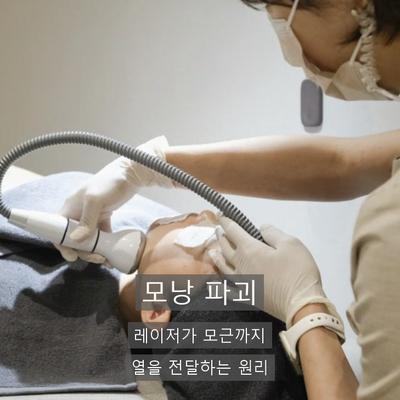
Unlike hair that grows several centimeters long, such as underarms or legs, most nose hair is exposed less than 1 centimeter.
At this length, laser energy is sufficiently delivered to the hair follicle, and the amount of energy excessively consumed by the epidermis is limited.
Hair deep inside the nasal mucous membrane is not within the treatment scope, so the actual treatment area is limited to the exposed parts around the nasal opening.

Therefore, nose hair laser removal can usually be performed without prior shaving, and there's no need to risk damaging the mucous membrane by forcibly shaving inside the nose.
Number of Sessions and Cycle for Nose Hair Laser Removal
Like other hair removal procedures, nose hair laser removal is not completed in a single session.
Lasers are only effective on hair follicles in the active growth phase, which contain abundant melanin.
Since not all nose hair follicles are in the growth phase simultaneously, it's impossible to destroy all follicles in one session.
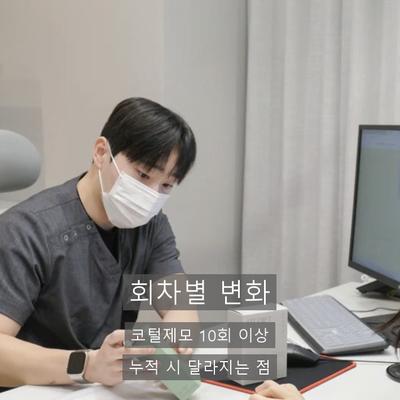
For any area, a minimum of 10 sessions is recommended, and the same applies to nose hair. Treatment cycles are recommended to be at least 3 weeks, generally 4 weeks, to align with the skin's keratin regeneration cycle.
As sessions progress, hair follicles in the growth phase are sequentially destroyed, leading to a noticeable reduction in nose hair density.
During the nose hair removal period, plucking or waxing hair by hand is prohibited. This is because the hair root that the laser targets would be removed, rendering the treatment ineffective.
For 1-2 days after the procedure, it's best to avoid stimuli that generate heat in the treated area. Even if folliculitis occurs, consistently applying a regenerating cream will help it naturally stabilize over time.
After nose hair laser removal, shaving from the day after the procedure, rather than on the day of the procedure, helps reduce skin irritation.
Kkeut Clinic's Approach to Nose Hair Laser Removal
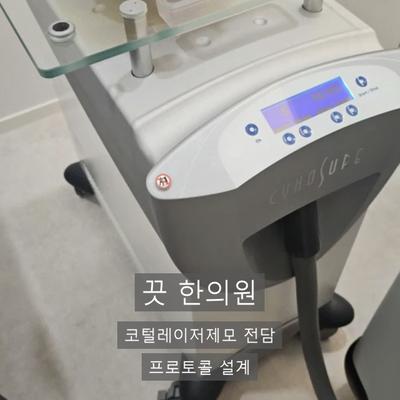
Kkeut Clinic analyzes the thickness of nose hair and skin condition, then precisely adjusts the Pulse Duration to design the treatment.
Thick hair with high melanin content, like nose hair, carries a risk of epidermal damage when energy is rapidly absorbed.
Kkeut Clinic uses long pulses to deliver heat gently, perfectly protecting the epidermis while ensuring energy precisely reaches the hair follicle.
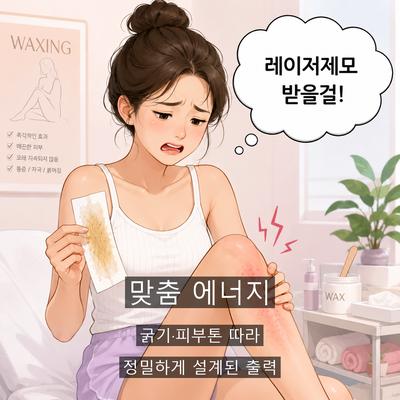
Kkeut Clinic possesses high-end equipment with verified performance and safety, such as Apogee and GentleMax.
Apogee continuously sprays powerful cold air before and after laser irradiation to minimize skin irritation, while GentleMax achieves powerful cooling with DCD gas cooling.
At Kkeut Clinic, before concluding the treatment, the area of concern is always re-checked, and the procedure is only finalized after the client's final approval. For areas requiring concentrated care, such as around the nasal opening, energy is more finely focused and irradiated.
Frequently Asked Questions
Q. Do I absolutely need to shave before nose hair laser removal?
A. Due to the structural characteristics of nose hair, nose hair laser removal can be performed without prior shaving. Excessive prior shaving, which carries a risk of irritating the nasal mucous membrane, is unnecessary. On the day of the procedure, Kkeut Clinic will check your condition and provide guidance.
Q. How many sessions of nose hair laser removal are needed?
A. For nose hair laser removal, a minimum of 10 sessions is also recommended. Since the laser only acts on hair follicles in the growth phase, sufficient sessions are needed to sequentially destroy all follicles. As sessions accumulate, you will experience a noticeable reduction in nose hair density.
Q. Can I pluck or wax during nose hair removal treatment?
A. During the nose hair laser removal period, plucking or waxing hair is strictly prohibited. If the hair root targeted by the laser is removed, the treatment will be ineffective. Only shaving is permitted.
Q. Is there pain or folliculitis after nose hair removal?
A. After laser nose hair removal, heat is directly delivered to the hair follicles, which may cause temporary folliculitis. This is a natural reaction, and consistent use of a regenerating cream will help it stabilize naturally over time.
Q. Can nose hair be completely removed?
A. There is no permanent hair removal that completely prevents regrowth for life. The goal of laser nose hair removal is semi-permanent density reduction. Even after a sufficient number of sessions, maintenance treatments every 2-3 months are recommended.
The Sincere Commitment of Kkeut Clinic
Kkeut Clinic takes responsibility for the results of laser nose hair removal through a limitless responsibility system, where procedures are finalized only after the client's final approval.
Kkeut Clinic optimizes pulse duration and precisely adjusts energy density to design a treatment that simultaneously protects the epidermis and destroys hair follicles, even for thick and coarse nose hairs.
Kkeut Clinic uses renowned premium devices such as Apogee and GentleMax to minimize pain while precisely targeting areas of concern for nose hair.
The subtle difference that makes all the difference — Experience it at Kkeut Clinic.
Loading menu…