

Poor Ultherapy outcomes? Discover the difference our performance makes. Beomgye, Pyeongchon, Beomgye Station, Pyeongchon Station, Hogye-dong, Bisan-dong, Gwanyang-dong, Dongan-gu, Indeogwon, Geumjeong, Anyang
5/5/2026
This is a procedure note for Poor Ultherapy outcomes? Discover the difference our performance makes. at Gyeonggi Anyang Beomgye KKEUT Korean Clinic.
Patients often search for 'no Ultherapy effect' when their expectations for the treatment are not met.
Individuals who have undergone Ultherapy but did not observe the anticipated improvements, or found their skin unchanged after treatment at another facility, frequently seek answers using this term.
Generally, an unsatisfactory Ultherapy outcome often stems from the procedural technique rather than any inherent flaw in the device itself.
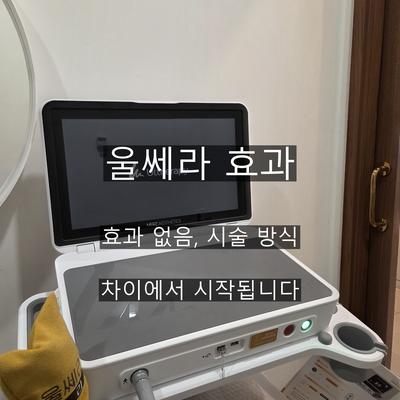
Effective Ultherapy relies on precise targeting of the SMAS layer.
Ultherapy involves delivering high-intensity focused ultrasound (HIFU) energy into the deeper dermal layers.
Achieving a noticeable lifting effect requires this energy to precisely reach the SMAS, or superficial muscular aponeurotic system, which is a foundational fascial layer, rather than merely treating the skin's superficial aspects.
Should the energy fail to adequately target this crucial layer, it may disperse at an inappropriate depth, leading to a lack of discernible results.
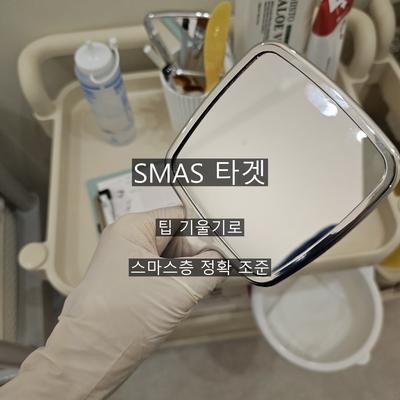
At our clinic, we focus on precisely targeting the SMAS layer by carefully adjusting the treatment tip's angle.
We conduct the procedure under real-time ultrasound guidance, which allows us to confirm that energy is accurately delivered to the intended depth.
This method contrasts significantly with procedures relying solely on subjective feel, without visual confirmation via an ultrasound screen.
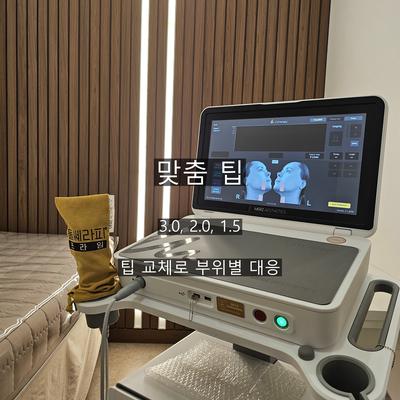
Treating the entire face effectively requires using customized tips.
Ultherapy tips are crucial as they define the specific depth that the ultrasound energy will reach within the tissue.
Although the 4.5mm tip is designed to target the SMAS layer, it is generally not recommended for regions with thinner skin, like the under-eye area, forehead, or temple.
Applying only the 4.5mm tip in such delicate zones may lead to energy missing its intended depth or potentially causing unwanted irritation.
Beyond the primary 4.5mm tip, our practitioners utilize 3.0mm, 2.0mm, and 1.5mm tips, selecting the appropriate size based on the specific anatomical area being treated.
This careful selection of tips, tailored to the unique skin thickness and characteristics of each facial region, contributes to a more consistent lifting outcome across the whole face.
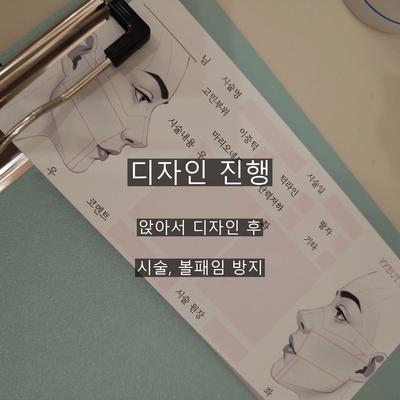
Beginning treatment without a seated design phase may pose a risk of developing cheek hollowing.
The facial volume distribution naturally shifts when an individual is in a reclining position.
If energy is administered in this altered state, it might stimulate regions different from those targeted while upright, which could potentially result in undesirable cheek hollowing.
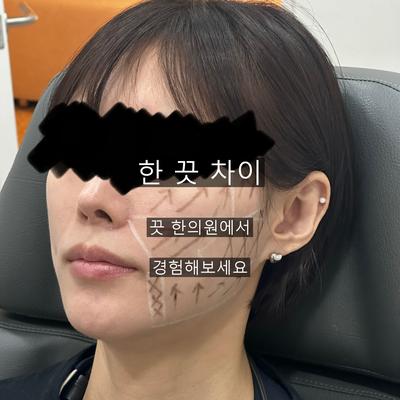
Prior to any lifting procedure, our clinic initiates a crucial design phase with the patient seated.
Our fundamental approach is to meticulously map the precise areas for energy delivery while accounting for the effects of gravity on the face, all before the actual treatment begins.
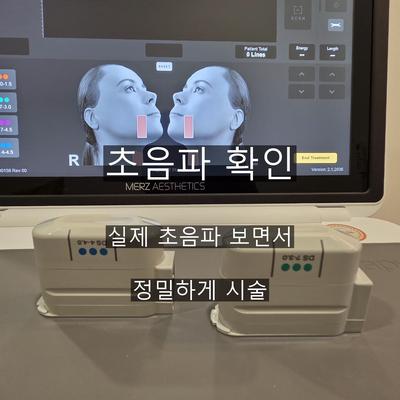
A contributing factor to experiencing an unsatisfactory 'no Ultherapy effect' can also be the complete absence of a well-defined treatment design.
When the procedure is conducted without a thorough assessment of each area's skin condition, without adapting tip types, and without a pre-treatment design, the energy distribution will likely be inconsistent.
Under such circumstances, the outcomes are likely to be less than desired.
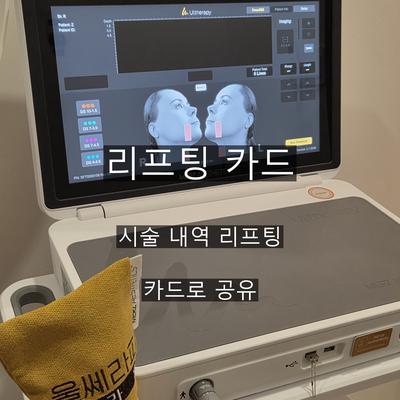
Following the procedure, our clinic generates a detailed 'lifting card' which is then shared with the patient.
This card meticulously records the specific tips employed, the amount of energy delivered, and the targeted areas, serving as a valuable reference for planning any subsequent treatments.
Our methodology treats each session not as an isolated incident, but as a cumulative step within a longer-term treatment strategy informed by collected data.
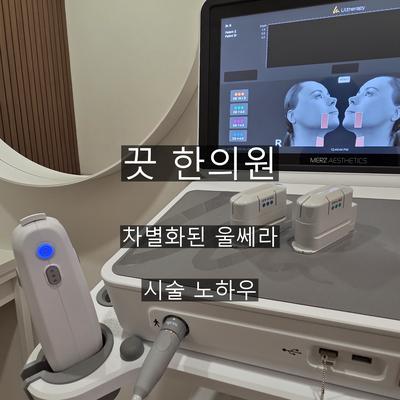
When Ultherapy seems ineffective, the device itself is rarely the problem.
Even with an identical treatment name, the outcomes experienced can vary significantly.
Ultherapy administered with careful SMAS targeting, appropriate tip selection, a thoughtful pre-treatment design, and transparent treatment record sharing offers a distinct experience compared to treatments lacking these fundamental elements.
Frequently Asked Questions
Q. If there's no Ultherapy effect, would a subsequent treatment yield different results?
A. Should the lack of Ultherapy effect be attributable to the treatment methodology, subsequent treatments might produce similar outcomes unless the approach is altered. It is important to first understand how the tip selection and SMAS targeting techniques will be adjusted for any follow-up sessions.
Q. What criteria are advisable for preventing an unsatisfactory Ultherapy outcome?
A. To help avoid an unsatisfactory Ultherapy effect, it is beneficial to verify if customized tips are utilized, if a design phase is conducted with the patient seated prior to treatment, and if real-time ultrasound verification is employed. A clinic adhering to these three points demonstrates a foundational commitment to sound treatment practices.
Q. How does Ultherapy at our clinic approach treatment differently?
A. Our clinic incorporates all four key elements: precise SMAS layer targeting through tip angle adjustments, customized tip selection for various facial areas, pre-treatment design conducted while seated, and the generation of a comprehensive lifting card. The entire treatment protocol is structured to help mitigate the risk of an unsatisfactory Ultherapy outcome.
Our Clinic's Dedication
Our clinic conducts procedures by carefully targeting the SMAS layer through adjustable tip angles, aiming to ensure that the energy consistently reaches the intended depth with precision.
In addition to the standard 4.5mm main tip, our clinic employs customized 3.0mm, 2.0mm, and 1.5mm tips, modifying them as needed for specific facial areas to foster a consistent lifting effect across the whole face.
Kkeut Korean Medicine Clinic begins treatment planning by assessing the patient while they are seated. After the procedure, a specific lifting card is used to meticulously track progress and ensure ongoing care until the next scheduled visit.
We believe a meticulous approach can lead to meaningful changes. This is the philosophy that guides Kkeut Korean Medicine Clinic.
Related notes
Procedure notes worth reading next.


Loading menu…