

Facelift Surgery vs. Ultherapy: A Comparison Guide to Effects and Recommended Candidates Beomgye, Pyeongchon, Beomgye Station, Pyeongchon Station, Hogye-dong, Bisan-dong, Gwanyang-dong, Dongan-gu, Indeogwon, Geumjeong, Anyang
9/15/2026
This is a procedure note for Facelift Surgery vs. Ultherapy: A Comparison Guide to Effects and Recommended Candidates at Gyeonggi Anyang Beomgye KKEUT Korean Clinic.
Many people considering a facelift wonder about the differences between surgical and non-surgical lifting methods.
The appropriate treatment method can vary depending on the degree of skin laxity and the expected recovery process. Therefore, it is helpful to understand the principles of surgical lifting and Ultherapy, the results you can expect, and who each treatment is recommended for.
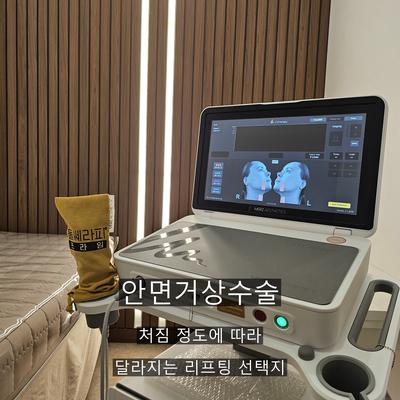
What is a Facelift?
A facelift involves incising the skin and the superficial musculoaponeurotic system (SMAS) layer, pulling up the sagging tissues, and fixing them in a lifted position.
This surgery physically repositions skin and SMAS tissues that have sagged due to gravity, offering structural improvement for those with significant sagging.
However, because it requires incisions, it is a surgery that necessitates considering anesthesia risks, scar management, and a relatively long recovery period.
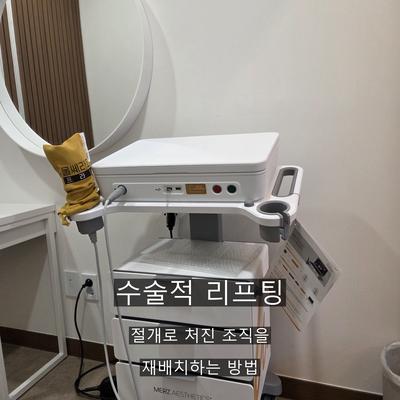
What is Ultherapy?
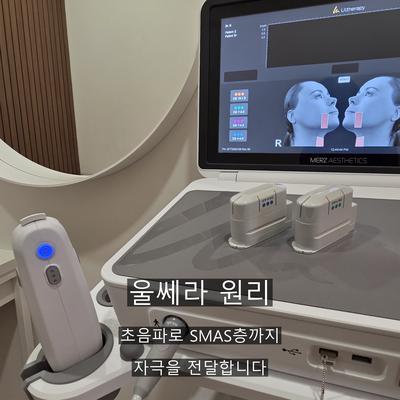
Ultherapy is a non-incisional lifting treatment that delivers high-intensity focused ultrasound (HIFU) energy deep into the skin's SMAS layer, promoting the production of collagen and elastin.
During the procedure, various tips (such as 4.5mm, 3.0mm, 2.0mm, and 1.5mm) are used while observing ultrasound imaging, allowing precise delivery of ultrasound energy to the subdermal layers of each area.
A major difference from surgical lifting is that no incision is required, allowing patients to return to daily life immediately after the procedure.
How Do the Effects and Recovery Differ?
The two treatments differ in the timing and manner in which their effects become apparent.
Since a facelift is a surgery that directly repositions and fixes tissues, the changes can be felt relatively clearly once recovery is complete. Because it involves incision and suturing, it may take some time for swelling and bruising to disappear.
In the case of Ultherapy, a gradual improvement in elasticity due to collagen regeneration can be observed starting about a month after the procedure, rather than immediately. This method is suitable for those who prefer gradual improvement over immediate changes.
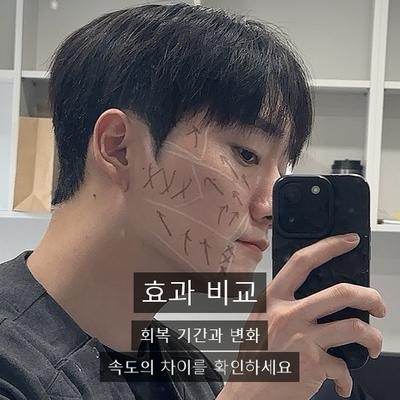
The treatment method may vary depending on the degree of sagging and the recovery period.
Recommended Candidates are Divided as Follows
If skin sagging is significantly advanced and structural repositioning of lax tissues is necessary, a facelift may be a more appropriate method.
If the degree of sagging is mild to moderate, and you desire lifting effects without the burden of incisions or anesthesia while maintaining your normal daily routine, then Ultherapy can be considered.
In conclusion, neither of these two treatments can be said to be inherently better. They are different treatments suited for different purposes, depending on the degree of skin laxity and individual recovery preferences.
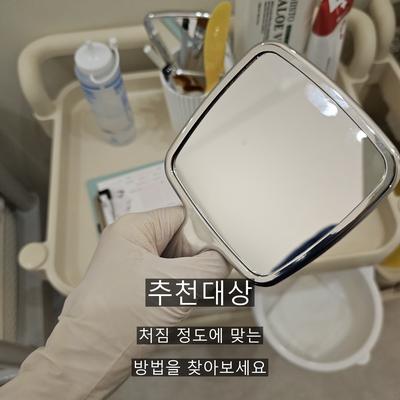
Ultherapy Pain and Downtime
During Ultherapy, a unique stimulating sensation may be felt as ultrasound energy reaches the deep layers of the skin. To prepare for this, most procedures involve the application of topical anesthetic cream.
For accurate energy delivery to the planned skin layer, the tip must adhere well to the skin. Therefore, performing the procedure under topical anesthesia rather than general anesthesia can be safer.
Immediately after the procedure, a slight pulling sensation or mild swelling may temporarily appear. However, unlike incisional surgery, returning to daily life is relatively quick.
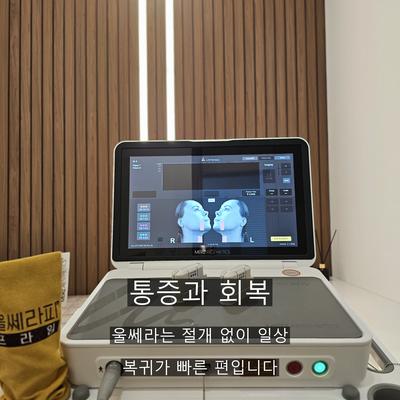
Ultherapy Frequency and Combination Treatments
If the recommended number of Ultherapy shots has been sufficiently administered, it is generally possible to consider repeating the treatment at intervals of approximately 6 months to 1 year.
Since Ultherapy acts on the deep layers of the skin, it is sometimes combined with other treatments that improve surface skin texture or elasticity in shallower layers to achieve synergistic effects.
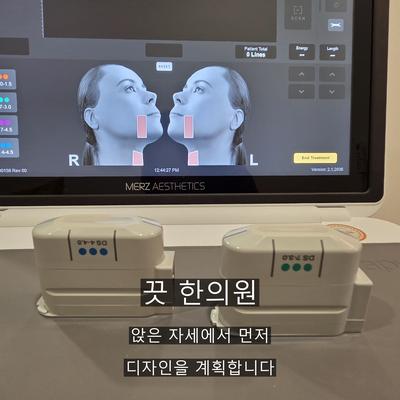
Ultherapy Treatment Design
Before Ultherapy, the actual state of skin sagging and the thickness of the skin in each area are first checked in a sitting position. Based on this, a plan is made regarding where to use the 4.5mm and 3.0mm tips.
In a lying position, sagging may appear less severe than it actually is due to gravity. Therefore, designing the treatment in a sitting position first ensures that ultrasound energy is accurately delivered to the desired areas.
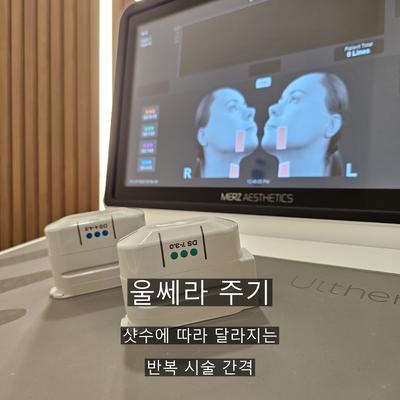
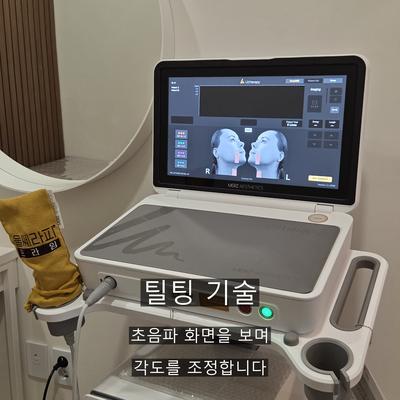
Additionally, the procedure is performed using a 'tilting' method, adjusting the angle of the treatment tip while observing the actual depth of the SMAS layer on the ultrasound screen.
Although the focal depth of the tip is constant, the depth of the SMAS layer can vary individually and by area. Therefore, the tip's angle is finely adjusted while viewing the ultrasound screen to ensure energy reaches the targeted layer.
After the procedure, patients are given a lifting card that records which tips were used, how many shots were administered, and how the intensity was set for each area.
The standard shot length for Ultherapy is 25mm. The procedure is performed maintaining this standard value.
Frequently Asked Questions
Q. Can Ultherapy alone improve sagging without a facelift?
A. The answer depends on the degree of sagging. If sagging is advanced to the point where a facelift is needed, non-surgical treatments alone may not achieve the desired level of improvement. It is important to consult with a specialist to determine the exact level of sagging.
Q. How many Ultherapy shots are needed for sufficient effect without a facelift?
A. For a full-face treatment, we generally recommend 600 shots or more. Especially in cases of severe sagging where a facelift is being considered, more shots and customized targeting of specific areas may be necessary.
Q. When do Ultherapy effects appear, and is the perceived difference significant compared to a facelift?
A. Changes such as improved skin elasticity may gradually appear approximately one month after the procedure. It is best to understand Ultherapy as a treatment where you observe the progress over sufficient time, rather than expecting immediate changes like with a facelift.
Q. Is there less pain burden when undergoing a lifting procedure without incision?
A. During the procedure, energy is delivered to the deeper layers of the skin, which may cause some minor irritation. However, we apply topical anesthetic cream to minimize pain, and we can explain that the procedure involves less burden compared to surgical methods that require incisions.
Q. Even if the face lacks volume, can a facelift or Ultherapy procedure still be suitable?
A. Yes, the procedure can be considered. The SMAS layer, which is the primary target for Ultherapy, is different from the fat volume layer. In fact, faces with less volume may have weaker skin support structures, making sagging more prominent. Therefore, for both facelifts and Ultherapy, it is crucial to consult sufficiently with medical staff to choose the method that is right for you. Procedure results may vary from person to person.
Kkeut Korean Medicine Clinic's Treatment Philosophy
At Kkeut Korean Medicine Clinic, we carefully assess the degree of skin sagging and thickness of the patient while they are in a seated position. This process allows us to establish a more suitable treatment plan for each individual.
Kkeut Korean Medicine Clinic utilizes tilting technology to precisely adjust the treatment angle while checking the SMAS layer in real-time on an ultrasound screen. This contributes to enhancing the precision of the procedure.
We maintain a lifting card that meticulously records treatment details and adhere to the principle of using a standard 25mm treatment length. Through this systematic management, we strive to provide patients with careful and safe procedures.
Meticulous procedures tailored to each individual We recommend consulting with the medical staff at Kkeut Korean Medicine Clinic.
Related notes
Procedure notes worth reading next.


Loading menu…