

Laser Beard Removal: Why One Session Isn't Enough and How Many You'll Need Beomgye, Pyeongchon, Beomgye Station, Pyeongchon Station, Hogye-dong, Bisan-dong, Gwanyang-dong, Dongan-gu, Indeogwon, Geumjeong, Anyang
This is Gyeonggi Anyang Beomgye KKEUT Korean Clinic's procedure note on Laser Beard Removal: Why One Session Isn't Enough and How Many You'll Need.
Beard hair removal using a laser is not a one-time procedure, but rather a process that involves multiple sessions.
Even with a small number of sessions, many wish for a significant reduction in beard hair, but the actual hair removal process can be different.
Some people stop midway because it takes time to feel a change, but consistently completing the planned number of sessions will help achieve the desired results.
Understanding in advance why laser beard hair removal requires multiple sessions and how long it takes will greatly assist in planning your treatment.
The beard area is a prime example of a region that requires more treatment sessions compared to other parts of the body.
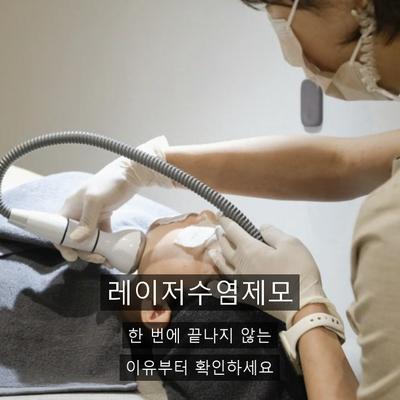
Laser hair removal uses the principle of selectively delivering energy to melanin pigment within the hair follicles.
The energy absorbed by melanin is converted into heat, which can cause damage to the hair root and follicle that produce hair.
This reaction is most effective only in hair follicles that are in the 'anagen phase' where hair grows vigorously.
Since the face has a mixture of fine and coarse hairs, the degree of change felt may vary by area, even within the same treatment session.
Follicles currently in the resting phase will not react to this treatment, and we must wait until their next growth phase arrives.
Since each hair follicle goes through growth and resting phases at different times, it is difficult to remove all follicles simultaneously with just one laser treatment.
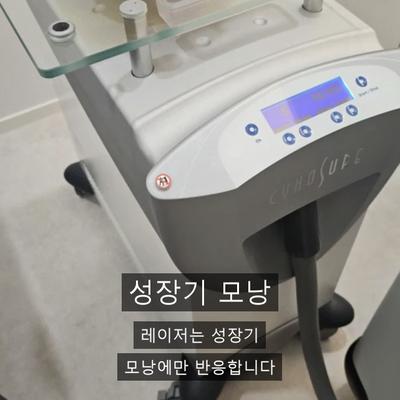
Due to this unpredictability, laser beard hair removal is performed over multiple sessions, sequentially treating follicles as they enter their growth phase.
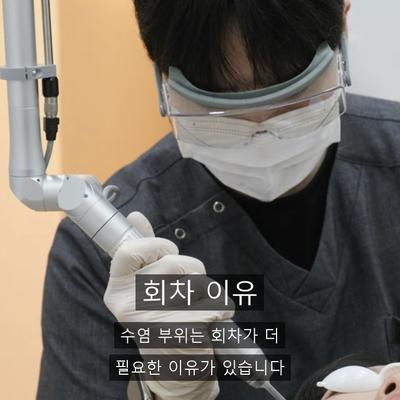
Compared to other body parts, the beard area has a high density of hair follicles and the hair itself is coarse, meaning there is a large quantity of follicles to treat.
As this area is influenced by male hormones, there's a continuous possibility of new follicles activating, which can extend the number of sessions required.
Due to these characteristics, it is common to undergo 20 or more sessions over a period exceeding one year.
Areas with relatively low follicle density, such as arms or legs, can be managed with around 10 sessions, but beard hair requires a different approach.
The larger the area to be treated, the greater the number of follicles that need to be targeted, which can extend the duration of a single session.
The interval between treatment sessions can also affect the overall outcome.
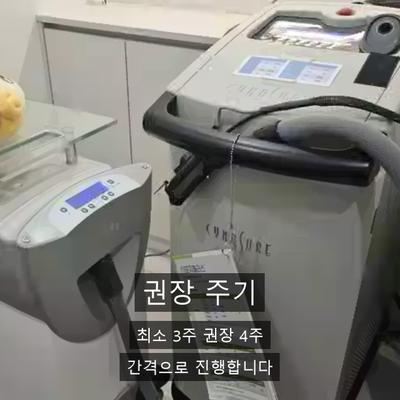
Considering the skin's regeneration cycle, it is generally recommended to schedule the next session with an interval of at least 3 weeks, preferably 4 weeks.
If the interval is too short, laser energy might be used on follicles that have not yet entered their growth phase, potentially reducing treatment efficiency.
Anesthetic cream is often applied before treatment, but the anesthetic components primarily act only on the skin surface.
Pain felt deep in the hair root is difficult to control with cream alone. It is primarily used to help you feel more comfortable during the procedure.
During the treatment, a cool air device can be used to manage skin sensation. As sessions progress and hair quantity decreases, the intensity of pain may naturally reduce.
On the day of the treatment, please refrain from shaving; we recommend shaving from the following day.
Immediately after the treatment, hair is temporarily weakened, so it may not shave as cleanly as usual.
During the period of laser beard hair removal treatment, you must absolutely avoid plucking hairs.
If you pluck hairs, the laser will have no hair root to target in the next session, making it difficult to expect hair removal effects in that area.
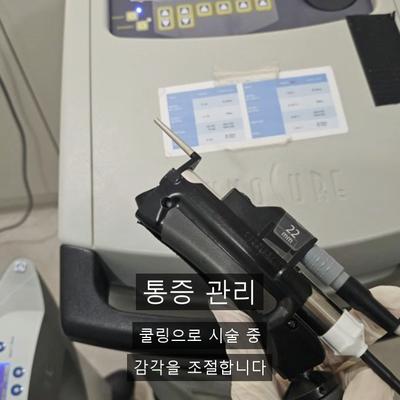
After treatment, folliculitis-like reactions, such as redness around the hair follicles or small pimple-like bumps, may appear.
This is a common reaction that can occur as heat is directly delivered to the hair follicles. Consistent application of a regenerative cream can gradually alleviate it over time.
For 1-2 days after treatment, avoiding activities that can raise body temperature, such as saunas, strenuous exercise, and alcohol consumption, can positively impact skin recovery.
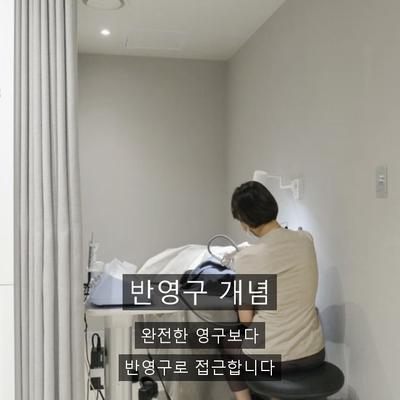
Many wish for 'permanent' hair removal, hoping never to grow hair again, but strictly speaking, true permanent hair removal where hair never grows back is realistically difficult.
Therefore, laser hair removal can be seen as more akin to 'semi-permanent' reduction and management of hair quantity.
Even after completing all planned treatment sessions, receiving additional maintenance treatments every 2-3 months is beneficial for consistently managing hair removal effects.
Kkeut Clinic's Customized Hair Removal Plan
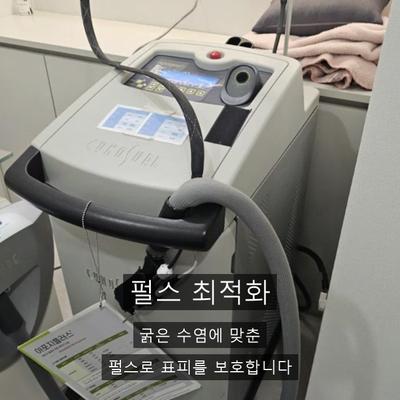
At Kkeut Clinic, we delicately adjust the pulse duration to suit the characteristics of thick and dark hair, such as beard hair.
Coarse hair contains a large amount of melanin pigment, so delivering energy with a short pulse can increase the risk of epidermal damage due to rapid absorption.
Kkeut Clinic utilizes long pulses to gently deliver thermal energy, thereby protecting the epidermis while simultaneously ensuring sufficient energy reaches the hair root.
Energy density is also precisely adjusted according to the treatment area and hair condition.
For thick and dark beard hair, a high energy density is applied to effectively accumulate heat even within the thick hair structure. Conversely, for fine and light hair, repeated irradiation is used to evenly deliver heat to the hair root.
For areas with dense hair follicles, the goal is to efficiently disperse and irradiate energy to reduce skin irritation caused by excessive heat accumulation.
We meticulously adjust energy output to allow treatment even for darker skin tones. We focus on minimizing skin irritation, thereby reducing the burden of the procedure.
The Treatment Philosophy of Kkeut Korean Medicine Clinic
Before concluding the procedure, we carefully re-examine to ensure no areas require additional energy.
We only finalize the entire process after the patient has personally confirmed and approved the treated area.
For areas of particular concern, we focus more intensively and precisely deliver energy.
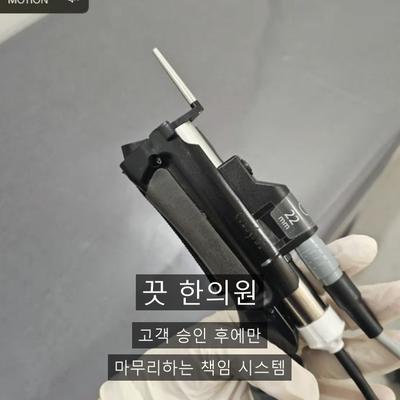
We utilize proven equipment such as Apogee and GentleMax to minimize pain and facilitate easy post-procedure care.
Since minor settings can collectively impact treatment results, Kkeut Korean Medicine Clinic meticulously reviews settings before each procedure.
Frequently Asked Questions
Q. How many laser beard removal sessions are typically needed?
A. Laser beard removal primarily responds to hair follicles in the anagen (growth) phase. Therefore, it typically involves consistent treatments over 20 sessions or more, often spanning a year or longer. At our clinic, we carefully assess each individual's hair thickness and density to recommend the appropriate number of sessions.
Q. What is the recommended frequency for laser beard removal?
A. Considering the skin regeneration cycle, we recommend treatments at intervals of at least 3 weeks, with 4 weeks being optimal. We adhere to this cycle to ensure that treatment occurs when hair follicles have sufficiently entered their growth phase.
Q. When can I shave after laser beard removal?
A. Shaving starting from the day after the procedure, rather than on the same day, can be more beneficial for post-care. Kkeut Korean Medicine Clinic provides detailed guidance on post-procedure care immediately after treatment.
Q. If folliculitis occurs during laser beard removal, should I stop the treatment?
A. This is one of the natural reactions that can occur as heat energy is delivered to the hair follicles. Therefore, there is no need to discontinue treatment. Our clinic provides guidance on using regenerating creams to support skin recovery.
Q. If I complete all laser beard removal sessions, will my beard never grow back?
A. We aim for semi-permanent results rather than complete permanent hair removal. Therefore, it is advisable to consider maintenance treatments at 2-3 month intervals even after completing the recommended number of sessions. We provide detailed consultations on the timing of maintenance treatments and future plans.
The Sincerity of Kkeut Korean Medicine Clinic
Considering the characteristics of thick and dense beards, we precisely design pulse and energy settings. This allows for more delicate and precise treatments.
We adhere to the principle that all procedures are finalized only after the patient has given their final confirmation and consent for the treated area. This is our commitment to providing treatments based on trust.
Kkeut Korean Medicine Clinic utilizes high-performance equipment such as Apogee and GentleMax to ensure the safety of procedures and aims for improved effectiveness.
You can experience the delicacy created by a subtle difference at Kkeut Korean Medicine Clinic.
Related notes
Procedure notes worth reading next.


Loading menu…