

Syringoma Treatment: Why You Shouldn't Squeeze Them and Should Instead Treat with Laser Beomgye, Pyeongchon, Beomgye Station, Pyeongchon Station, Hogye-dong, Bisan-dong, Gwanyang-dong, Dongan-gu, Indeogwon, Geumjeong, Anyang
6/18/2026
This is a procedure note for Syringoma Treatment: Why You Shouldn't Squeeze Them and Should Instead Treat with Laser at Gyeonggi Anyang Beomgye KKEUT Korean Clinic.
Small bumps that appear like milia around the eyes or on the cheeks may create an urge to squeeze or pick them, but if this is a lesion requiring syringoma treatment, you should not touch it.
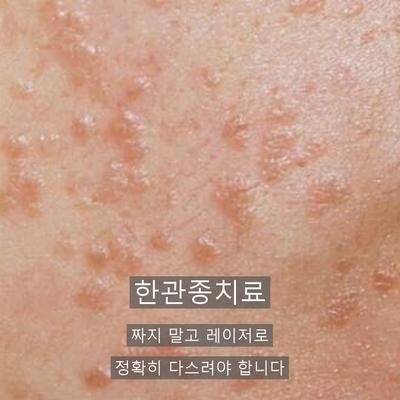
Syringomas are benign tumors formed by the abnormal proliferation of eccrine sweat gland ductal cells.
It is characterized by feeling firm when pressed with a finger on the skin's surface, and no contents emerge even when attempting to squeeze it.
They are skin-colored or light yellowish, typically 1-3mm in size, and often appear in clusters under the eyes, on the cheeks, and on the forehead.
Why you shouldn't squeeze them
Syringomas differ in structure from milia, which are filled with sebum or keratin.
Since they are formed by sweat gland ductal cells proliferating in the dermal layer, squeezing them by hand will not release any contents and instead carries a high risk of inflammation spreading to surrounding tissues.
Aggressive squeezing can lead to hyperpigmentation or scarring, and a vicious cycle where recurrence becomes faster in the damaged area.
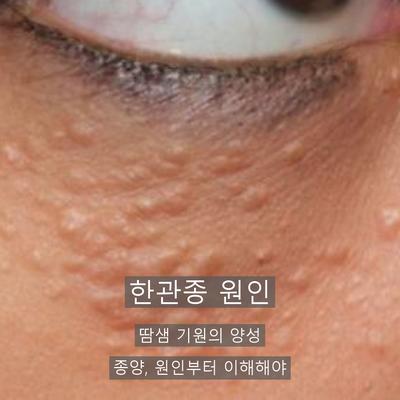
The same applies to piercing with a needle or using an extractor at home. Even if the surface lesion appears flat for a moment, cells remaining in the dermal layer will proliferate again, leading to repeated recurrence in the same spot.
Why accurate differentiation from milia and sebaceous hyperplasia is essential
While all small, bumpy lesions on the face may look similar, their causes and structures are actually different.
Milia are cysts where keratin is trapped beneath the skin, sebaceous hyperplasia is an overgrowth of sebaceous glands, and syringomas are a proliferation of sweat gland ductal cells.
The three conditions require completely different approaches, so performing a procedure without accurate differentiation may be ineffective or even worsen the skin condition.

Milia can be resolved by opening the cyst with a laser and removing its contents, but syringomas are difficult to resolve fundamentally with simple surface removal alone.
This is why accurate diagnosis is the starting point for syringoma treatment.
Laser Treatment Mechanism and Indications
Lasers are the most commonly used method for syringoma treatment.
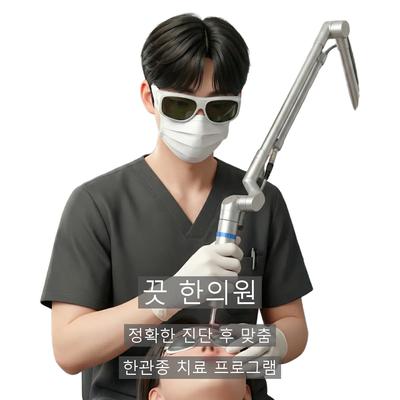
The Er:YAG laser's 2940nm wavelength is strongly absorbed by water molecules, precisely vaporizing only the lesional tissue. Thermal damage to surrounding normal skin is minimized, resulting in a relatively short downtime.
Before the procedure, an anesthetic cream is applied, followed by laser irradiation. After the procedure, a protective dressing is applied. The duration of a single session varies depending on the number and location of lesions but is typically around 15-30 minutes.
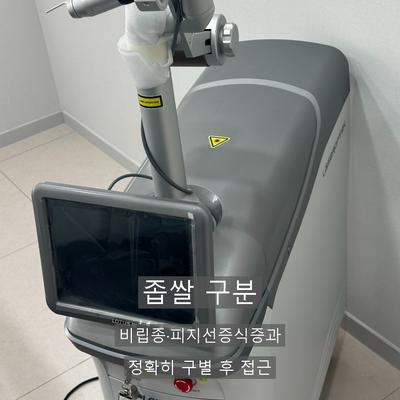
Since syringomas often appear in clusters, it is more beneficial for skin recovery to approach them in multiple sessions, depending on their condition, rather than removing all lesions at once.
Immediately after the procedure, scabs will form. It is important not to physically irritate the treated area during the 1-2 weeks it takes for the scabs to naturally fall off.
Even after removing surface lesions with a laser, if the sweat glands themselves remain, there is a possibility of recurrence in the same or nearby areas. For this reason, a separate approach to inhibit recurrence may be necessary.
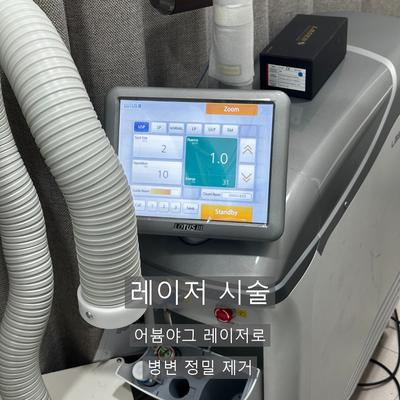
Sun protection is crucial for post-procedure care. If UV rays reach the scabbed area, it can lead to hyperpigmentation, so SPF sunscreen must be diligently applied until complete recovery.
When washing your face, do so gently without vigorously rubbing the treated area. Waiting for scabs to naturally fall off is important for scar prevention.
Kkeut Clinic's Unique Approach to Syringoma Treatment
Before treating syringomas, Kkeut Clinic accurately differentiates them from similar-looking milia and sebaceous hyperplasia, adopting different approaches accordingly.
Even if they appear as similar small bumps, different causes require different treatment methods. Procedures performed without diagnosis may be ineffective or even irritate the skin.

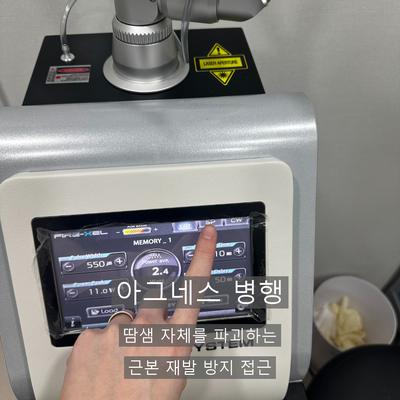
Kkeut Clinic goes beyond surface removal, operating a separate concurrent program for recurrence prevention using Agnes (radiofrequency insulated needle treatment).
Agnes involves directly inserting an ultra-fine insulated needle into the lesion to emit radiofrequency energy, destroying the sweat gland itself. This is a fundamental approach that eliminates the sweat gland ductal cells, which are the root cause of the problem, rather than just burning the surface, making it different from typical surface removal procedures.
Kkeut Clinic is so dedicated to preventing recurrence because we understand that the biggest concern in syringoma treatment is the anxiety of 'what if it comes back?'
For post-procedure care, we use Duoderm Gel. Unlike regular Duoderm stickers, its gel type allows comfortable use even for those with sticker allergies, and it stably protects the treated area without the hassle of peeling and re-applying.
Frequently Asked Questions
Q. Is syringoma treatment always necessary at a clinic?
A. Syringoma treatment is a procedure that requires the removal of sweat gland ductal cells located in the dermal layer, so squeezing or picking at home is ineffective. Instead, it increases the risk of inflammation, hyperpigmentation, and scarring, which is why laser treatment is necessary.
Q. How do you distinguish between milia and syringomas?
A. Milia release white contents when squeezed, whereas syringomas do not. If they appear in clusters around the eyes and feel firm, syringomas can be suspected. Accurate differentiation requires a medical diagnosis.
Q. I've heard that syringomas often recur after treatment. How can this be reduced?
A. With surface laser treatment alone, the sweat glands themselves may remain, leading to a possibility of recurrence. To suppress recurrence after syringoma treatment, combining it with sweat gland destructive procedures like Agnes can effectively lower the recurrence rate.
Q. Can I return to daily life after syringoma treatment?
A. Scabs will form immediately after the procedure, so dressing care is needed for about 1-2 weeks. If you maintain sun protection and minimize irritation during face washing, there will be no significant hindrance to maintaining daily life.
The Sincerity of Kkeut Korean Medicine Clinic
Kkeut Korean Medicine Clinic accurately differentiates similar-looking tiny lesions such as milia and sebaceous gland hyperplasia, and approaches syringoma treatment differently.
Kkeut Korean Medicine Clinic goes beyond simple superficial removal. We offer a separate recurrence prevention program that destroys the sweat glands themselves using Agnes radiofrequency insulated needle treatment, fundamentally resolving patients' anxiety about recurrence.
Kkeut Korean Medicine Clinic ensures the entire recovery process, safely protecting the treated area with Duoderm gel post-procedure aftercare, free from allergy concerns.
Different Results with a Subtle Difference — Experience it at Kkeut Korean Medicine Clinic.
Related notes
Procedure notes worth reading next.


Loading menu…