

Syringoma Treatment for Bumpy Irregularities Around the Eyes Beomgye, Pyeongchon, Beomgye Station, Pyeongchon Station, Hogye-dong, Bisan-dong, Gwanyang-dong, Dongan-gu, Indeogwon, Geumjeong, Anyang
8/1/2025
This is a procedure note for Syringoma Treatment for Bumpy Irregularities Around the Eyes at Gyeonggi Anyang Beomgye KKEUT Korean Clinic.
Understanding Syringomas: Their prevalence near the eyes, underlying reasons, and the challenges in preventing recurrence.
When small, firm bumps appear around the eyes, resisting cosmetic coverage, proving difficult to extract, and gradually multiplying, a diagnosis of 'syringoma' is frequently considered.
Syringomas are benign growths that, despite their harmless nature, often lead to noticeable cosmetic concerns. Their characteristic presentation as multiple lesions in specific skin regions helps differentiate them from simple skin imperfections like blemishes or milia.
These lesions notably tend to aggregate below the eyes, specifically in the lower eyelid region. This common pattern often prompts individuals to seek medical advice, wondering why syringomas consistently manifest in this particular area.
This column will explore syringomas in detail, covering their underlying causes, their predisposition for the periorbital area, factors contributing to their recurrence, and practical strategies for their appropriate management, alongside their pathophysiological aspects.
Understanding the Origins of Syringoma Development
Syringomas specifically arise from the ducts of eccrine sweat glands, which are the structures responsible for sweat excretion, manifesting as tissue overgrowths.
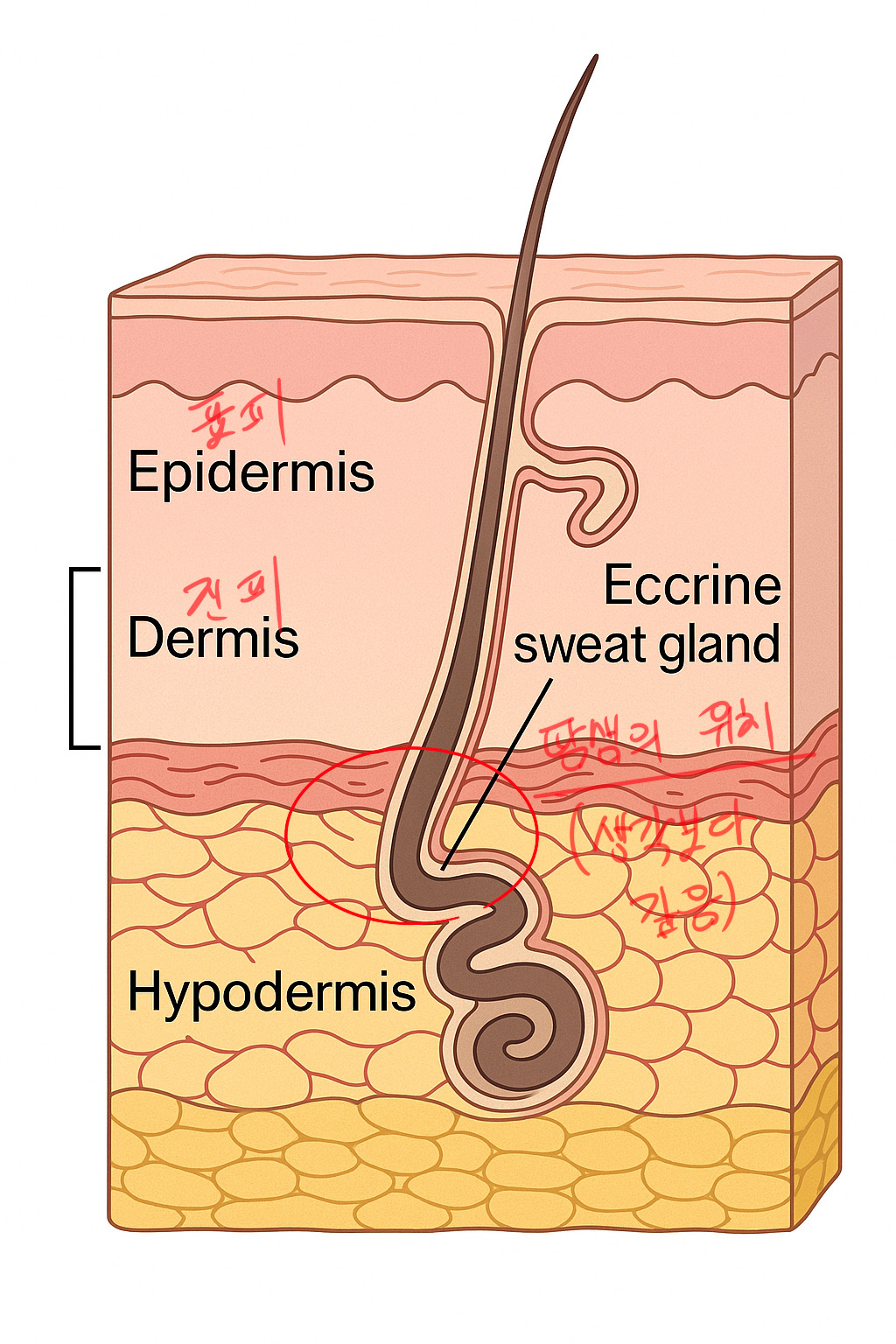
These eccrine sweat glands are widely dispersed across the body, playing a crucial role in regulating body temperature by releasing sweat through skin pores.
However, syringomas develop within the dermis, the skin's deeper layer, when the ductal cells forming these sweat channels experience hyperplasia, or excessive growth.
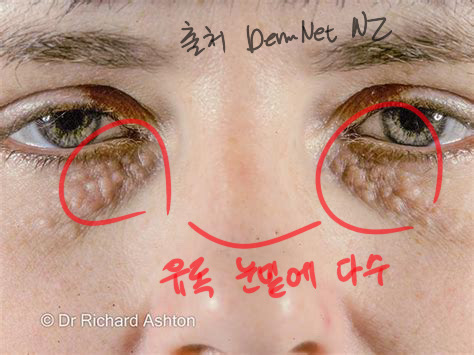
Unlike acne, which stems from blocked sebaceous glands, syringomas are distinct. They are best characterized as benign tissue masses within the dermis, arising from the abnormal proliferation of certain sweat gland components.
What then triggers this cellular proliferation? Current understanding points to several contributing factors, which include:
1. Family History and Genetic Factors
A significant number of individuals with syringomas report a family history of the condition. Observing similar bumpy formations around the eyes in relatives like a mother or aunt suggests a strong likelihood of inheriting a genetic predisposition.
2. Hormonal Influences
Syringomas demonstrate a notable prevalence among women. Their initial appearance often coincides with periods of significant hormonal fluctuation, such as post-puberty, during pregnancy, or with the use of oral contraceptives.
It is hypothesized that female hormones, including estrogen and progesterone, may play a role in stimulating the proliferation of sweat gland duct cells.
Furthermore, certain research has indicated the presence of hormone receptors within syringoma lesions themselves, suggesting a direct link.
3. Persistent Irritation and Mechanical Stress
The delicate periorbital skin is frequently exposed to various physical and chemical irritants, including makeup application, cleansing routines, mascara removal, and contact lens usage.
It is speculated that recurrent irritation of the thin, sensitive skin in this region may induce microscopic inflammation. This, in turn, could lead to reactive hyperplasia of the sweat gland ducts, a process characterized by cell proliferation in response to inflammatory triggers.
4. Underlying Metabolic Conditions (e.g., Diabetes)
Specifically, a subtype known as clear-cell variant syringomas frequently exhibits a connection with conditions such as diabetes or compromised glucose tolerance.
Here, the prevailing hypothesis suggests that glycogen buildup or other metabolic dysfunctions might trigger the abnormal proliferation of ductal cells.
The Specific Predilection of Syringomas for the Eye Area
While syringomas are capable of forming on any body part, their notable and consistent appearance beneath the eyes is a pattern widely observed in clinical practice.
This localized tendency is directly attributable to distinct anatomical and physiological characteristics of the periorbital skin.
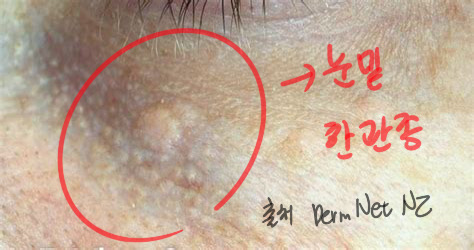
- Dense Concentration of Eccrine Sweat Glands
- The skin surrounding the eyelids is characterized by a particularly high density of eccrine ducts.
- Consequently, a greater number of potential points of origin contributes to an elevated chance of these lesions developing.
- Thin, Highly Reactive Skin Area
- The periorbital region is distinguished by the thinnest skin on the face, possessing a comparatively fragile protective barrier.
- Minor stimuli can readily impact the ductal cells in this area. Furthermore, thermal and external irritants are prone to penetrating deeply into the underlying tissue.
- Elevated Expression of Hormone Receptors
- The periorbital skin is recognized for exhibiting a relatively high level of responsiveness from estrogen receptors.
- Consequently, periods of systemic hormonal fluctuation could lead to a heightened sensitivity in the periorbital ducts.
The Complexities Beyond Simple Ablation in Syringoma Treatment
A frequent initial inquiry from patients is whether these lesions can be easily removed through a straightforward laser 'shaving' procedure.
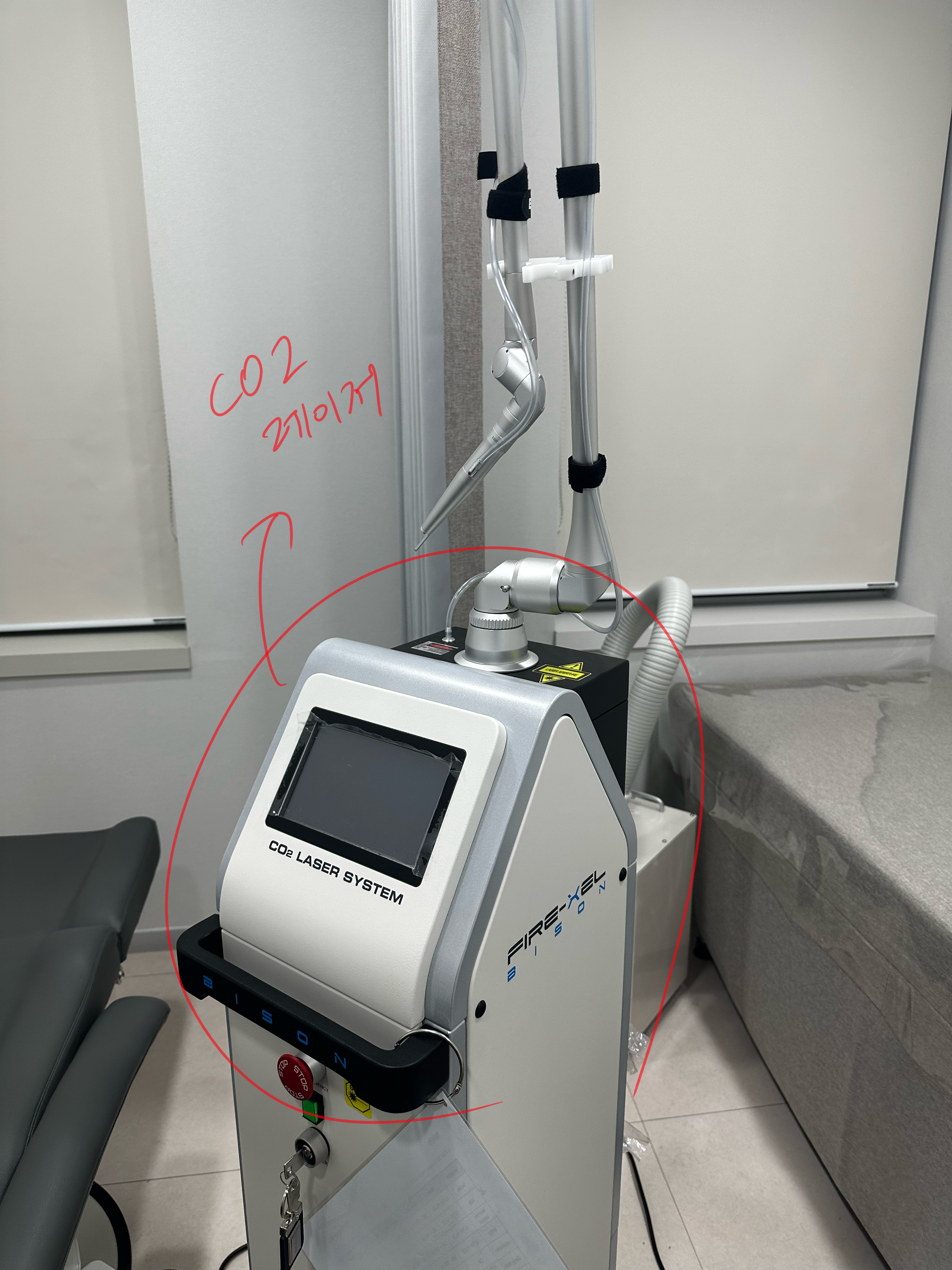
Indeed, procedures using ablative lasers, such as CO₂ laser, to 'flatten' lesions around the eyes are a routine part of dermatological practice.
However, it is crucial to understand that syringomas are not confined solely to the epidermal surface of the skin.
Syringomas develop as lesions situated deep within the mid-dermis.
Should only the superficial part be addressed, the underlying cause may persist, potentially leading to reappearance.
Conversely, excessive depth of removal risks penetrating too far into the dermis, which could result in post-inflammatory hyperpigmentation or scarring.
Given the delicate nature of the eye area, there is an increased susceptibility to hyperpigmentation, necessitating careful consideration of these potential outcomes.
Then, what kind of treatment approach might be well-suited?
A dual strategy focusing on both surface refinement and core treatment.
Currently, a comprehensive strategy for addressing syringomas often involves the following components:
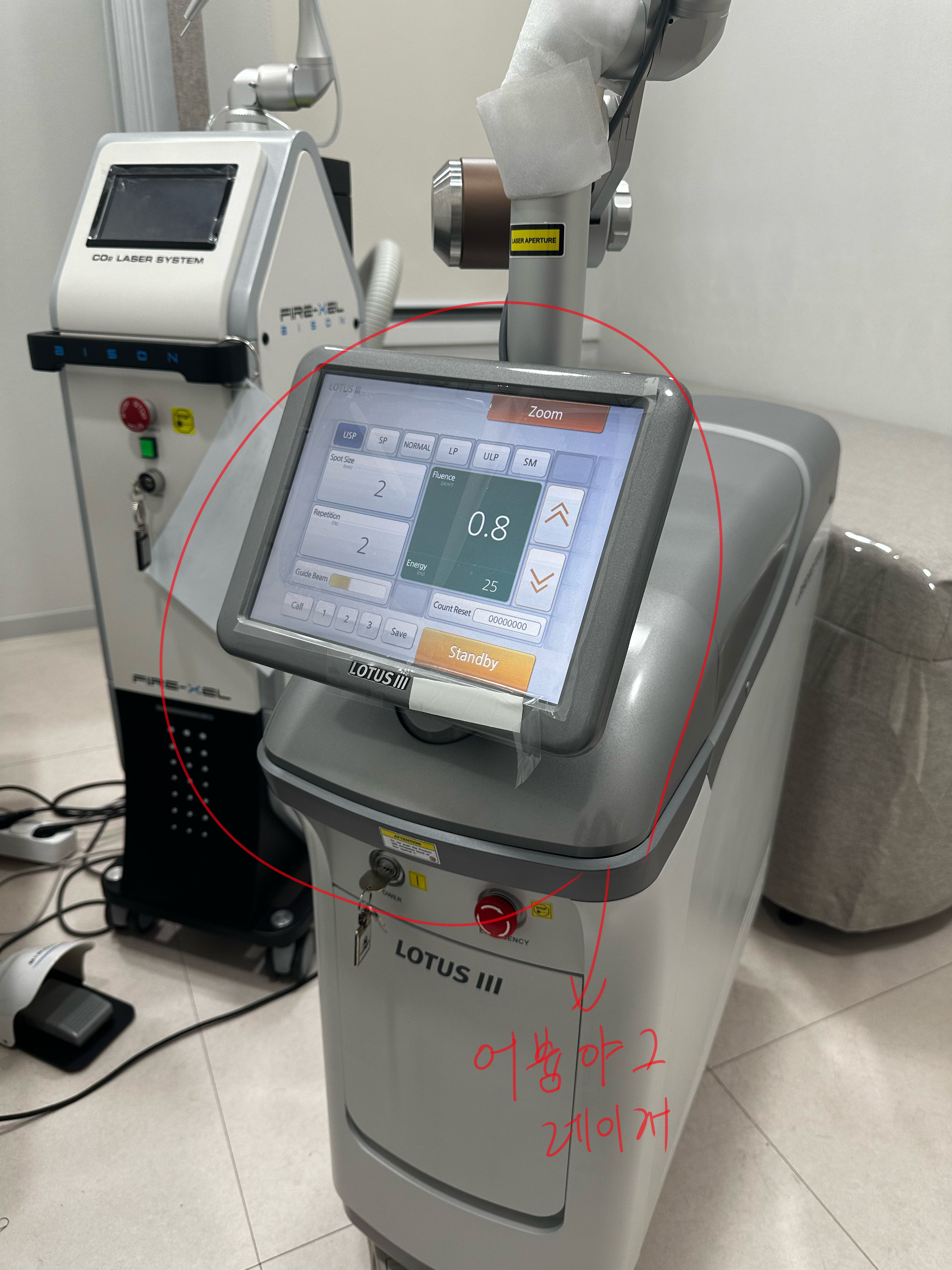
- Surface Lesion Ablation (e.g., CO₂ or Er:YAG Laser)
- This procedure aims to smooth the visible, raised surface of the lesions.
- The goal is for the skin to appear smoother, both naturally and when makeup is applied.
- Dermal Lesion Removal (Insulated Microneedle RF, e.g., Agnes)
- Devices utilizing insulated microneedle radiofrequency (RF) technology, for instance, 'Agnes',
- feature insulation that allows RF energy to be precisely delivered only from the needle's tip.
- This mechanism is designed to avoid harming the epidermis,
- thereby allowing for precise coagulation and destruction of the lesion at high temperatures, specifically within its deep dermal location.
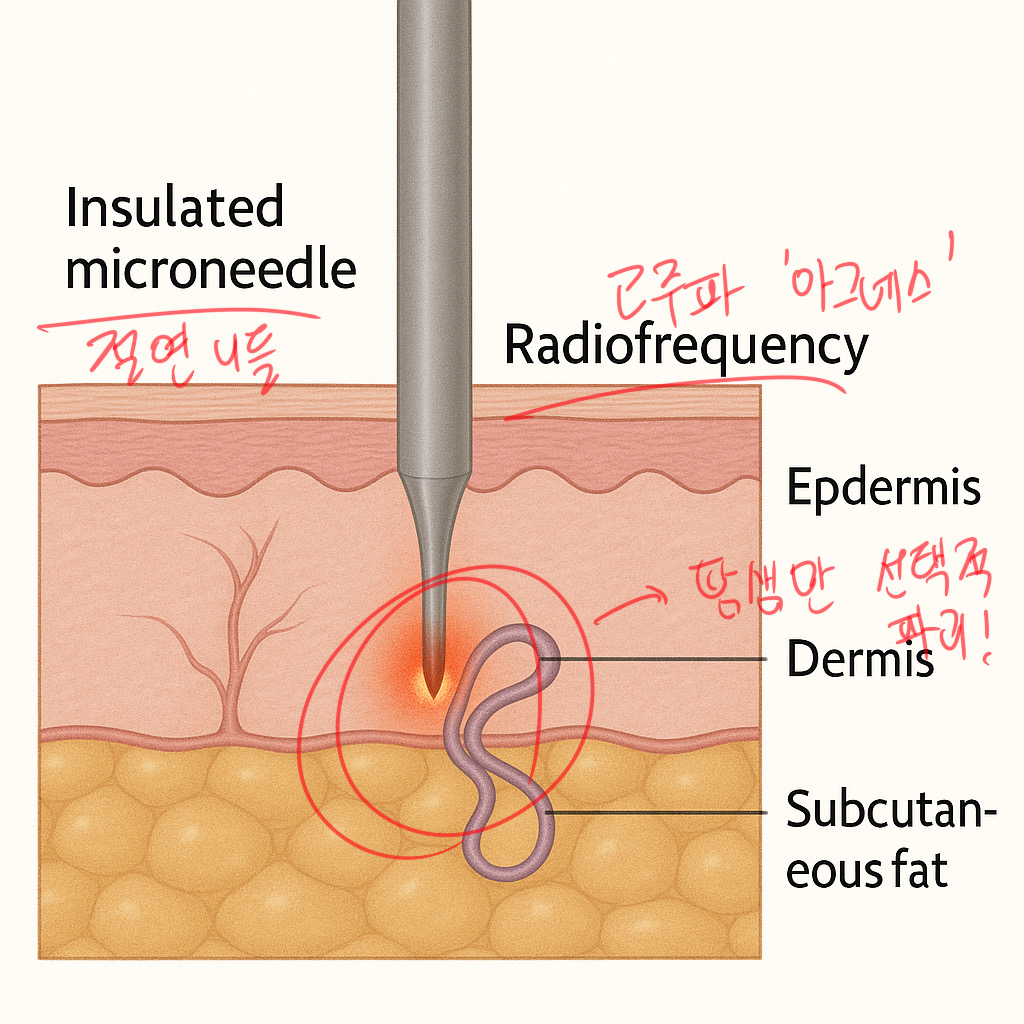
- Because the thermal energy is confined to the exact point reached by the needle tip,
- this approach aims to minimize thermal impact on surrounding healthy tissues while also working to reduce the potential for recurrence.
In summary, effective syringoma management involves understanding their structure and tailoring treatment accordingly.
Syringomas are more than just a superficial skin concern.
They originate from sweat ducts situated deep within the dermis, often influenced by a complex interplay of genetic predisposition, hormonal shifts, and various irritating elements.
Consequently, a simple treatment approach may not suffice.
Addressing only the surface may lead to recurrence,
and excessive depth of removal carries the risk of scarring.
Thus, a precise treatment strategy is necessary to manage both the visible surface and the underlying core components.
Effective management of syringomas hinges upon
a careful approach that accounts for the exact location and depth of the affected sweat ducts.
This often involves a combination treatment utilizing ablative laser and insulated microneedle RF technologies.
Related notes
Procedure notes worth reading next.


Loading menu…