

How will laser toning improve pigmented skin? Beomgye, Pyeongchon, Beomgye Station, Pyeongchon Station, Hogye-dong, Bisan-dong, Gwanyang-dong, Dongan-gu, Indeogwon, Geumjeong, Anyang
9/29/2026
This is a procedure note for How will laser toning improve pigmented skin? at Beomgye(Opening Soon) KKEUT Korean Clinic.
When the brown spots on your face are bothering you because they can't be easily covered with makeup, many people become interested in improving pigmentation.
We will explore the principles behind pigmentation and explain, step by step, how laser toning addresses skin pigmentation issues.
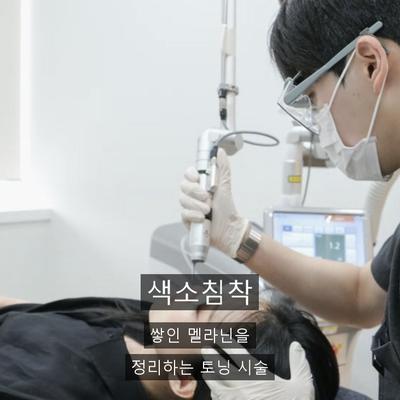
Melanin, which determines skin color, is a pigment produced to protect the skin from external stimuli such as UV rays, friction, and inflammation.
When these stimuli are repeated, the cells that produce melanin are continuously activated. This causes the pigment to accumulate in one place, forming noticeable spots.
Sometimes, brown marks remain even after inflammation subsides following acne or other skin damage. This can also be seen as a phenomenon of excessive pigment deposition.
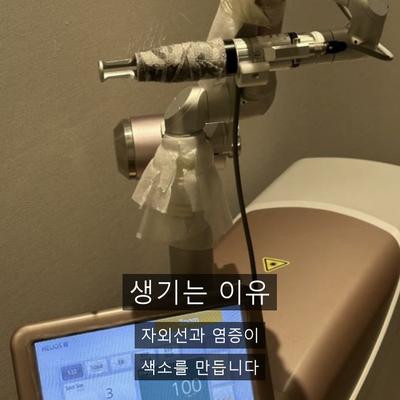
'Pigmentation' is a term that encompasses various types of lesions, such as widespread melasma, clearly defined lentigo (sun spots), and marks left after inflammation.
Since lesions with different characteristics require different approaches, identifying the exact type of pigmentation is the first step in management.
At our clinic, for clearly defined lentigo or freckles, we use the Mark-Vu diagnostic device to capture images, and the director directly identifies them. This is to approach them from a different perspective than broadly distributed pigmentation or general skin tone issues.
To improve pigmentation issues, two aspects must be considered: controlling existing accumulated melanin pigment, and managing environmental factors that trigger pigment production.
If only one aspect is addressed, the pigmentation may darken again after it has lightened. Therefore, it is desirable to combine the treatment with daily care such as sun protection and sufficient moisturizing.
For broadly distributed pigmentation problems, treatments that deliver energy uniformly across the entire skin may be more suitable than methods targeting only specific spots. Laser toning is one such treatment designed for this purpose.
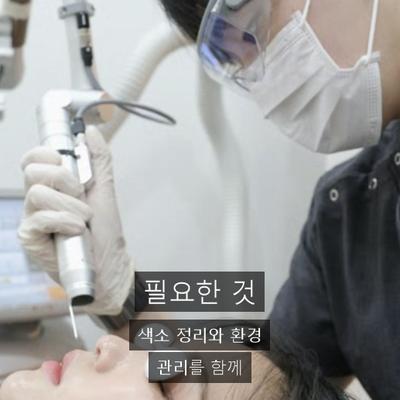
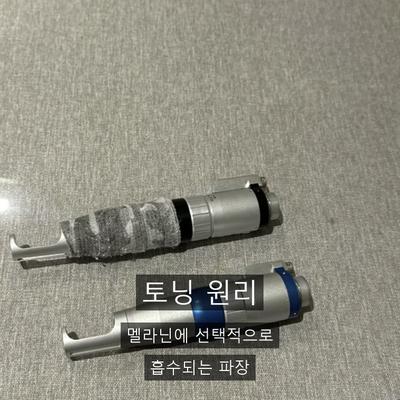
Laser toning refers to a treatment method that uses a laser with a 1064nm wavelength to uniformly irradiate a wide area of skin with low energy.
Lasers of this wavelength primarily react to and are absorbed by melanin pigment, helping to finely break down pigment particles. These finely crushed pigment particles can gradually be expelled from the skin over time through the skin's natural metabolic processes.
This treatment focuses more on improving the overall skin tone of the entire face rather than directly removing individual pigments. It can be considered for those concerned with generally dull skin tone or widely spread blemishes.
Laser toning is not completed in a single session; gradual improvement can be expected when it is performed consistently and repeatedly. We often recommend a cumulative total of 10 or more sessions.
While it may be difficult to notice significant changes in the initial sessions, as more sessions are completed, you can observe the skin tone gradually becoming brighter and more even. The progress of the treatment may vary depending on the depth and extent of the pigmentation, as well as the individual's skin condition.
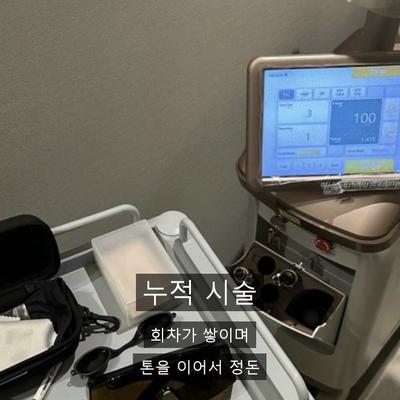
Individual Toning Management Process
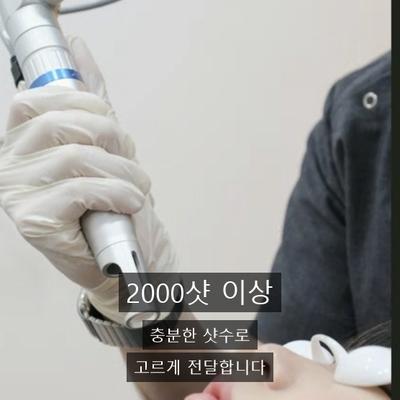
At our clinic, we perform toning treatments with a minimum of 2,000 shots. This is to ensure sufficient shots are delivered so that energy can be uniformly distributed across the entire face. After the treatment, the director confirms the number of shots irradiated with the patient.
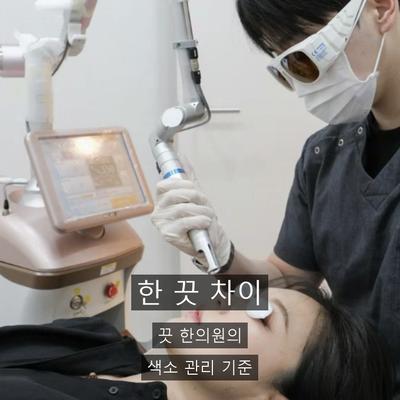
After evenly irradiating energy across the entire face, we provide more focused care for the areas of concern that each patient has. This is to approach treatment according to individual characteristics, such as the cheekbones where melasma often appears, or particularly dark blemishes.
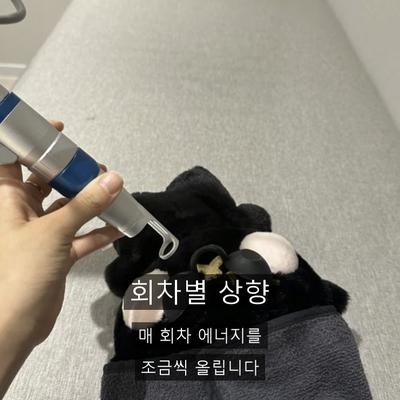
Instead of repeating the same settings every session, we closely observe the skin's reaction and gradually adjust the energy. This is a process of finding the appropriate intensity for the skin condition.
We consider a sufficient number of shots, intensive targeting of lesions, and session-by-session energy adjustment as important principles in pigment management.
During the treatment, it is advisable to diligently use sunscreen and pay attention to skin moisturizing. This can help prevent the improved pigmentation from darkening again due to UV stimulation.
Frequently Asked Questions
Q. How many laser toning sessions are usually needed?
A. Generally, we recommend a cumulative total of 10 or more sessions. Since there can be differences depending on the depth and extent of pigmentation and individual skin response, it is best to check your skin condition during your first consultation and discuss the treatment plan together.
Q. Are melasma and freckles managed with the same method?
A. Melasma and freckles have different characteristics, so their management methods may also differ. Clearly defined lentigo or freckles may require an individualized approach after Mark-Vu imaging and direct diagnosis by the director. Conversely, broadly distributed pigmentation may be managed by addressing overall skin tone through laser toning, etc.
Q. What kind of aftercare is important after the treatment?
A. Sun protection and sufficient moisturizing are essential management elements. Since pigmentation can darken again due to UV exposure, consistently applying sunscreen during the treatment period can be helpful.
Our Clinic's Philosophy
Our clinic aims to build trust by providing over 2,000 shots of sufficient laser irradiation and having the director personally verify the shot count.
We strive to provide more delicate care by intensively addressing each individual's areas of concern.
We gradually adjust the energy according to the skin's reaction during each session, managing to ensure comfort and desired changes.
We provide management with a meticulous approach.
Loading menu…