

Surgical Scars: Why They Linger Over Time and How JuveLook Treatment Works Beomgye, Pyeongchon, Beomgye Station, Pyeongchon Station, Hogye-dong, Bisan-dong, Gwanyang-dong, Dongan-gu, Indeogwon, Geumjeong, Anyang
9/5/2026
This is a procedure note for Surgical Scars: Why They Linger Over Time and How JuveLook Treatment Works at Gyeonggi Anyang Beomgye KKEUT Korean Clinic.
Many people assume that scars left after surgery will naturally fade over time.
However, there are many scars whose color or surface contours remain unchanged even after several years.
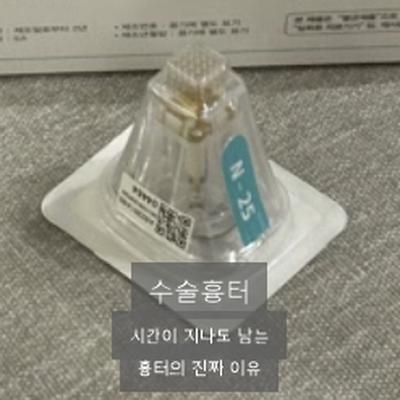
When a wound from surgery heals, the skin has difficulty fully regaining its original smooth texture.
If both the outer layer of the skin, the epidermis, and the deeper layer, the dermis, are damaged simultaneously, the body tends to respond by sealing the wound first, rather than regenerating the tissue perfectly.
At this time, collagen fibers clump together irregularly and without order, forming what we know as scar tissue.
While collagen in healthy skin is arranged in a cross-hatched, dense network, collagen in scar tissue tends to be aligned lengthwise in one direction.
Due to these structural differences, scars tend to have a different texture and color compared to the surrounding skin, even over time.

Scars that occur after surgery can be classified into several types depending on their form.
Common examples include atrophic scars, which are sunken below the surrounding skin surface; hypertrophic scars, which are raised and thick; and keloid scars, which grow beyond the original wound boundaries.
Depending on the suturing method during surgery, skin tension, and individual constitutional characteristics, scars can form differently even after the same surgery.
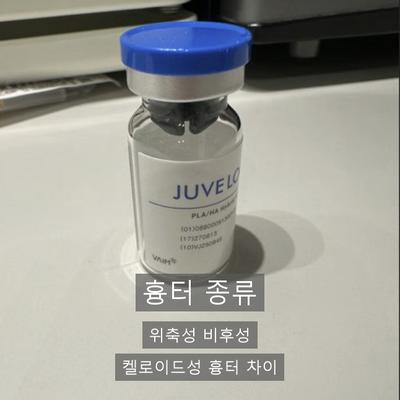
Attempts to manage scars solely with scar ointments or massage are common, but for scars with damage extending deep into the dermal layer, satisfactory improvement may be difficult to achieve with surface care alone.
Surgical scars do not fade well over time because scar tissue does not fully recover into normal skin but remains as permanent substitute tissue.
Since the skin has limitations in its ability to reorganize collagen structures on its own, it is not easy to naturally restore the original skin texture in the scar area.
Therefore, to improve surgical scars, an approach that directly induces collagen regeneration in the dermal layer is necessary.
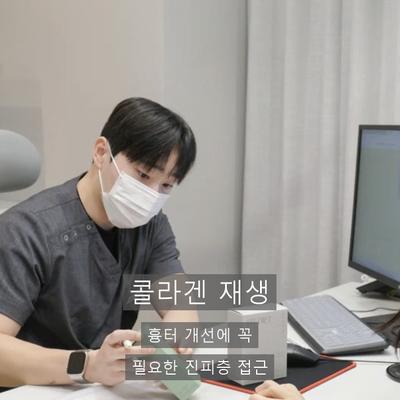
Juvelook treatment helps improve scars by inducing collagen synthesis, taking into account the characteristics of scar tissue.
The main ingredient, PLLA, acts on the dermal layer, stimulating fibroblasts in the skin to gradually induce the production of new collagen.
As a result, new collagen fills in the scar area where collagen structure is irregular, gradually improving surface irregularities and color differences.
Juvelook has a relatively high collagen-boosting effect among skin boosters, making it a treatment that can be considered not only for pores and fine wrinkles but also for areas requiring fundamental changes in skin tissue, such as acne scars and surgical scars.
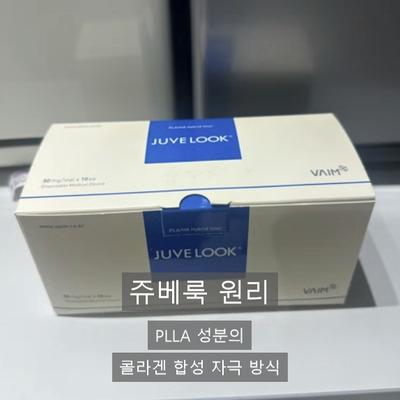
Juvelook treatments are usually performed 2-3 times at 4-week intervals, and considering the treatment's characteristic of gradual collagen production, it is best to aim for steady improvement rather than short-term changes.
Surgical scar treatments generally begin after the scar tissue has sufficiently stabilized, and the number of treatments or intervals may vary depending on the depth or extent of the scar.
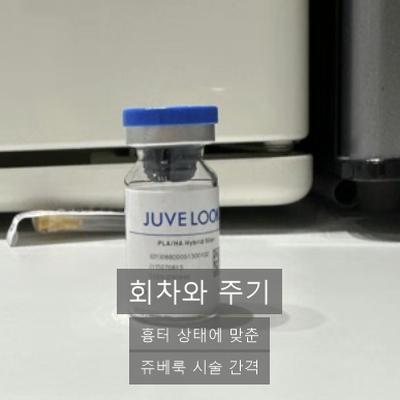
At Kkeut Oriental Medicine Clinic, we carefully consider our approach to surgical scar treatment from the very beginning.
At Kkeut Oriental Medicine Clinic, after a direct consultation with our director to thoroughly assess the scar's shape and the extent of dermal layer damage, we carefully determine the suitability of Juvelook treatment.
At Kkeut Oriental Medicine Clinic, we avoid the conventional manual injection method for Juvelook treatments.
This is because manual injection methods increase the risk of drug nodules and have limitations in uniformly delivering the medication throughout the entire dermal layer.
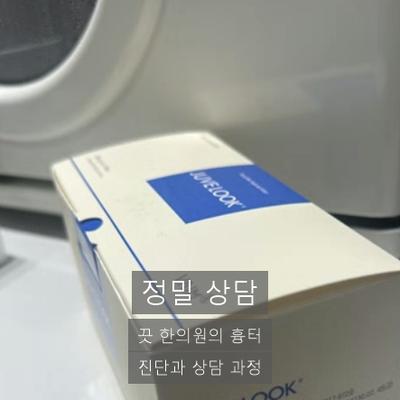
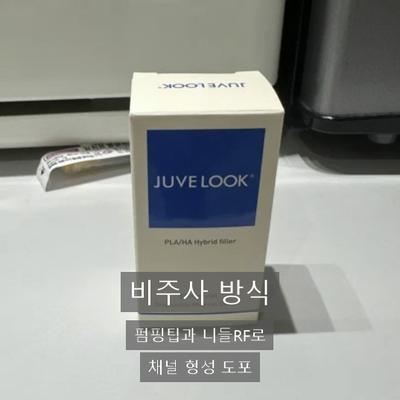
Instead, at Kkeut Oriental Medicine Clinic, we create micro-channels in the skin using pumping tips or needle RF devices before applying the medication. This helps ensure that the stimulus for collagen production is evenly delivered throughout the entire dermal layer.
Our unique channel-forming method brings positive differences in pain during treatment and in the recovery process.
This method of drug application using channels can reduce pain compared to manual injections and has the advantage of not leaving significant damage on the skin surface, thus requiring no complicated post-treatment care.
At Kkeut Oriental Medicine Clinic, before treatment, we extract the precise amount of medication and allow patients to visually confirm it, adhering strictly to the principle of using genuine products in the exact prescribed quantity without dilution.

Frequently Asked Questions
Q. Can surgical scars naturally fade over time?
A. They may improve to some extent rather than disappearing completely, but it is difficult for the skin to return to its original state. Since scar tissue remains as substitute tissue rather than regenerated tissue, there may be limitations in managing it naturally. At Kkeut Oriental Medicine Clinic, we can guide you to consider Juvelook treatment, which induces collagen regeneration, for such cases.
Q. When can Juvelook treatment for surgical scars begin?
A. Treatment is usually performed after the tissue in the surgical area has sufficiently stabilized. The exact timing may vary depending on the patient's surgical scar condition, so it is advisable to confirm this through a specialist consultation at Kkeut Oriental Medicine Clinic.
Q. How many Juvelook treatments are generally recommended for surgical scars?
A. While there are differences depending on the size or depth of the scar, treatments are typically performed 2-3 times at 4-week intervals. At Kkeut Oriental Medicine Clinic, during consultation, we thoroughly examine the patient's surgical scar condition and suggest a customized number of treatments.
Q. How much pain is involved in surgical scar treatment?
A. At Kkeut Oriental Medicine Clinic, we use a method where micro-channels are created first before applying the medication, resulting in relatively less pain compared to manual injections. Furthermore, there is minimal surface damage to the scar area, which can reduce the burden of post-treatment care.
Q. Are surgical scars and hyperpigmentation the same condition?
A. These two are different. Hyperpigmentation is a phenomenon caused by an excessive increase of melanin pigment within the skin, while surgical scars refer to a state where the skin's collagen structure itself has been altered. At Kkeut Oriental Medicine Clinic, through consultation, we clearly differentiate between these two and propose appropriate improvement plans for each.
Our Philosophy at Kkeut Oriental Medicine Clinic
We first conduct a consultation to thoroughly understand the patient's scar type and the extent of dermal layer damage. Through this process, we establish a suitable management direction for each individual and create a plan for improvement.
We use a pumping tip and Needle RF to create channels in the skin, then apply the necessary medication. This process facilitates the delivery of active ingredients and can help enhance the efficiency of the treatment.
We extract the precise amount of medication needed for the treatment and allow patients to verify this process right before their eyes. This helps create a transparent treatment environment and can enhance patients' psychological comfort.
Our meticulous and dedicated treatment approach can contribute to improving individual skin conditions.
Related notes
Procedure notes worth reading next.


Loading menu…