

Depressed Scar Treatment: Why It's Difficult in One Session, and the Principle Behind Potenza Beomgye, Pyeongchon, Beomgye Station, Pyeongchon Station, Hogye-dong, Bisan-dong, Gwanyang-dong, Dongan-gu, Indeogwon, Geumjeong, Anyang
8/19/2026
This is a procedure note for Depressed Scar Treatment: Why It's Difficult in One Session, and the Principle Behind Potenza at Gyeonggi Anyang Beomgye KKEUT Korean Clinic.
Depressed scars that bother you whenever you look in the mirror are often difficult to completely resolve with a single treatment.
Many people considering treatment for depressed scars feel that the scars remain the same even after several treatments.
This is often due to the structural characteristics of the scar tissue itself, rather than the treatment being incorrect.
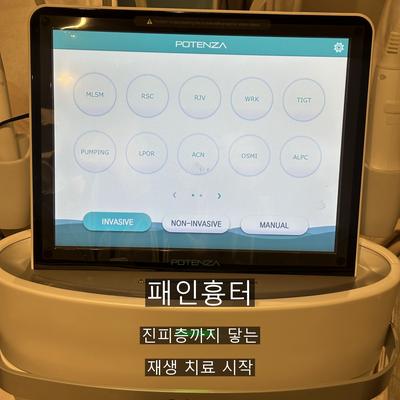
Depressed scars caused by acne or injuries are formed when the collagen structure in the deep dermal layer of the skin collapses.
Damaged tissue undergoes fibrosis over time, becoming hard and firm, and this fibrotic tissue makes the scars deeper and more stubborn.
An approach that only smooths the surface makes it difficult to fundamentally break down this fibrotic tissue.
This is why an approach that delivers stimulation deep into the dermal layer to induce collagen regeneration is necessary.
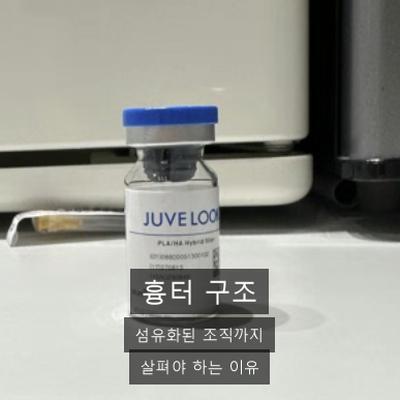
This is also why treatment for depressed scars involves multiple sessions.
The dermal layer is not completely reconstructed with a single stimulation, and the process of new collagen synthesis and arrangement takes time.
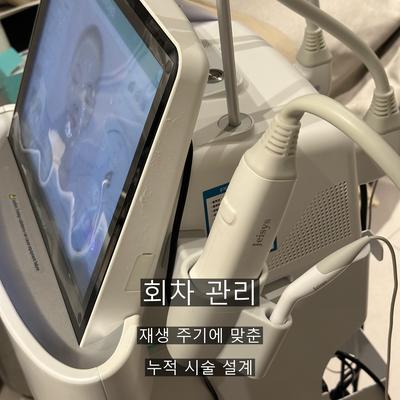
Generally, when cumulative treatments are performed 3 to 5 times at intervals of 4 to 6 weeks, the extent of scar improvement becomes more distinct.
Consistent management tailored to the regeneration cycle, rather than rushing to expect results, is the key to scar treatment.
A common method used for these types of scars is Needle RF.
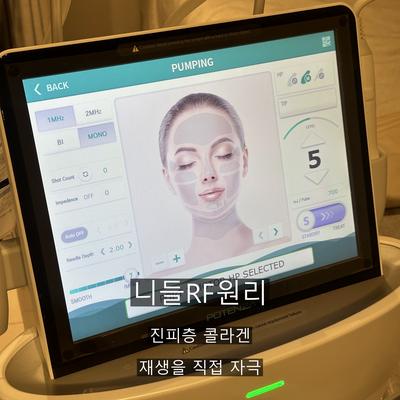
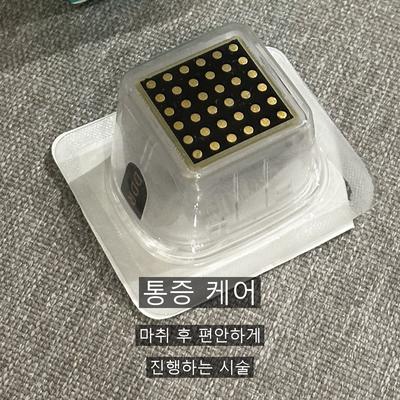
Microneedles create channels down to the dermal layer, then stimulate collagen and elastin production by directly emitting high-frequency energy from the needle tips.
Unlike past methods that ablated the surface, this device has evolved to intensively target the dermal layer, reducing downtime while enhancing regenerative effects.
The ability to precisely adjust needle depth according to the area and purpose is also an important factor in scar treatment.
Since the degree of damage varies for each scar area, it is important to set different needle depths for different areas.
It is used not only for depressed scar treatment but also for enlarged pores, fine wrinkles, and reduced skin elasticity.
It can be applied to both acne scars and traumatic scars, so the treatment plan varies depending on the cause of the scar.
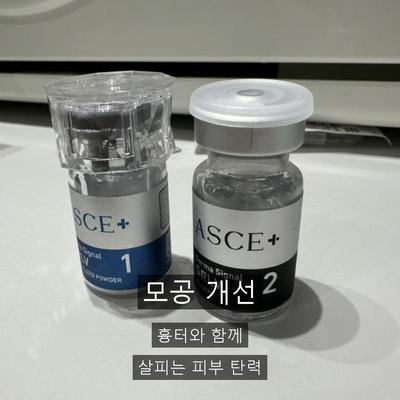
Combining skin boosters with scar treatment can further enhance dermal regeneration.
If scars are accompanied by hyperpigmentation, dermal stimulation and skin tone improvement must be considered together.
At this point, how deeply and evenly the medication is delivered becomes the decisive factor for the outcome.
For older scars, such as acne scars, the dermal layer's response rate is slower, making consistent management even more crucial.
Pain is manageable as the procedure is performed after anesthesia.
Redness and tiny bleeding points may appear immediately after the procedure and usually subside within one or two days.
In some cases, it may last up to a week depending on skin type or treatment intensity, so individual differences should be considered.
Makeup is possible from the next day, but it is best to keep it minimal for about three days to protect the skin.
For one to two days after the procedure, it is advisable to avoid heat-inducing activities such as saunas, strenuous exercise, and alcohol consumption.
Apply moisturizer frequently to restore the skin barrier and diligently apply sunscreen.
Many people expect all scars to disappear after just one depressed scar treatment. While changes in skin texture, such as becoming smoother, may be felt quickly, the fundamental regeneration of deep scars is completed as more sessions accumulate.
The rate at which scars become shallower and the rate at which their depth decreases may vary, so comparing changes between sessions with photos can also be helpful.
Kkeut Korean Medicine Clinic meticulously designs the entire treatment process, considering these characteristics of scar treatment.
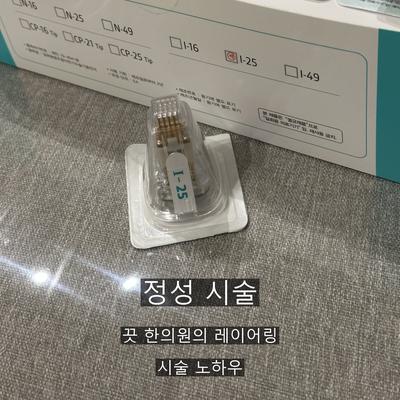
Kkeut Korean Medicine Clinic uses a dedicated pumping tip to push medication deep into the dermal layer when combining skin boosters.
This enhances absorption compared to general injection methods, creating a more favorable environment for scar regeneration.
In this process, drug absorption efficiency significantly increases compared to general topical application.
Kkeut Korean Medicine Clinic strictly adheres to hygiene and safety by using a 'one tip per person' principle for all treatment tips, discarding them immediately after use.
Kkeut Korean Medicine Clinic increases treatment density in scar areas by adjusting needle depth for each area and using a layering technique with overlapping passes.
Kkeut Korean Medicine Clinic diligently ensures that the specified number of shots is delivered without compromise, ensuring even energy distribution throughout the entire skin.
Frequently Asked Questions
Q. How many sessions of depressed scar treatment are needed to feel the effects?
A. The changes from depressed scar treatment become distinct when cumulative treatments are performed 3 to 5 times at intervals of 4 to 6 weeks, aligned with the dermal regeneration cycle. At Kkeut Korean Medicine Clinic, we guide you by reviewing the progress of each session together.
Q. Is the depressed scar treatment very painful?
A. Depressed scar treatment is performed after anesthesia, so it is more tolerable compared to other needle procedures. Kkeut Korean Medicine Clinic ensures sufficient anesthesia time before the procedure to minimize pain.
Q. Can depressed scar treatment and pore management be done together?
A. Yes, the equipment used for depressed scar treatment is also utilized for improving enlarged pores and skin elasticity. Kkeut Korean Medicine Clinic examines both the scar and pore condition to design the treatment area.
Q. What is the downtime after depressed scar treatment?
A. Immediately after depressed scar treatment, redness and tiny bleeding points usually subside within a day or two, but depending on individual differences, they can last up to about a week. Kkeut Korean Medicine Clinic provides detailed guidance on aftercare methods on the day of the procedure.
Q. How is the cost of depressed scar treatment determined?
A. The cost of depressed scar treatment varies depending on the scar area and the number of sessions planned, and Kkeut Korean Medicine Clinic provides reasonable pricing through consultation.
The Sincerity of Kkeut Korean Medicine Clinic
Kkeut Korean Medicine Clinic delivers differentiated results through precise layering procedures that reach the dermis.
Kkeut Korean Medicine Clinic enhances patient satisfaction by adhering to the principle of disposing one tip per person and operating with dedicated pumping tips.
Kkeut Korean Medicine Clinic pursues both safety and effectiveness simultaneously through uncompromising shot counts and precise needle depth control.
A Subtle Difference, A Different Result — Experience it at Kkeut Korean Medicine Clinic.
Related notes
Procedure notes worth reading next.


Loading menu…