

How many sessions does it take to remove a tattoo? - Why it varies by case Beomgye, Pyeongchon, Beomgye Station, Pyeongchon Station, Hogye-dong, Bisan-dong, Gwanyang-dong, Dongan-gu, Indeogwon, Geumjeong, Anyang
7/9/2026
This is a procedure note for How many sessions does it take to remove a tattoo? - Why it varies by case at Gyeonggi Anyang Beomgye KKEUT Korean Clinic.
The number of tattoo removal sessions required varies from person to person.
This is because even tattoos of the same size require a different number of sessions depending on their color, depth, and skin type.
If you've decided to remove a tattoo, it's best to first understand why this variation occurs.
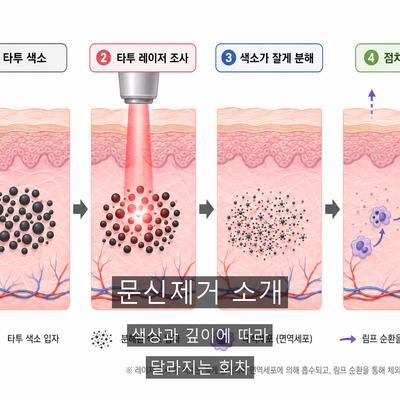
Tattoo removal lasers work by breaking down pigment particles deep within the skin.
As laser energy is absorbed by the tattoo ink, the particles are finely fragmented.
The fragmented pigment particles are enveloped by immune cells in the body and slowly expelled through the lymphatic system.
This process repeats, gradually lightening the tattoo's color.
Tattoos are not 'erased' but rather expelled from the body.
The factors determining how many tattoo removal sessions are needed are not just one or two.
Color is the biggest variable.
Black ink absorbs a wide range of wavelengths and reacts relatively quickly, but greens and yellows have lower absorption rates, requiring more sessions.
The depth at which the tattoo is etched is also important.
Ink located deep in the dermis requires more treatments than shallow tattoos.
Tattoo density, layering, skin type, and immune response speed all affect the number of sessions.
The type of laser is also one of the variables.
Picosecond lasers, with their shorter pulse duration, are advantageous for breaking down small particles and can help reduce the number of sessions. However, removal is also possible with nanosecond lasers, though it may require a few more sessions.
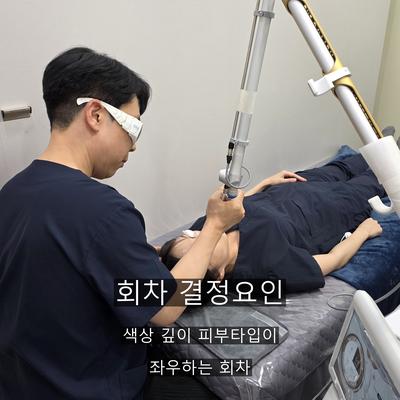
Traditional methods often involved long-term treatment, typically over 10 sessions, with intervals of 6 to 8 weeks.
This was due to the belief that sufficient recovery time was necessary for the next treatment to be safe.
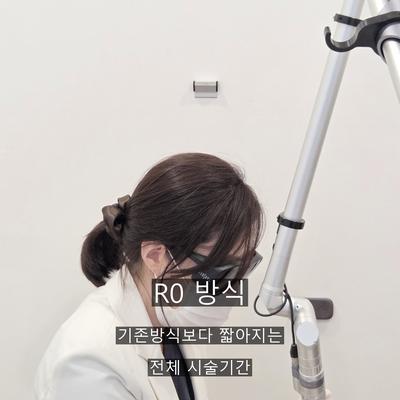
Recently, the trend is changing with the introduction of a rapid-repeat treatment technique called the R0 method.
This method involves treating the same area multiple times in a single visit to enhance the efficiency of pigment destruction.
According to research, applying the R0 method can reduce the total number of treatment sessions by about 30 to 50 percent.
Results have also been reported where pigments lighten by more than 70 to 90 percent with approximately 3 total visits.
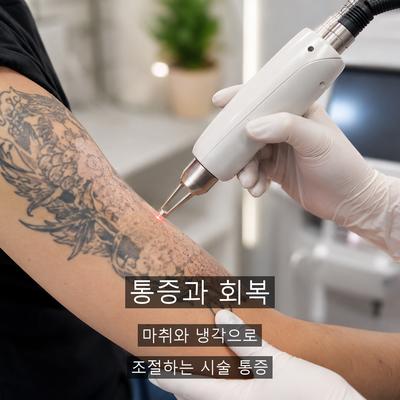
It can be more painful than getting a tattoo, but the pain is manageable when combined with anesthesia and cooling.
Immediately after the procedure, swelling, redness, and a whitish frosting phenomenon may appear.
Recovery usually occurs within 1 to 2 weeks, but there can be variations depending on skin condition, tattoo depth, and treatment intensity.
Blisters that form after the procedure serve to protect the skin, so they should not be forcibly popped.
Apply a regenerative ointment frequently to prevent dryness and aid recovery.
To prevent hyperpigmentation, sunscreen must be carefully applied to exposed areas.
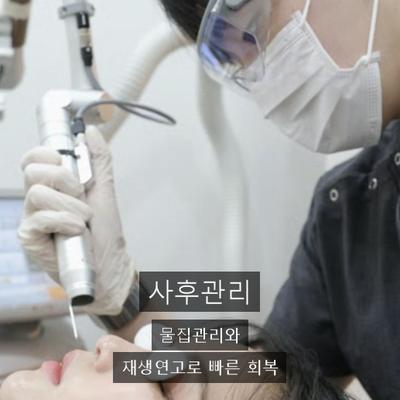
The idea that tattoos cannot be removed unless a pico laser is used is not accurate.
While picosecond lasers are advantageous for breaking down small particles, nanosecond lasers can also effectively remove tattoos, with the only difference being the number of sessions depending on the operating method.
Some people worry about scars, but if only the ink is precisely targeted, the risk of scarring is not high.
Results can vary depending on individual skin recovery capabilities and post-procedure care, making expert judgment crucial.
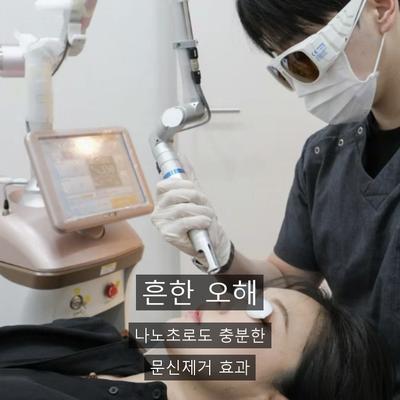
Ultimately, whether fewer treatment sessions are needed depends more on the operating method than on a single piece of equipment.
Even with the same laser, how it is used and what procedures are followed greatly influence the number of sessions and the results.
You should seek a clinic that meticulously manages these aspects.
Kkeut Korean Medicine Clinic's Unique R0 Plus R20 Hybrid Protocol
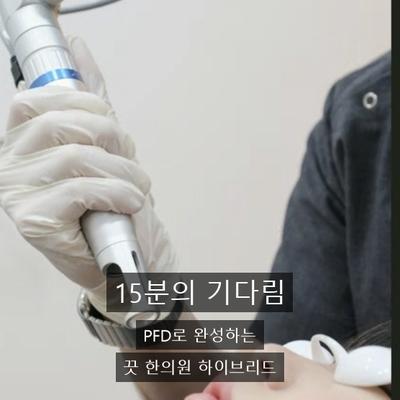
Kkeut Korean Medicine Clinic undergoes a process of waiting for 15 minutes after applying PFD.
This is not a quick-shoot-and-finish approach, but rather one that incorporates the stability of the existing R20 method.
During this 15-minute waiting period, the PFD medication acts sufficiently, and the white bubbles, known as frosting, almost disappear.
If bubbles remain, the light will scatter during the next treatment and will not precisely hit the pigment. Therefore, this waiting process is Kkeut Korean Medicine Clinic's unique know-how to ensure the laser reaches the pigment more deeply and accurately.
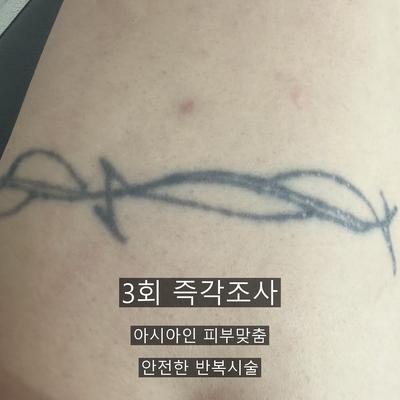
Asian skin, which is sensitive to melanin reactions, should not be treated in the same way as Western skin.
Kkeut Oriental Medicine Clinic considers these skin characteristics and adheres to 3 immediate, repeated irradiations to achieve maximum effect within a safe, side-effect-free range.
Results only possible at Kkeut Oriental Medicine Clinic
While treatment time tends to be longer than conventional methods, Kkeut Oriental Medicine Clinic focuses on results over time.
Our goal is to reduce the total number of clinic visits and allow you to experience noticeable pigment reduction with just one visit.
Frequently Asked Questions
Q. How many tattoo removal sessions does it take to noticeably lighten the tattoo?
A. The number of tattoo removal sessions varies depending on the color and depth, but with Kkeut Oriental Medicine Clinic's R0 plus R20 method, pigment often significantly lightens within approximately 3 visits.
Q. Is tattoo removal difficult if it's not a pico laser?
A. Not at all. It can also be removed with a nanosecond laser, and Kkeut Oriental Medicine Clinic enhances efficiency through its irradiation method and procedures.
Q. Is the pain severe?
A. It is tolerable when anesthesia and cooling are combined.
Q. When can I return to daily life after the procedure?
A. Most people can return to daily life the next day, and swelling and whitening often subside within 1 to 2 weeks.
Kkeut Oriental Medicine Clinic's Sincerity
Kkeut Oriental Medicine Clinic provides differentiated results through a hybrid protocol that involves a 15-minute waiting period after PFD application.
Kkeut Oriental Medicine Clinic increases patient satisfaction through 3 immediate, repeated irradiations that consider the characteristics of Asian skin.
Kkeut Oriental Medicine Clinic simultaneously pursues safety and effectiveness through a treatment philosophy that prioritizes results over time.
A subtle difference, distinct results — Experience it at Kkeut Oriental Medicine Clinic.
Related notes
Procedure notes worth reading next.


Loading menu…