

Syringoma Treatment: 3 Key Things to Know to Prevent Recurrence Beomgye, Pyeongchon, Beomgye Station, Pyeongchon Station, Hogye-dong, Bisan-dong, Gwanyang-dong, Dongan-gu, Indeogwon, Geumjeong, Anyang
6/15/2026
This is a procedure note for Syringoma Treatment: 3 Key Things to Know to Prevent Recurrence at Beomgye(Opening Soon) KKEUT Korean Clinic.
Many people experience small bumps reappearing in the same spot shortly after receiving treatment for syringoma.
Why does it recur after being removed once? How can it be eliminated cleanly without recurrence? — This article will cover 3 key points.
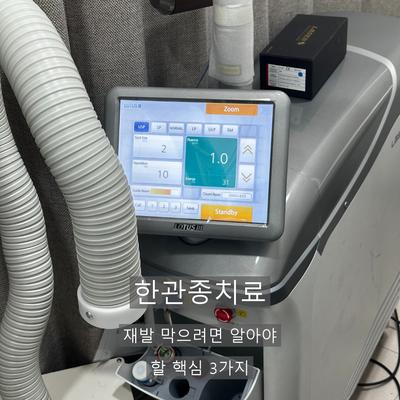
What is Syringoma?
Syringoma is a benign skin tumor caused by the abnormal proliferation of sweat gland ducts within the skin.
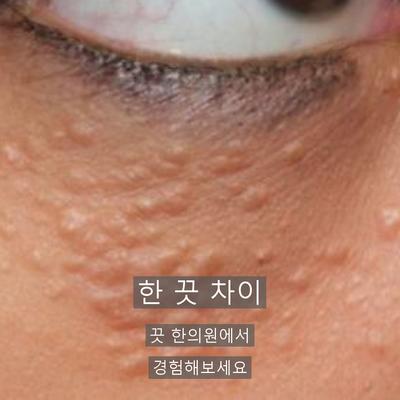
It most commonly appears as skin-colored or pale yellow small bumps under the eyes, and can also spread to the forehead, cheeks, and neck.
Syringoma is a lesion that originates from a structure completely different from sebaceous glands or keratin. This is the most crucial starting point in syringoma treatment.
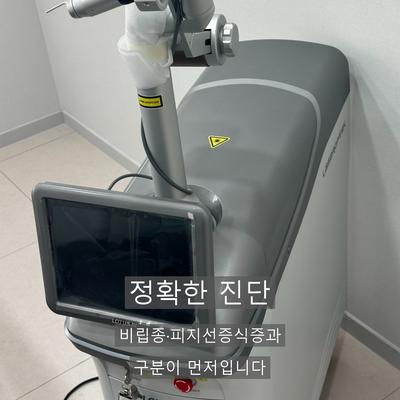
Key 1 — Diagnosis Comes First
There are three types of small bump-like lesions that resemble syringoma: milia, sebaceous hyperplasia, and syringoma.
Even though they look similar, their causes are completely different. Milia are caused by blocked keratin cysts, sebaceous hyperplasia by overgrown sebaceous glands, and syringoma by problems with sweat gland ducts.
Different causes require different approaches. This is why using the same treatment method might be ineffective or even cause irritation.
This is why accurate differential diagnosis is essential before treating syringoma.

Key 2 — Removing Only the Surface Leads to Recurrence
The biggest reason for syringoma recurrence is that only the surface was removed.
If only the visible bumps on the skin's surface are removed with a laser, it may look clean temporarily. However, the sweat gland ducts that cause syringoma remain deep within the dermal layer of the skin.
The remaining ducts proliferate again, causing syringoma to recur in the same spot. This is why the pattern of recurrence repeats within a few months or a year.
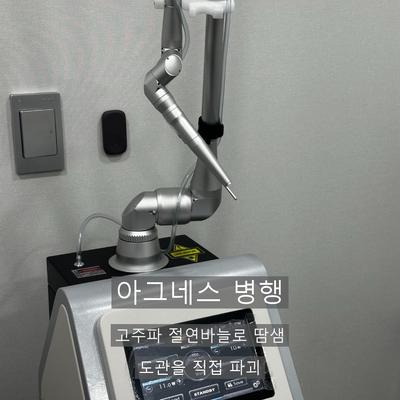
To prevent recurrence, the proliferated sweat gland ducts themselves must be targeted.
For this purpose, high-frequency insulated needle treatment, or Agnes, is used. A fine insulated needle is directly inserted into the dermal layer of the skin, and high-frequency energy is emitted only from the tip of the needle to precisely destroy the sweat gland ducts in the lesion area.
This is a fundamentally different approach from surface laser removal, as it targets only the causative structure without causing unnecessary damage to surrounding tissues.

Key 3 — Post-Treatment Care Determines Recurrence Rate
The speed of skin recovery and the likelihood of recurrence vary depending on how post-syringoma treatment care is managed.
The treated area has a temporarily weakened skin barrier. During this period, exposure to external irritants, UV light, or excessive friction increases the risk of hyperpigmentation or secondary infection.
Immediately after the procedure, it is important to rapidly stabilize the damaged area through regenerative care. This helps the skin recover to its normal state and reduces the chance for syringoma to proliferate again.
Sun protection must be strictly maintained throughout the treatment period. UV radiation can irritate skin tissue, slowing down recovery and causing pigment changes.
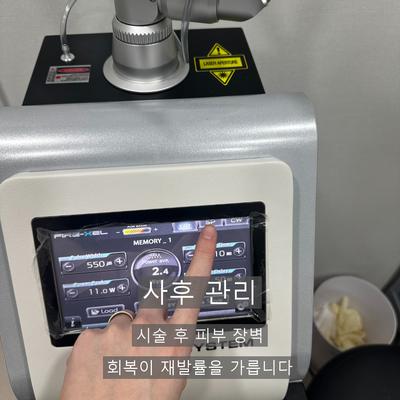
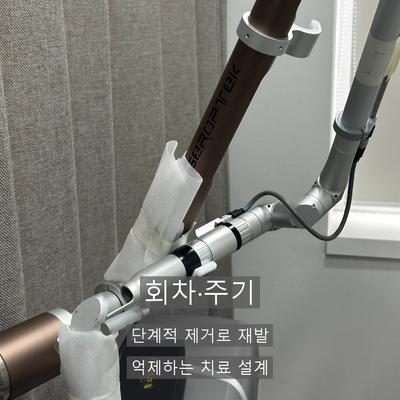
The number of sessions and their timing are also important. Rather than resolving all lesions in a single session, syringoma treatment requires a gradual process of removing remaining duct structures. Determining the timing of subsequent treatments based on the skin's recovery status is the safest approach.
Frequently Asked Questions
Q. Does syringoma treatment remove them completely?
A. Syringoma treatment aims for both lesion removal and recurrence suppression. At Kkeut Clinic, in addition to surface removal, we utilize a combined Agnes program that destroys the sweat gland ducts themselves, thereby reducing the possibility of recurrence.
Q. Are syringoma treatment and milia removal done using the same method?
A. No, they are different. The core of milia treatment is destroying keratin cysts, while syringoma treatment targets sweat gland ducts as the cause, so the approach differs. Treating both with the same method may be ineffective or cause irritation.
Q. Can I resume daily life immediately after syringoma treatment?
A. You can resume daily life from the day of the procedure. However, it is beneficial for recovery to avoid strong friction or UV exposure on the treated area and to combine it with regenerative care.
Q. Is treatment possible even if syringoma is directly under the eyes?
A. Precise treatment is possible even for sensitive areas like around the eyes. However, the feasibility and method will be determined after thoroughly assessing the specific characteristics of the area before the procedure.
Kkeut Clinic's Sincerity
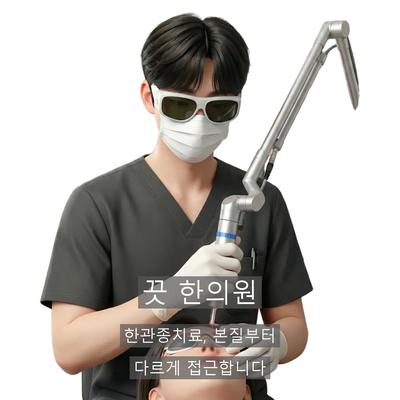
At Kkeut Clinic, we accurately differentiate syringoma from similar lesions like milia and sebaceous hyperplasia in treatment, then approach each with distinct methods. We do not use the same method simply because they look similar.
Kkeut Clinic goes beyond surface removal by offering a separate combined Agnes high-frequency insulated needle program. This fundamental approach, which destroys the sweat gland ducts themselves, results in a different recurrence rate compared to typical surface treatments.
Kkeut Clinic uses DuoDerm Gel after procedures. Unlike regular sticker-type DuoDerm, the gel type can be comfortably used by those with allergies, and it promotes stable skin recovery.
A subtle difference, a different result — Experience it at Kkeut Clinic.
Loading menu…