



Why Men Should Choose Laser Hair Removal for Leg Hair Instead of Shaving Beomgye, Pyeongchon, Beomgye Station, Pyeongchon Station, Hogye-dong, Bisan-dong, Gwanyang-dong, Dongan-gu, Indeogwon, Geumjeong, Anyang
9/30/2026
This is a procedure note for Why Men Should Choose Laser Hair Removal for Leg Hair Instead of Shaving at Beomgye(Opening Soon) KKEUT Korean Clinic.
Those considering male leg hair removal often think of shaving first.
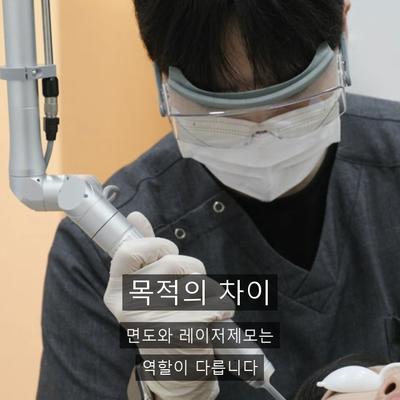
Shaving is a daily management practice done at home, while laser hair removal is a procedure that targets the hair follicles that produce hair. The purposes of the two methods are different.
Here, we will look in order at the characteristics of male leg hair, personal management methods, the principles and required sessions of laser hair removal, and how hair removal procedures are performed at our clinic.

What are the characteristics of male leg hair?
Male leg hair is often thick and dark, distributed over a large area from the calves to the thighs.
Thick, dark hair contains a lot of melanin pigment, which is advantageous for absorbing laser energy.
Among body parts, areas like the armpits, arms, and legs have large skin surfaces and distinct hair pigments, so they tend to respond well to laser procedures.
However, hair thickness, density, and skin color vary from person to person, and can even differ in various parts of the same leg.

Shaving and waxing are management methods with different purposes
Shaving is a method of cutting hair that is exposed outside the skin.
With simple preparations, it can provide an immediate clean feeling on the day itself, which is why many people prefer it for daily management.
Waxing is a method that removes hair down to the root, maintaining smoothness slightly longer than shaving.
Both methods can serve their respective purposes depending on the need.
However, since they do not affect the hair follicle itself, the fundamental structure from which hair regrows remains intact.
While waxing provides temporary results and can irritate the skin, laser procedures can offer semi-permanent hair removal effects by destroying hair follicles.
Since shaving and laser hair removal each play different roles, it is best to choose the appropriate method based on the results you desire.
How does laser hair removal work?
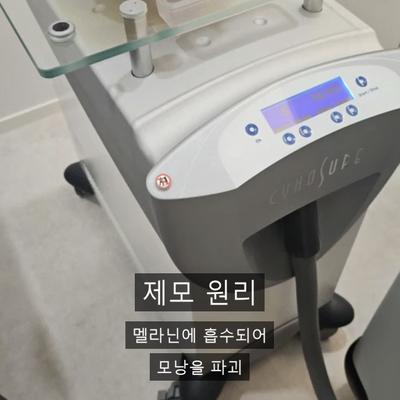
Laser hair removal utilizes the principle that the black melanin pigment within the hair selectively absorbs laser energy.
The absorbed energy is converted into thermal energy, which damages the hair root and follicle that produce hair.
Lasers can most effectively impact hair follicles in the active growth phase, where melanin pigment activity is vigorous.
Since the timing of the growth phase varies for each hair, it is difficult to expect results on all hair follicles with just a single treatment.
Therefore, multiple treatment sessions are recommended, timed with the cycle in which resting hairs transition back into the growth phase.
Sessions and cycles are set as follows
For any area, it is advisable to consider at least 10 or more treatment sessions.
Since the timing of hair appearing in the growth phase is irregular, consistent repeat treatments are necessary for energy to adequately reach all hair follicles.
The treatment interval is a minimum of 3 weeks, with a 4-week interval considered appropriate.
This interval is set considering that the skin cell regeneration cycle is approximately 4 weeks, to protect the skin and allow time for new growth-phase hairs to emerge.
Even after a significant reduction in hair, maintenance treatments can be considered every 2 to 3 months.
Before starting treatment, it's good to understand that the goal is semi-permanent hair removal rather than permanent hair removal where hair never grows back.

Good care tips to know before and after treatment
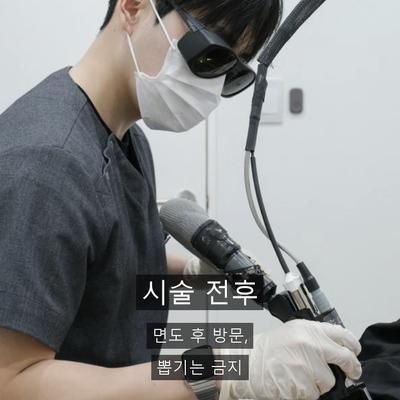
It is recommended to shave the treatment area before coming for your appointment.
If the hair is long, laser energy may be unnecessarily dissipated on the skin surface, increasing the risk of burns, and making it difficult for sufficient energy to reach the hair root.
After treatment, it is best to shave from the day after the skin has calmed down to some extent.
During the laser hair removal treatment period, you should refrain from plucking or waxing hair.
This is because if hair is plucked, the hair root that the laser targets disappears, which can reduce the effectiveness of the treatment.
For about 1 to 2 days after treatment, it is best to refrain from activities that can raise body temperature, such as exercise, saunas, and alcohol consumption.
As this is a procedure that directly delivers thermal energy to the hair follicles, temporary symptoms of folliculitis, such as small red spots or itching, may occasionally appear. Consistent application of a regenerative cream usually leads to improvement over time.
Our clinic offers leg hair removal treatments.
Our clinic performs treatments using laser devices such as Apogee and GentleMax.
Apogee continuously sprays cool air before and after treatment to regulate skin temperature, while GentleMax protects the skin through a gas cooling method.
Depending on the hair thickness, long pulses are utilized to gently deliver thermal energy while protecting the skin surface.
For thick and dark hair, energy density is adjusted for sufficient heat accumulation. Conversely, for fine and light hair, energy is delicately controlled or multiple passes are made to ensure heat is effectively delivered to the hair root area.
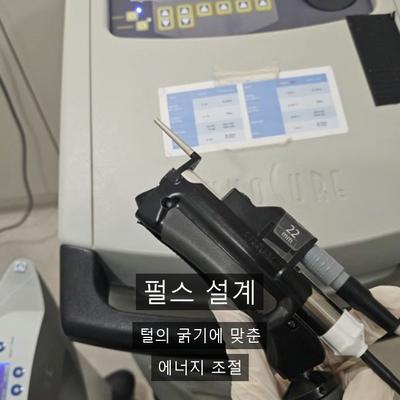
In areas with dense hair, energy is divided during treatment to reduce the risk of burns caused by excessive heat accumulation.
For darker skin tones, the output is carefully adjusted to prevent potential side effects that may arise from melanin pigment reactions.
Energy is more delicately focused on the individual's main areas of concern.
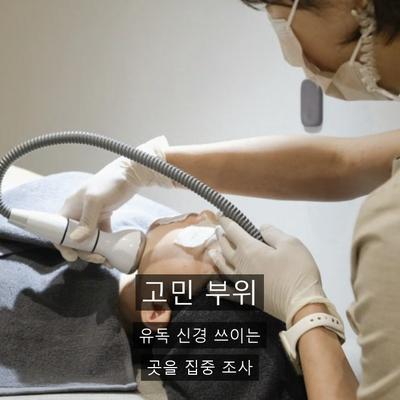
Before completing the treatment, we check if any additional procedures are needed, and finalize only after the patient has given their final consent.
We carry out each step of this process with great care.

Frequently Asked Questions
Q. How many sessions are typically needed for men's leg hair removal?
A. For men's leg hair removal, regardless of the specific area, we generally recommend considering 10 or more sessions. Hair grows irregularly according to its growth cycle, requiring consistent management. The number of treatment sessions may vary depending on individual hair density, thickness, and other factors. During your visit, we will assess your current condition through consultation and explain the appropriate number of sessions.
Q. Should I shave before my men's leg hair removal session?
A. It is recommended to shave before your men's leg hair removal session. If the hair is too long, the laser energy may be unnecessarily consumed on the skin surface, which could increase the possibility of burns.
Q. Is men's leg hair removal treatment painful?
A. The pain you might feel during men's leg hair removal is comparable to holding a cold ice pack against your skin. As treatments are repeated and the amount of hair decreases, the intensity of the pain tends to lessen as well. Anesthetic cream primarily affects only the skin surface, so it is not an essential factor for pain reduction. At our clinic, we effectively manage pain using cooling devices.
Our Commitment at Kkeut Korean Medicine Clinic
We meticulously design pulse duration and energy density to match hair thickness and density, striving to achieve optimal results tailored to each individual.
We focus more intensely on areas of concern during treatment and build trust by finalizing the process only after the patient's final confirmation and consent.
At our clinic, we utilize devices like Apogee and GentleMax along with a cooling system to minimize discomfort during treatment and strive for stable results.
You can experience a noticeable difference through our delicate approach.
Loading menu…