

Why might 300 shots of Tenstherma not be quite enough? Beomgye, Pyeongchon, Beomgye Station, Pyeongchon Station, Hogye-dong, Bisan-dong, Gwanyang-dong, Dongan-gu, Indeogwon, Geumjeong, Anyang
5/4/2026
This is a procedure note for Why might 300 shots of Tenstherma not be quite enough? at Gyeonggi Anyang Beomgye KKEUT Korean Clinic.
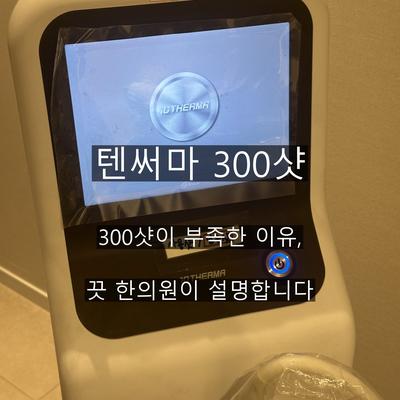
Some individuals report feeling that 300 shots of Tenssermar do not meet their expectations.
There is a straightforward explanation for this.
Covering the entire facial area with just 300 Tenssermar shots can be challenging.
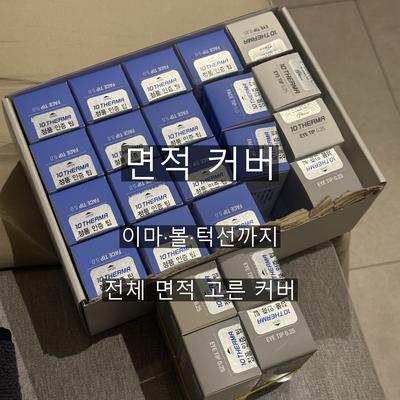
Each Tenssermar tip has a defined contact surface area.
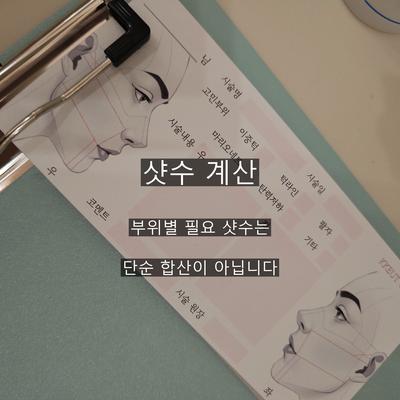
Properly stimulating areas such as the forehead, cheeks, cheekbones, jawline, and neck requires a cumulative total of shots that often exceeds 300.
Achieving uniform heat stimulation across the full face necessitates a specific number of shots, which is influenced by factors like the treated area's dimensions and the tip's application spacing.
Attempting to apply 300 shots uniformly across the entire face may result in inadequate heat delivery to each region. Conversely, concentrating all shots on a single area means other facial parts will not receive treatment.
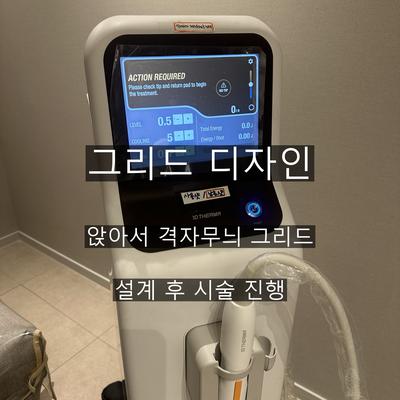
GGEUT Oriental Medical Clinic's Approach: Initial Grid Design
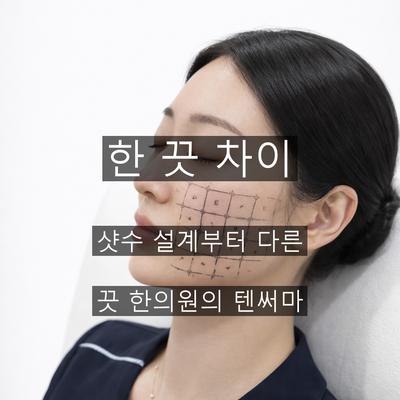
Before initiating Tenssermar treatment at GGEUT Oriental Medical Clinic, the tip's grid pattern is meticulously drawn with the patient in a seated position.
This step is crucial because facial contours, particularly the cheeks and jawline, shift noticeably between sitting and lying postures.
Performing the design exclusively while the patient is lying down could lead to unintended cheek hollowing or cause areas requiring significant lifting to be overlooked.
Establishing the grid prior to treatment clarifies the precise path for the tip, allowing for an accurate calculation of the total shots needed.
Consequently, GGEUT Oriental Medical Clinic does not adhere to a fixed 300-shot standard for Tenssermar. Our approach involves delivering the exact number of shots determined by the initial grid design.
The Superpass Technique: Heat Delivery as Critical as Shot Quantity
The perceived inadequacy of 300 Tenssermar shots extends beyond merely the number of applications.
Regardless of the shot count, insufficient heat accumulation within the deep skin layers can compromise the effectiveness of the lifting stimulation.
To ensure consistent and significant heat delivery, GGEUT Oriental Medical Clinic incorporates the Superpass technique.
The Superpass method involves repeatedly moving the treatment tip along designated paths, facilitating optimal heat build-up within the skin. This approach tends to yield deeper and more pronounced outcomes than a single-pass application.
Inadequate heat accumulation can lead to weaker collagen contraction, explaining why some individuals might find the results of 300 Tenssermar shots less impactful than anticipated.
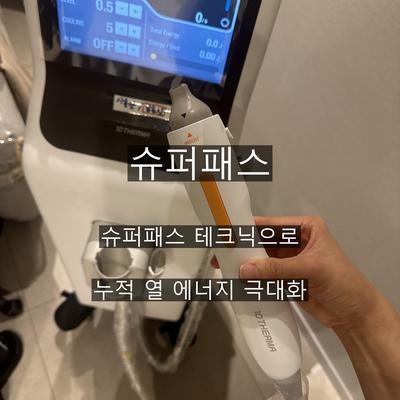
At GGEUT Oriental Medical Clinic, we combine precise shot count planning with the Superpass technique. This dual approach ensures comprehensive coverage with an appropriate number of shots, along with effective heat accumulation in every treated area.
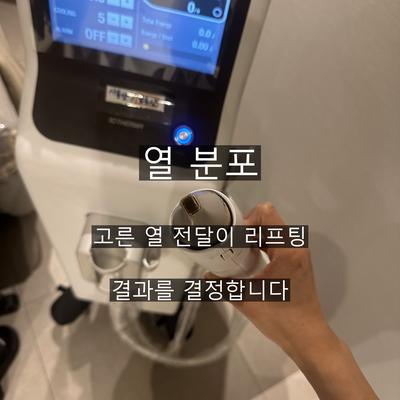
GGEUT Oriental Medical Clinic: The Lifting Card, a Transparent Treatment Record
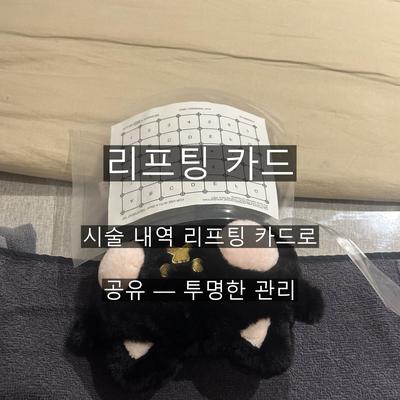
Following each Tenssermar procedure at GGEUT Oriental Medical Clinic, a personalized lifting card is generated and provided.
This lifting card systematically documents the specific areas treated, the total number of shots administered, and the energy delivery parameters utilized.
By referencing this historical data, the record aids in precisely tailoring the shot count and energy settings for any future treatments.
Tenssermar is not typically a single-session treatment, as collagen regeneration builds up incrementally with each procedure. For this reason, maintaining detailed records for every session is highly valuable.
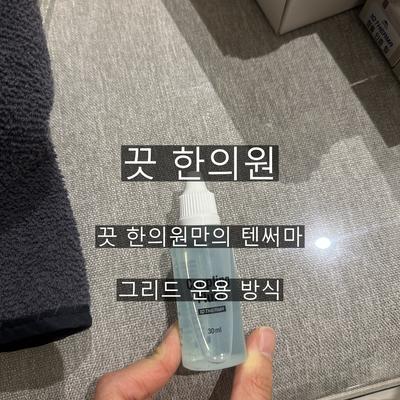
GGEUT Oriental Medical Clinic's protocol for Tenssermar, especially when evaluating the context of a 300-shot guideline, encompasses three distinct phases: initial grid design, Superpass technique application, and thorough lifting card documentation.
Common Inquiries
Q. If 300 Tenssermar shots prove insufficient, what is considered an appropriate number of shots?
A. The optimal number of Tenssermar shots, including whether 300 shots are suitable, depends on each patient's unique facial anatomy and the outcome of the initial grid design. Our clinic prioritizes a seated grid design, followed by a precise calculation of the necessary shots, which then guides the treatment plan.
Q. Could there be specific reasons why the desired outcome is not achieved, even after 300 Tenssermar shots?
A. When the results of 300 Tenssermar shots fall short of expectations, it often stems from an inadequate shot count for the targeted region or variations in how heat is effectively accumulated within the skin. Our clinic employs the Superpass technique to promote enhanced heat accumulation, which in turn can lead to more efficient stimulation, even with an equivalent number of shots.
Q. What criteria determine the scheduling for a subsequent Tenssermar session following a 300-shot treatment?
A. GGEUT Oriental Medical Clinic utilizes the previous session's lifting card data as a primary reference. We review the energy levels applied during the 300-shot Tenssermar treatment to then precisely adjust both the treatment interval and the number of shots for the next session.
Q. What potential disparities might arise if a grid design is not implemented during the procedure?
A. Proceeding without a pre-designed grid can result in an irregular tip application path, leading to uneven heat distribution across various facial regions. This may contribute to issues like unintended cheek hollowing or inconsistent stimulation, potentially leaving certain areas inadequately treated even after 300 Tenssermar shots.
GGEUT Oriental Medical Clinic's Commitment
The tip grid is carefully designed with the patient comfortably seated, which aims for a consistent and balanced heat delivery across the entire facial area. This methodical approach helps ensure a more uniform energy application.
Our clinic utilizes the Superpass technique to optimize the transfer of accumulated thermal energy. This method allows for precise management of both the number of shots and the overall efficiency of heat delivery.
Details from each session are thoroughly documented using a lifting card system. This robust record-keeping supports the creation of well-structured ongoing and future treatment plans.
A personalized approach is taken to foster delicate yet meaningful changes. We focus on providing considerate care tailored to each individual's specific requirements.
Related notes
Procedure notes worth reading next.


Loading menu…