

Why are 600 shots considered the optimal number for radiofrequency (RF) treatments such as Densitherm Lifting and Tensharma? Beomgye, Pyeongchon, Beomgye Station, Pyeongchon Station, Hogye-dong, Bisan-dong, Gwanyang-dong, Dongan-gu, Indeogwon, Geumjeong, Anyang
6/20/2026
This is a procedure note for Why are 600 shots considered the optimal number for radiofrequency (RF) treatments such as Densitherm Lifting and Tensharma? at Gyeonggi Anyang Beomgye KKEUT Korean Clinic.
Denssity Lifting: Why 600 Shots is Optimal
Denssity Lifting is a non-invasive lifting procedure that uniformly delivers monopolar radiofrequency (RF) energy to the dermal and subcutaneous layers of the skin, inducing collagen denaturation and regeneration.
Devices in the same family, such as TenssTherma, Thermage, Oligio, and Volnewmer, are all based on this monopolar RF principle, and Denssity Lifting also falls into this category.
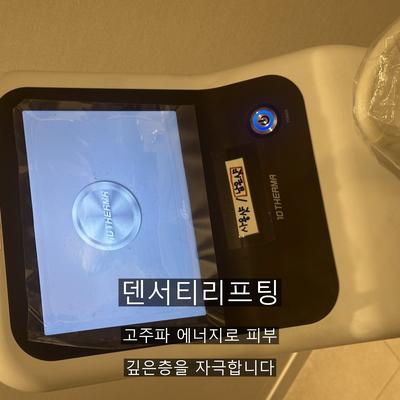
So, why is 600 shots frequently mentioned?
In RF lifting, 'shot count' refers to the number of times energy is delivered to the skin. Each shot applies thermal stimulation to one point on the skin, and only when this stimulation accumulates does the collagen in the dermis contract, initiating new collagen synthesis.
600 shots is a clinical benchmark designed to uniformly cover the entire face (forehead, eye area, cheeks, jawline, neck) while ensuring sufficient energy reaches each area.
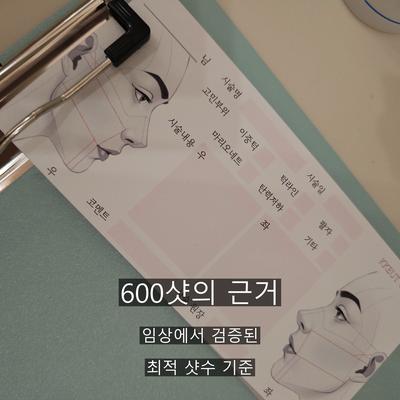
If the shot count is excessively low, there won't be enough energy for collagen stimulation to reach the entire skin evenly. Conversely, forcefully increasing the shot count or energy can lead to excessive heat concentration in one area, potentially causing tissue damage or burns.
The 600-shot standard is a numerical representation of 'sufficient stimulation without overdoing it'.
Just as important as shot count — energy density and movement speed
Simply meeting the numbers doesn't guarantee results. Even with the same 600 shots, if the handpiece is moved quickly and energy is scattered, the total heat accumulated at each point will be lower.
The key in RF lifting is for the dermis to reach a certain temperature or higher. Only by reaching this temperature can collagen denaturation and regeneration signals function properly. This is why the handpiece must be moved slowly to allow sufficient energy accumulation.
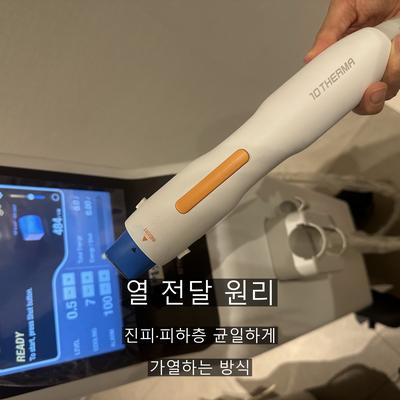
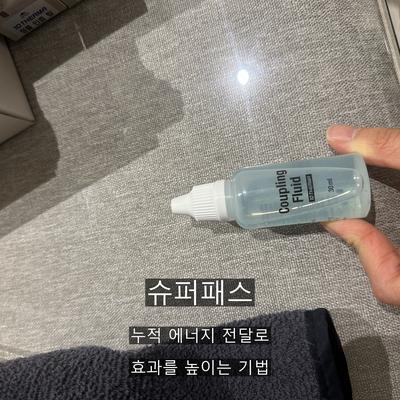
The emphasis on the 'Super Pass' technique in TenssTherma and Denssity Lifting treatments has the same background. This method involves passing over an area multiple times, overlapping to deliver sufficient cumulative energy, which results in a different outcome than quickly sweeping over it once.
Ultimately, 600 shots is just the starting point; the expected results are achieved only when movement speed, energy density, and area-specific distribution are all aligned.
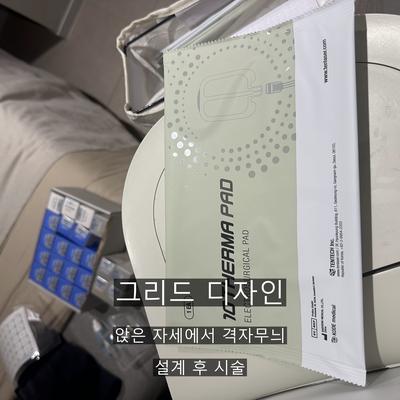
Why Grid Design is Essential
Before undergoing RF lifting, there's a design phase where a grid pattern is drawn on the face. This stage is where the practitioner plans how many shots to allocate to each area.
If the procedure is performed solely by feel without a grid, energy won't be evenly distributed, leading to excessive stimulation in certain areas or, conversely, skipped spots. Even with 600 shots, the actual effect won't be uniformly distributed across the entire face.
There's also a reason why the design must be done in a seated position. When lying down, the position of facial tissues changes, causing a misalignment between the actual sagging areas and the target locations. Designing the grid after checking the sagging fat and cheek positions while seated ensures energy can be focused on the precise areas.
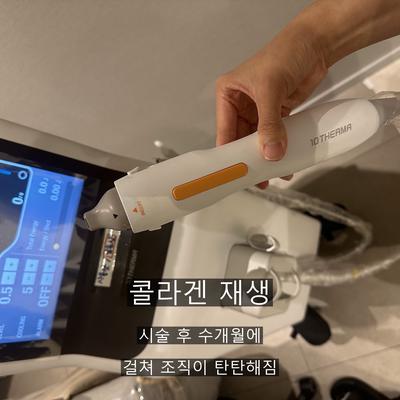
The effects after the procedure are divided into immediate results and those that appear over time. Immediate elasticity is felt as collagen contracts due to RF thermal stimulation, and then over 2-3 months, new collagen synthesis progresses, making the lifting effect increasingly defined.
For Denssity Lifting series treatments, the common approach is to build cumulative effects through consistent, periodic management rather than a one-time procedure.
Frequently Asked Questions / Common Misconceptions
Frequently Asked Questions
Q. For Denssity Lifting, is it always true that more shots (e.g., 600 vs. 1000) mean better results?
A. In Denssity Lifting, an increased shot count does not necessarily equate to increased effectiveness. 600 shots is a clinical standard designed to uniformly distribute sufficient energy across the entire face. Forcefully increasing the shot count can put excessive thermal stress on tissues, so the key is to properly administer the appropriate number of shots.
Q. How do TenssTherma, Thermage, and Denssity Lifting differ?
A. All are procedures in the same category, based on monopolar RF (radiofrequency) energy to heat the dermis and induce collagen stimulation. While there are differences in equipment manufacturers, tip design, and cooling methods, the core mechanism is identical. The results depend more on the energy application method and protocol than on which device is used.
Q. I don't see immediate results after the procedure; is this normal?
A. Beyond immediate firmness, the main changes from Denssity Lifting appear over 1-3 months after the procedure. This is because collagen regeneration is a process that takes time. Even if there are no noticeable changes immediately after the procedure, regeneration is underway internally.
Q. How many Denssity Lifting sessions are needed?
A. While it varies depending on skin condition and degree of sagging, a consistent maintenance approach every 3-6 months is generally recommended. Rather than a one-time procedure, an approach that maintains tissue firmness through cumulative stimulation is more effective.
The Sincere Approach of Kkeut Clinic
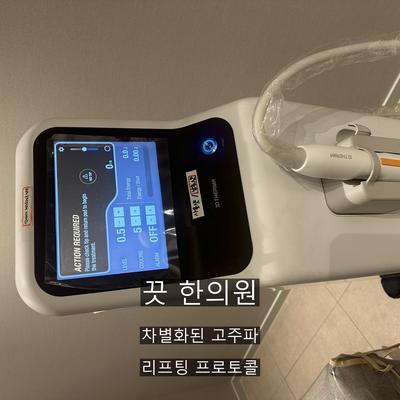
Kkeut Clinic always performs grid design in a seated position before RF lifting. This allows us to identify sagging areas precisely as they are affected by gravity and plan energy distribution accordingly before the procedure, ensuring no energy is wasted on unnecessary areas or misses the target.
Kkeut Clinic utilizes the Super Pass technique to increase cumulative energy delivery. Our goal is not simply to meet a shot count, but to ensure the dermis is sufficiently heated. In Denssity Lifting series RF procedures, this difference determines the results.
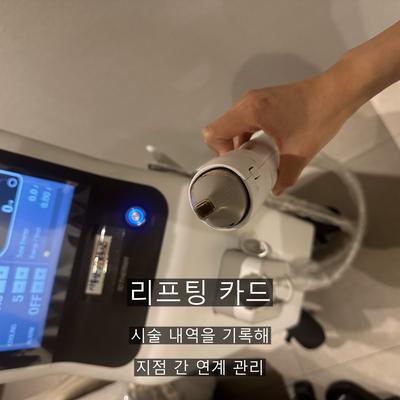
Kkeut Clinic records and shares treatment details via a lifting card. This ensures consistent energy application by carrying over previous treatment records, regardless of which branch you visit, and maintains the continuity of cumulative management. This is why our approach yields different results compared to starting anew each time without records.

A Subtle Difference, Different Results — Experience it at Kkeut Clinic.
Related notes
Procedure notes worth reading next.


Loading menu…