

Ultherapy and Sunken Cheeks: What's the Real Recovery Story? The Unvarnished Truth from Our Chief Director Beomgye, Pyeongchon, Beomgye Station, Pyeongchon Station, Hogye-dong, Bisan-dong, Gwanyang-dong, Dongan-gu, Indeogwon, Geumjeong, Anyang
4/11/2026
This is a procedure note for Ultherapy and Sunken Cheeks: What's the Real Recovery Story? The Unvarnished Truth from Our Chief Director at Gyeonggi Anyang Beomgye KKEUT Korean Clinic.
For patients considering Ultherapy, 'cheek hollowing' is a significant concern among potential side effects.
Observations that post-procedure volume loss can make one appear older or hollow often lead to hesitation regarding the treatment.
Online searches frequently present claims such as 'it recovers over time' or 'it returns to normal after about six months'.
Nevertheless, as medical professionals with extensive research and clinical experience in lifting procedures, there is an important point we need to convey clearly to our patients.
To be direct, once Ultherapy-induced cheek hollowing develops, it is challenging for it to fully recover naturally.
We will clarify why this phenomenon occurs, and what considerations are important for preventing such undesirable outcomes, from a professional standpoint.
Ultherapy utilizes high-intensity focused ultrasound (HIFU) energy, delivering it deep into the skin to the SMAS layer. This creates thermal coagulation points, which in turn contract skin tissue and can yield a lifting effect.
This process can inevitably involve a reduction in fat cells.
When ultrasound energy targets the fat layer, fat cells may be destroyed, leading to a decrease in volume.
This principle can be beneficial for areas with excess fat, like jowls or a double chin. However, if energy is applied incorrectly to areas where volume should be preserved, such as the front or side cheeks, it may lead to significant hollowing.
While it is often stated that Ultherapy-induced cheek hollowing recovers as swelling diminishes and tissues regenerate over time, this explanation only partially addresses the issue.
Mild hollowing resulting from immediate post-procedure swelling or temporary tissue contraction might show some improvement over several months. However, the more significant concern arises from true cheek hollowing caused by 'fat cell destruction'.
The number of fat cells in an adult body is generally stable. It is biologically very challenging for destroyed fat cells to proliferate and fully restore their original volume.
Ultimately, if significant cheek hollowing develops, it is often challenging to fully regain the previous facial contour without additional volume-restoring procedures like fillers, Sculptra, or fat grafting. This means that after investing in a lifting procedure, one might face further substantial costs, time, and risks to address the resulting side effect.
For this reason, preventing cheek hollowing from occurring initially is considerably more crucial than anticipating its recovery once it has developed.
This is because cheek hollowing tends to stem not from equipment flaws, but rather from insufficient practitioner technique and design capabilities.
To fundamentally prevent such side effects and provide patients with reliable and satisfactory outcomes, our approach prioritizes 'precision planning and customized design' as a core principle of our treatments.
Each individual's face presents unique variations in bone structure, muscle movement, fat distribution, and skin thickness. Mechanically applying a uniform number of shots, without considering these individual differences, can contribute to cheek hollowing.
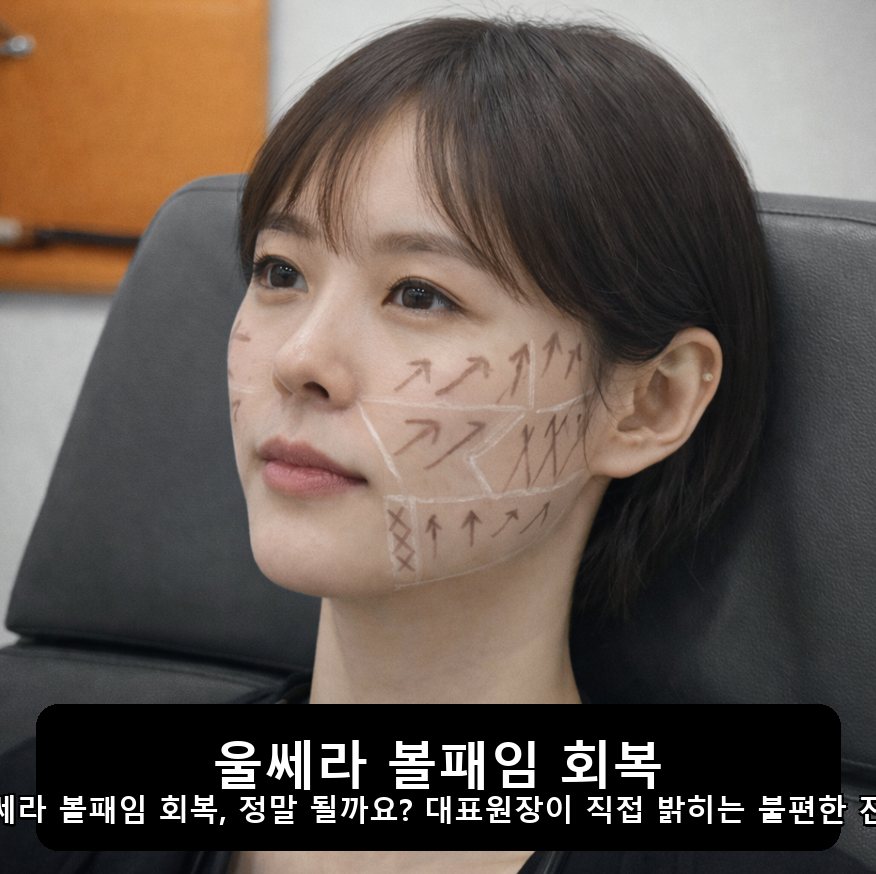
Our medical team thoroughly examines each patient's face, precisely identifying areas of volume loss, areas crucial for volume preservation, and regions requiring lifting, subsequently creating a detailed 'design map'.
Areas requiring energy application and those that must be avoided are precisely delineated, down to the millimeter. Regions sensitive to fat loss, such as below the lateral cheekbones or above the nasolabial folds, are carefully avoided or have their energy intensity finely adjusted.
With a comprehensive understanding of facial anatomy, we precisely target the location and depth of the SMAS layer. Our aim is to correct the structural framework of the face, rather than merely pulling the skin surface, to achieve natural yet distinct lifting results.
Summary of Papers, Academic Materials, and Evidence
1. Excessive application of high-intensity focused ultrasound (HIFU) energy to the subcutaneous fat layer can induce atrophy and destruction of fat cells, making spontaneous biological regeneration challenging.
2. A uniform shot application approach that disregards individual facial anatomical structures, such as fat distribution and fascial depth, is a significant contributor to cheek hollowing side effects.
3. Dermatological research indicates that precise procedures, which focus energy exclusively on the accurate target layer (SMAS) while protecting the subcutaneous fat layer, tend to be more effective at minimizing side effects.

Our Clinic's Distinctive Approach
Tailored pulse design, which involves adjusting the laser pulse duration for each session, considering individual patient's hair thickness and density variations.
The **Cryo Cooling System** utilizes a strong cooling air spray to help reduce nerve sensitivity and protect the surface of the skin during procedures.
Using data from the **Mark-Vu skin analysis camera**, we can establish an initial baseline and observe potential skin changes before and after a procedure.
Our strict appointment system aims to streamline the treatment process, helping to minimize patient waiting times.
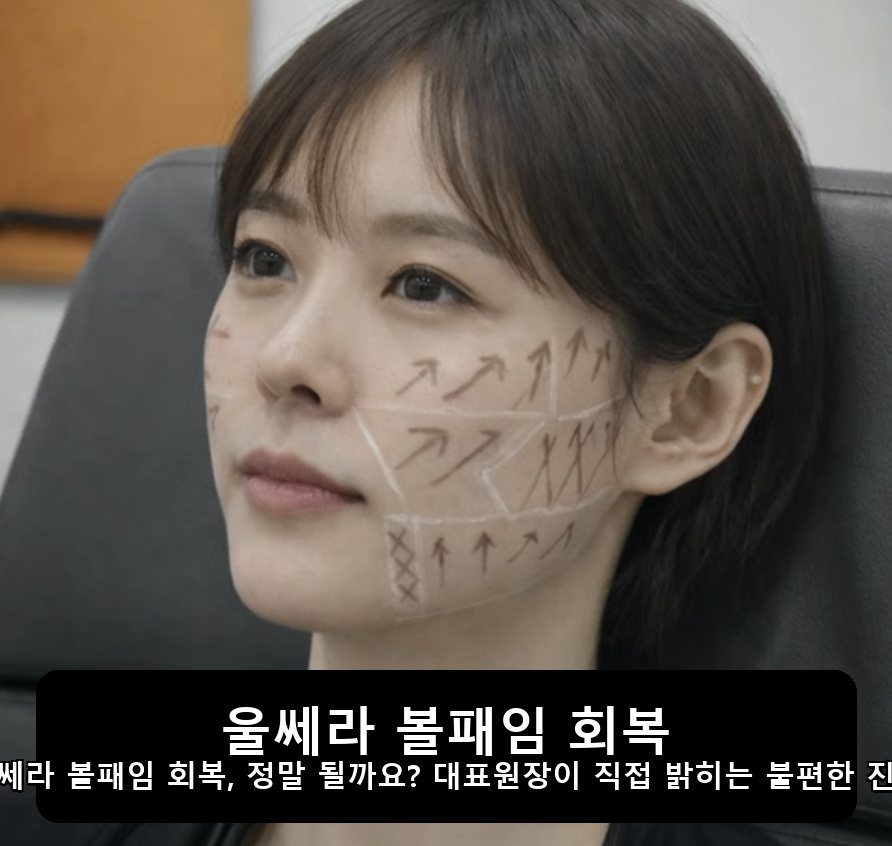
Once Ultherapy-induced cheek hollowing occurs, it can be quite challenging to reverse. Therefore, making a thoughtful decision when choosing a clinic and consulting with medical staff is important from the very beginning.
Our medical team is committed to ethical practice, avoiding recommendations for unnecessary or excessive procedures driven by profit. If a patient's skin condition indicates a high risk of potential side effects, we will decline aggressive treatment proposals.
To address concerns about cheek hollowing and to pursue a natural aesthetic, it is important to seek a consultation where precise planning is emphasized from the initial stages.

QnA Summary
Q. Is it true that Ultherapy cheek hollowing cannot naturally recover?
A. Cheek hollowing caused by actual fat cell destruction is challenging for the body to regenerate naturally. Therefore, preventative measures taken early on are of significant importance.
Q. What is design lifting?
A. Design lifting involves a careful analysis of each patient's distinct facial anatomy and fat distribution. This analysis helps determine the precise areas where energy application may be beneficial and where it should be cautiously avoided.
Q. What should I check to avoid cheek hollowing?
A. Beyond considering the number of shots or the cost, it is advisable to assess the medical team's expertise in designing treatment plans. This includes confirming their approach to analyzing your unique facial condition and developing personalized strategies.
Related notes
Procedure notes worth reading next.


Loading menu…