

3 Key Criteria to Consider When Choosing an Ultherapy Clinic: Precise Design, Ultrasound Confirmation, and Treatment Records Beomgye, Pyeongchon, Beomgye Station, Pyeongchon Station, Hogye-dong, Bisan-dong, Gwanyang-dong, Dongan-gu, Indeogwon, Geumjeong, Anyang
10/23/2026
This is a procedure note for 3 Key Criteria to Consider When Choosing an Ultherapy Clinic: Precise Design, Ultrasound Confirmation, and Treatment Records at Gyeonggi Anyang Beomgye KKEUT Korean Clinic.
Those considering Ultherapy often first check reviews or whether the clinic possesses the equipment.
However, even with the same equipment, differences can occur in the treatment process.
In this article, we explain the criteria to consider when choosing an Ultherapy clinic, divided into three stages: consultation, treatment planning, and post-treatment records.
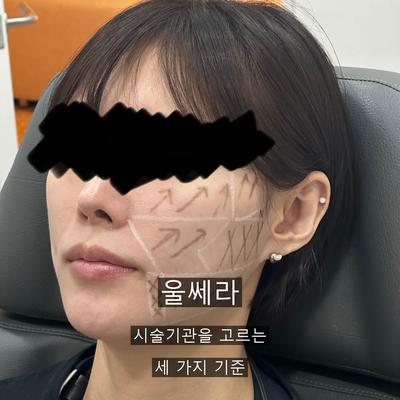
Criterion 1. Check how the design process is conducted during consultation
Ultherapy is performed while lying down, but it's advisable to check if the design phase is first conducted while seated.
When the patient lies down, the direction of gravity changes, and sagging tissues may be pushed upwards.
A face in a supine position may appear less saggy than it actually is, and if lifting areas are determined in this state, there's a possibility that the necessary areas won't be properly addressed when standing up.
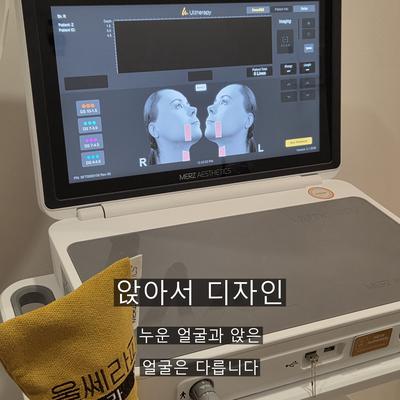
While seated, the collapsed facial lines can be accurately identified, and a treatment plan can be established by adjusting intensity according to the necessary areas.
Before starting the ultrasound treatment, you should also check whether the medical staff directly palpates and visually inspects the skin to assess skin thickness in each area.
Even within a single face, the skin thickness varies in different areas such as above the cheekbones, under the chin, and on the cheeks.
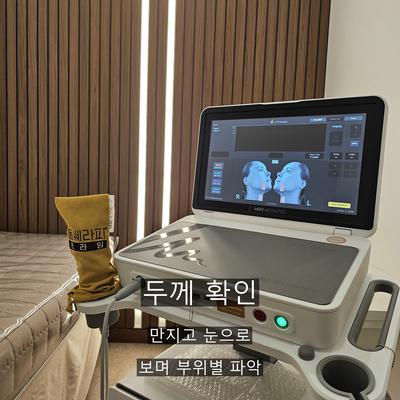
Criterion 2. During treatment planning, check the tip selection and method of confirming the target layer
If skin thickness has been confirmed, you can inquire about how this information guides the actual treatment tip selection.
It's advisable to check whether a specific plan is established for each area before treatment, rather than spontaneously deciding which tips (e.g., 4.5mm or 3.0mm tips) to use on which areas during the procedure.
You can also inquire whether various customized tips, such as 3.0mm, 2.0mm, and 1.5mm, are used in addition to the 4.5mm main tip.
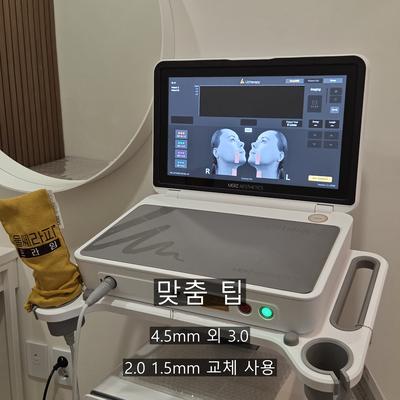
Ultherapy tips focus energy at a fixed depth. For example, a 4.5mm tip focuses energy at a 4.5mm depth, and a 3.0mm tip at a 3.0mm depth.
However, the depth of the SMAS layer, which is the treatment target, varies from person to person and differs in various areas within a single face.
If the SMAS layer is between the focal depths of two tip specifications, applying energy with the tip held vertically may cause the focus to miss the target layer.
In this case, tilting the tip diagonally can adjust the actual focal depth, allowing it to reach layers that lie between the tip specifications. This is called 'Tilting'.
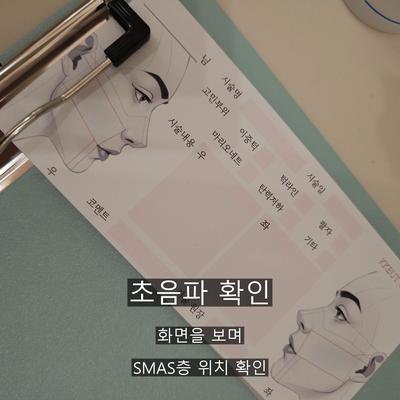
Tilting is a process that requires delicate angle adjustment while confirming the position of the skin layers through the ultrasound screen, thus requiring sufficient time.
Therefore, it's advisable to inquire whether the ultrasound screen is continuously monitored during the procedure, and if angles are readjusted for each area.
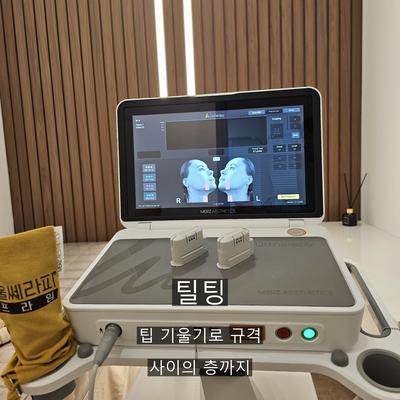
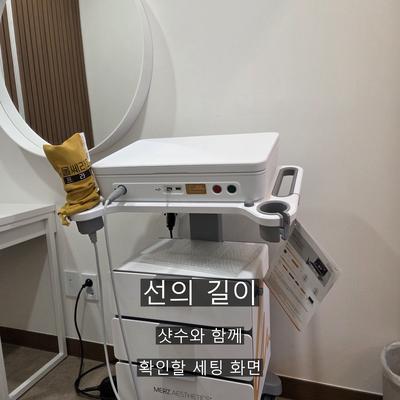
One more item to check on the device's settings screen is the 'line length'. One shot of Ultherapy delivers energy in the form of a line, not a dot, and this length can be adjusted in the settings.
Even with the same number of shots, the actual energy delivered to the skin can vary depending on the line length setting. Therefore, it's advisable to check not only the number of shots but also whether the treatment is performed with the device's standard length, and if the settings screen is transparently displayed before the procedure.
Criterion 3. Check if detailed records are kept after treatment
It's difficult for patients to directly observe the lifting procedure, and often only the total number of shots is provided after the treatment.
It's advisable to check whether information such as the types of tips used, the number of shots delivered to each area, and intensity adjustments for each area are recorded and provided on paper or a card.
If detailed records exist, it provides a clear basis for discussing differences from previous treatments during subsequent procedures, and an individual's treatment history can be systematically managed over multiple sessions.
If you are curious about the purpose-based differences between Ultherapy and other lifting treatments, you might want to read our article on Thread Lift vs. Ultherapy, and if you need more detailed information about shot planning for specific areas, you can also check out the article on Ultherapy for Nasolabial Folds.
Kkeut Clinic applies the three criteria presented above to conduct treatments as follows.
At Kkeut Clinic, before Ultherapy, the design is performed with the patient in a seated position. This is an important process to prevent cheek hollowing, and the skin thickness of each area, confirmed by direct palpation and visual inspection, becomes a key criterion for tip selection planning.
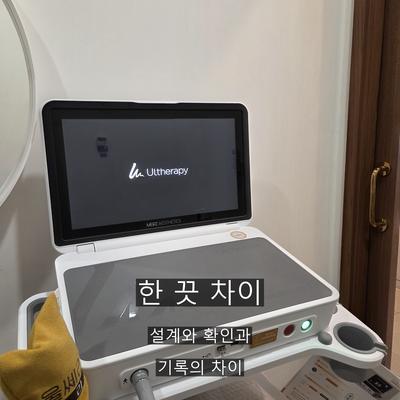
At Kkeut Clinic, in addition to the 4.5mm main tip, various customized tips of 3.0mm, 2.0mm, and 1.5mm are interchanged and used. The procedure targets the SMAS layer with delicate tip angle adjustments while observing the actual ultrasound screen.
Kkeut Clinic performs treatments with the device's standard length settings and transparently displays the device's setup screen before the procedure.
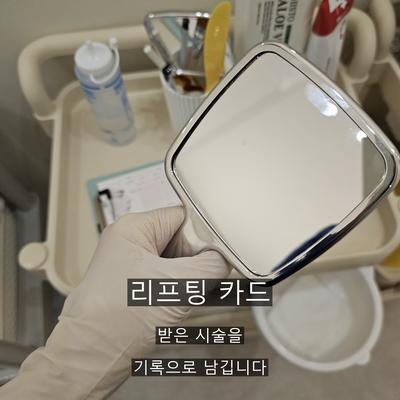
At Kkeut Clinic, after the treatment, a detailed lifting card is prepared and shared with the patient.
If you are comparing several Ultherapy clinics, we recommend using the three criteria mentioned above as a checklist.
Frequently Asked Questions
Q. What should be the first thing to ask about during the consultation phase when choosing an Ultherapy clinic?
A. During an Ultherapy clinic consultation, it's advisable to first ask if the design is performed while seated, and if tip planning is based on checking the skin thickness of each area.
Q. Is it sufficient to only check the number of shots when comparing Ultherapy clinics?
A. The number of shots is only one piece of information about the treatment. Since each Ultherapy clinic may have different line length settings and tip configurations, it's advisable to check not only the number of shots but also the device's setup screen, the types of tips actually used, and the method of energy distribution for each area.
Q. How can I check the detailed contents of a treatment received at an Ultherapy clinic?
A. At Kkeut Clinic, after treatment, details such as the types of tips used, the number of shots per area, and the applied intensity are meticulously recorded on a lifting card and shared with the patient. When comparing other Ultherapy clinics, it's advisable to inquire whether such records of treatment details are kept.
Kkeut Korean Medicine Clinic's Medical Philosophy
Kkeut Korean Medicine Clinic carefully designs treatments in a seated position, considering each patient's individual body shape. Through a process of precisely checking the thickness of each area, a more detailed treatment plan is established.
We replace tips suitable for each individual's condition and adjust angles while monitoring real-time changes in the treatment area through ultrasound imaging. This process enhances the precision of the procedure and can contribute to a comfortable experience.
Kkeut Korean Medicine Clinic applies treatments of appropriate length tailored to each individual's skin condition and goals. Additionally, we record the changes before and after the procedure on a lifting card, sharing it with the patient to collaboratively understand the progress. This process considers safety and strives for the expected treatment effects.
Subtle treatments where small differences matter. Kkeut Korean Medicine Clinic aims for careful treatment through such a precise approach.
Loading menu…