

Ultherapy for Nasolabial Folds: The Importance of Targeting the SMAS Layer and Shot Planning Beomgye, Pyeongchon, Beomgye Station, Pyeongchon Station, Hogye-dong, Bisan-dong, Gwanyang-dong, Dongan-gu, Indeogwon, Geumjeong, Anyang
6/25/2026
This is a procedure note for Ultherapy for Nasolabial Folds: The Importance of Targeting the SMAS Layer and Shot Planning at Gyeonggi Anyang Beomgye KKEUT Korean Clinic.
Ultherapy for nasolabial folds: results differ when accurately targeting the SMAS layer.
The biggest reason nasolabial folds deepen is not the loss of skin surface elasticity. As the SMAS layer, which supported the cheek fat, sags downwards, the cheek fat collapses, and its weight presses on the nasolabial lines, creating wrinkles. Procedures that only stimulate the skin surface cannot reverse this structural sagging. Ultherapy for nasolabial folds is effective because it precisely delivers HIFU (High-Intensity Focused Ultrasound) energy not to the skin surface, but directly to the SMAS layer, simultaneously causing contraction and collagen regeneration.
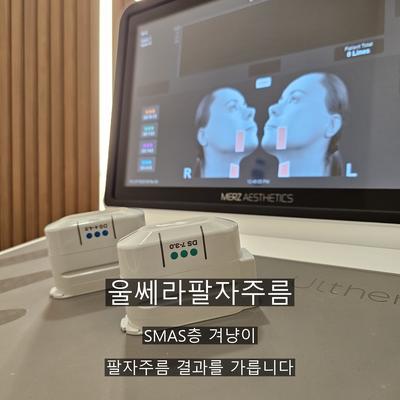
What is the SMAS layer, and why is it connected to nasolabial folds?
The SMAS layer (Superficial Musculo-Aponeurotic System) is a thin muscular membrane structure located between the subcutaneous fat layer and the fascia. When this layer is firmly supported, the cheek fat stays in place and the nasolabial lines are smooth. As the SMAS layer loses elasticity with age, the supporting structure collapses downwards, resulting in sagging cheek fat and increased depth of nasolabial folds.
Ultherapy uses focused ultrasound energy to create thermal coagulation points in the SMAS layer (4.5mm depth) without damaging the skin surface. The heated tissue immediately contracts, lifting the sagging cheek fat, and over several months, new collagen is regenerated, leading to a reduction in nasolabial lines.
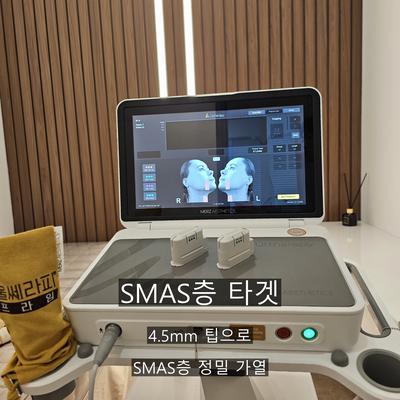
Tip Depth Planning — Why 4.5mm Alone Is Insufficient
Ultherapy tips are categorized into four types based on the depth at which energy is focused: 1.5mm, 2.0mm, 3.0mm, and 4.5mm. Although the 4.5mm tip is the main tip for directly heating the SMAS layer, designing a treatment for nasolabial folds should not be done with this tip alone.
Around the nasolabial lines, the thickness of the fat layer and skin depth vary by area. As you get closer to deep nasolabial lines, the skin tends to be thinner, so if only the 4.5mm tip is applied uniformly across the entire area, energy may not reach the intended layer or may be inefficiently dispersed in some sections. By reinforcing the deep dermal layer with a 3.0mm tip and strategically placing 2.0mm or 1.5mm tips in areas like around the eyes or where the skin is thin, layering stimulation at different depths, the lifting vectors for the entire nasolabial line will be evenly formed.
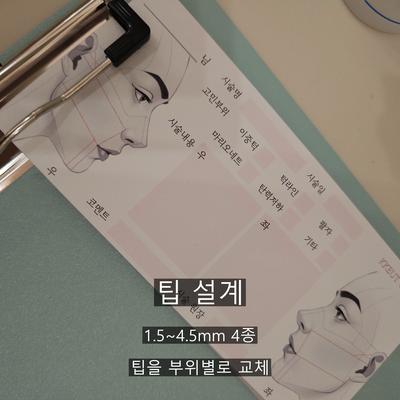
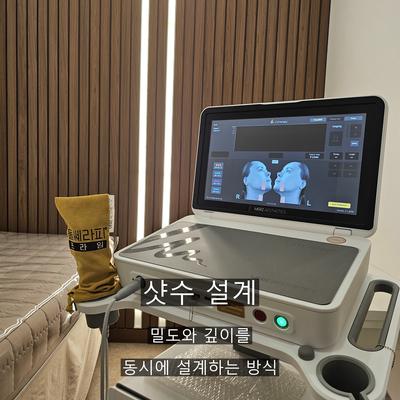
Shot count planning is also important. In the sagging cheek fat areas that form nasolabial folds, a sufficient number of thermal coagulation points must be densely embedded for the lifting effect to manifest. If the shot count is too low, the gaps between coagulation points widen, preventing lifting vectors from connecting; if too dense, it overloads the tissue, increasing downtime. Calculating the appropriate shot range based on the length of the nasolabial line, the degree of cheek fat sagging, and skin thickness is the core of the pre-procedure planning phase.
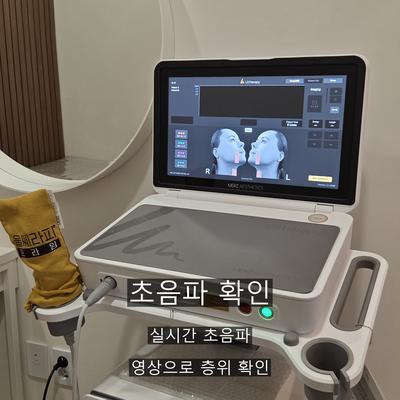
Ultrasound Imaging Guidance — What It Means to Visually Confirm Layers During Treatment
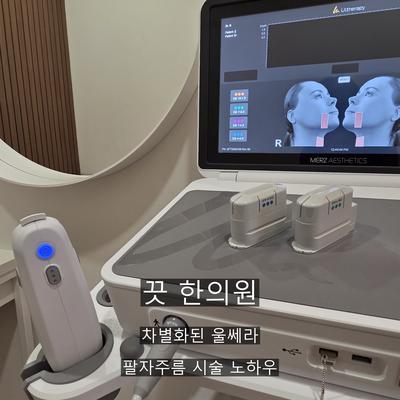
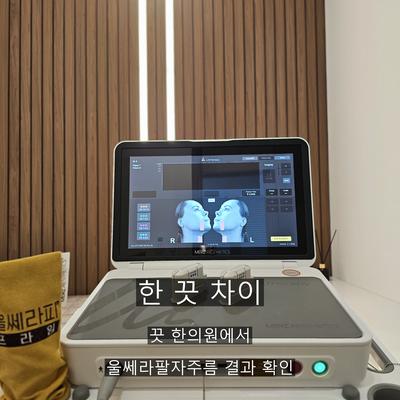
One of Ultherapy's key technical features is the ability to view ultrasound images in real-time during the procedure. By observing the cross-section of the skin layers on the screen, it is possible to confirm which depth the tip is targeting. By finely adjusting the tip angle, even with the same 4.5mm tip, the SMAS layer access angle changes, allowing energy to be delivered precisely to the target layer even in areas where fat layer thickness varies.
If the procedure is performed solely by relying on sensation without this ultrasound confirmation process, it is impossible to know if the tip is actually targeting the SMAS layer. In procedures targeting structural sagging like nasolabial lines, layer confirmation is not an option but a prerequisite for procedural accuracy.
Number of Sessions and Treatment Cycle
Ultherapy for nasolabial folds typically takes about 3 to 6 months for collagen regeneration to complete after a single session. The effects are divided into two phases: immediate tissue contraction right after the procedure, followed by collagen regeneration over several months. For this reason, at least 3 months of observation are needed to evaluate the final results.
While many experience a reduction in nasolabial lines with a single session, for moderate to severe sagging or cases accompanied by a decrease in cheek fat volume, two or more cumulative sessions are more effective. The recommended interval varies depending on individual skin condition and the number of shots per session, with 6-month intervals being a common guideline.
Post-Procedure Care
For 1-2 days starting from the day of the procedure, you may experience warmth and mild swelling in the treated area. Avoid strong sun exposure and apply sunscreen diligently. Avoid activities that drastically raise body temperature, such as saunas, strenuous exercise, and alcohol consumption, within 3 days after the procedure. While there is a common belief that 'hot compresses after the procedure help prolong the effect,' HIFU's tissue contraction and collagen stimulation are responses already completed during the procedure, so subsequent heat stimulation does not affect the outcome.
Frequently Asked Questions
Q. For Ultherapy on nasolabial folds, how many shots are appropriate?
A. The number of shots required for Ultherapy on nasolabial folds varies depending on the individual's degree of cheek fat sagging, the depth of the nasolabial lines, and skin thickness. It is important to design the shot count for each area so that lifting vectors are evenly formed across the entire sagging section, and layer accuracy and distribution determine the results more than the total number of shots.
Q. How much pain is associated with Ultherapy treatment?
A. A strong sensation of heat and tingling stimulation is felt when HIFU energy is delivered to the deep layers. While there are individual differences, the Ultherapy treatment area for nasolabial folds typically involves thicker cheek fat, so the intensity is relatively high. Discomfort can be reduced through pain management before the procedure.
Q. Which is more effective, Shurink or Ultherapy for nasolabial folds?
A. Both procedures use the HIFU method, but Ultherapy's ability to confirm layers through ultrasound imaging guidance makes a difference in terms of precision for improving structural sagging. If sagging is prominent and direct access to the SMAS layer is required, Ultherapy for nasolabial folds is a more direct approach.
Q. Are the results permanent?
A. While the collagen regeneration effect lasts, aging continues. To maintain the improved state from Ultherapy for nasolabial folds, it is realistic to plan repeat treatments every 6-12 months.
Kkeut Clinic's Sincere Approach
During Ultherapy procedures, Kkeut Clinic adjusts the tip angle and confirms ultrasound images in real-time to precisely target the SMAS layer. Because we perform treatments while visually observing the layers, we can confirm with every shot whether the energy is being delivered to the intended depth.
Beyond the 4.5mm main tip, Kkeut Clinic designs treatments by switching between 3.0mm, 2.0mm, and 1.5mm tips for different areas, ensuring that layered energy is evenly distributed across the entire nasolabial line. This differs from performing the entire procedure with just one type of tip, resulting in a different density of outcomes.
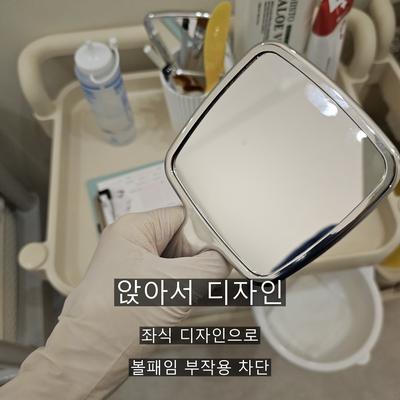
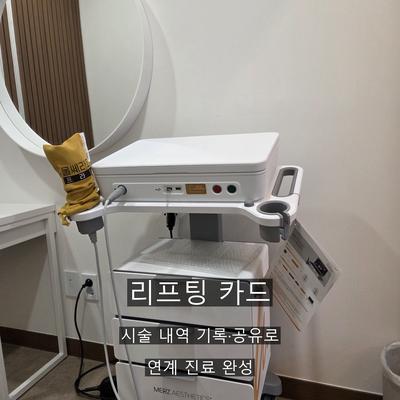
Kkeut Clinic performs the design process in a seated position before the procedure. If designed in a lying position, the cheek fat shifts, and the position is determined in that shifted state, potentially misaligning the actual sagging area with the target area. This seated design preemptively prevents side effects like cheek hollowing, and after the procedure, the tip configuration and shot details are recorded on a lifting card to ensure continuous follow-up care from any point.
A subtle difference for a distinct result — Experience it at Kkeut Clinic.
Related notes
Procedure notes worth reading next.

Loading menu…